
Patients arriving at a new healthcare facility carry more than their symptoms. They carry uncertainty, questions they haven’t voiced yet, and sometimes genuine fear about what they’ll find. That anxiety directly affects whether they book, whether they show up, and how engaged they are in their care. To build patient confidence with video tours is to address that anxiety before it becomes a barrier. Done well, a virtual office tour removes the unknown, introduces your team, and signals to every prospective patient that you take their experience seriously from the very first click.
Table of Contents
- Key takeaways
- How to build patient confidence with video tours
- Planning your video tour properly
- Producing video tours that patients actually trust
- Common challenges and how to handle them
- Measuring the impact on patient confidence
- My perspective on what actually works
- How Com can support your next video project
- FAQ
Key takeaways
| Point | Details |
|---|---|
| Video tours reduce no-shows | Facilities using virtual tours report 25% fewer no-shows and higher appointment conversions. |
| Authenticity outperforms polish | Simple, genuine staff introductions build more trust than expensive, high-production videos. |
| Plan before you film | Identify patient concerns, map key spaces, and address privacy requirements before a camera enters the building. |
| Measure what matters | Track no-show rates, online conversions, and patient satisfaction scores to evaluate your video’s real impact. |
| Publish across every touchpoint | Place video tours on your website, Google Business Profile, and appointment reminder emails for maximum reach. |
How to build patient confidence with video tours
The anxiety patients feel before a first visit is not imaginary, and it is not trivial. 53% of patients search online for information about their healthcare provider before their first appointment. They want to see where they are going, who will treat them, and whether the environment feels safe. A video walkthrough for patients answers those questions before the front desk ever picks up the phone.
What separates a video tour that builds genuine confidence from one that merely exists on a website page? Specificity and honesty. Patients want to see the actual waiting room, not a curated version. They want to hear a real clinician explain what happens at check-in, not read it in dot points. When you show your facility truthfully and warmly, you are doing something far more powerful than marketing. You are giving patients permission to trust you.
Video walkthroughs for patients also function as a form of prehabilitation for the appointment itself. Pre-visit familiarity with clinical spaces correlates directly with reduced no-shows and better in-clinic engagement. When patients have already seen your consultation room on screen, the physical experience of arriving there carries far less cognitive load. That translates into calmer patients, more productive appointments, and clinical staff who spend less time managing anxiety and more time delivering care.
Planning your video tour properly
Preparation determines whether your video tour genuinely serves patients or simply adds content to your website. Start by identifying the specific concerns your patient cohort carries. Paediatric families worry about whether the environment feels child-friendly. Aged care referrals need reassurance about accessibility and warmth. Patients managing chronic conditions want to know how much privacy they will have during consultations. Each of those concerns maps to a specific shot or segment in your video.
Key areas to plan for include:
- Waiting room and reception. Visuals of waiting room spacing and private areas directly reduce patient concerns about comfort and privacy.
- Consultation rooms. Show a clean, organised space that signals competence without feeling cold or clinical.
- Accessible entry and parking. Mobility concerns are real. Showing accessible pathways removes a common barrier to booking.
- Staff faces. Even a ten-second introduction from the practice manager changes how a patient feels about arriving.
- Check-in process. A brief walkthrough of what happens on arrival takes the mystery out of an unfamiliar process.
Privacy and compliance are non-negotiable before filming begins. No patient should appear in footage without explicit written consent. Clinical staff need to understand what will and will not be captured. If you are working within a hospital network, your communications or governance team should review the content before publication.
Pro Tip: Schedule filming during a quiet administrative period, not during clinical hours. You will avoid disruptions, protect patient privacy by default, and give staff the headspace to speak naturally on camera.
Assign clear roles before the shoot: someone to manage the camera or liaise with a production team, a clinician or staff member to appear on screen, and an administrator to handle logistics. Attempting to improvise all three on the day produces exactly the kind of video that reduces trust rather than building it.
Producing video tours that patients actually trust
The single most important production insight in healthcare video is this: physicians speaking simply and clearly build stronger trust than expensive, high-production videos. You do not need a $20,000 production budget. You need genuine people who understand what patients are worried about, and the willingness to answer those concerns on camera without a script that sounds like a brochure.
Here is a practical production sequence:
- Film empty clinical spaces first. Capture your waiting room, consultation room, reception desk, and any specialist treatment areas with steady, well-lit footage. Natural daylight is your ally. Overhead fluorescent lighting alone creates a cold, institutional feel that works against you.
- Record short staff introductions. Ask two or three team members to speak for sixty to ninety seconds about what patients can expect when they arrive. Prompt them with real questions patients ask: “What should I bring?” and “What happens first?”
- Show the check-in moment. A brief, narrated walk from the entry through to check-in is enormously reassuring for patients who struggle with new environments.
- Edit for clarity, not length. A three-minute video that covers every relevant touchpoint outperforms a seven-minute video that wanders. Cut anything a patient would not genuinely find useful.
- Add captions. A significant proportion of healthcare patients are older adults or people with hearing difficulties. Captions are not optional if you are serious about accessibility.
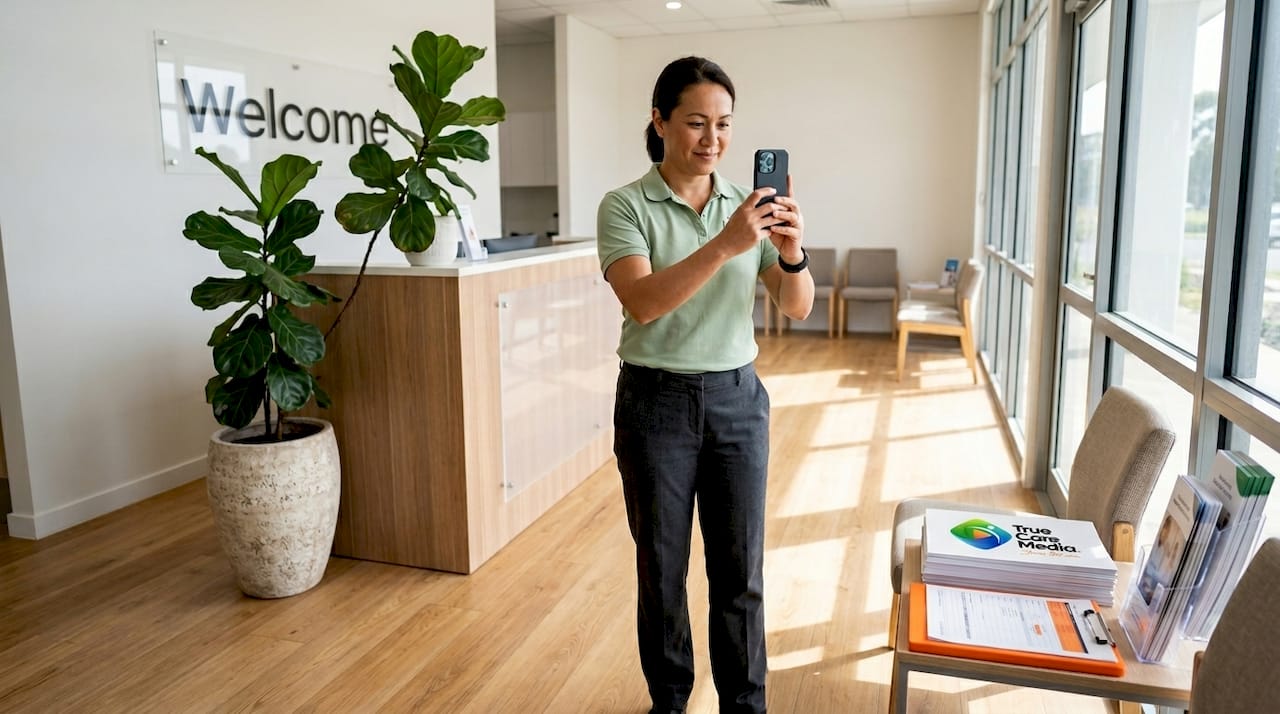
Pro Tip: Record on a smartphone in landscape mode if professional equipment is not available. Good lighting and a quiet room matter far more than camera resolution. Patients respond to what they see and hear, not the pixel count.
Once you have edited footage, publish it strategically. Embed it on your website’s homepage and your “New Patients” page. Add it to your Google Business Profile, where it will surface when patients search for your practice. Include a link in your appointment confirmation emails. For specialist providers, consider including video links in referral information packs. A patient who receives a referral letter that includes a video tour of the facility they are being referred to arrives in a completely different frame of mind.
Understanding the types of patient experience videos that work best across different clinical contexts will help you decide how to structure the content for your specific setting.
Common challenges and how to handle them
Most healthcare teams encounter the same handful of practical problems when they attempt video tours for the first time. Knowing what they are in advance saves significant time and frustration.
- Lighting. Clinical environments are notoriously difficult to film in. Fluorescent overheads create unflattering colour casts and shadows. Where possible, supplement with portable LED panels or schedule filming when natural light is strongest.
- Audio. Background noise from ventilation systems, equipment, and foot traffic is a genuine problem in healthcare settings. A lapel microphone for any staff speaker costs less than $80 and eliminates most audio issues.
- Staff reluctance. Some clinicians are uncomfortable on camera, which is completely understandable. Frame participation as a patient service rather than self-promotion. Most staff who are reluctant initially become willing once they understand the benefit to patients. Video tours specifically reassure paediatric patients by reducing procedure anxiety, which resonates with clinicians who spend significant effort managing that anxiety in person.
- Over-polished output. This is a genuinely counterintuitive trap. Over-polished videos reduce perceived trust because they feel like advertising rather than honest communication. Resist the urge to add stock music, animated logos, and cinematic transitions. Patients want to see real people in a real space.
- Outdated content. A video that shows a reception desk that has since been moved, or a staff member who has since left, actively undermines trust when patients arrive and encounter something different. Schedule a content review every six to twelve months.
For providers supporting families with children, resources like preparing children for healthcare appointments demonstrate how pre-visit video content fits into a broader preparation strategy that reduces anxiety for both patient and parent.
Measuring the impact on patient confidence
You cannot optimise what you do not measure. When video tours are deployed properly, you should expect to see movement in several key metrics within the first three to six months.
| Metric | What to measure | How to collect data |
|---|---|---|
| No-show rate | Compare monthly no-show percentages before and after video launch | Practice management software |
| Online-to-appointment conversion | Track how many website visitors book after viewing the video | Google Analytics or booking platform data |
| Patient satisfaction scores | Include a specific question about pre-visit preparedness | Post-appointment surveys |
| Video engagement | Watch time, play rate, and drop-off point | YouTube Analytics or website video player |
| Referral quality | Ask referring practitioners whether patients seem better prepared | Direct feedback from referral network |
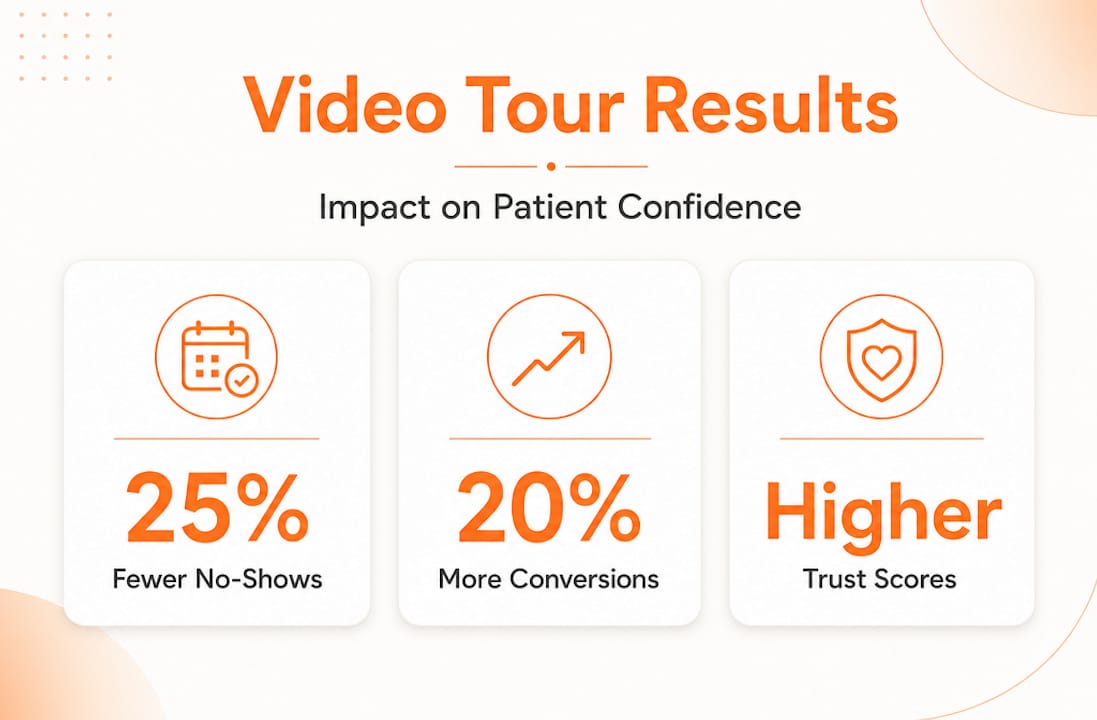
Facilities that adopt virtual office tours report a 20% increase in online-to-appointment conversions alongside the reduction in no-shows. That combination has a direct impact on revenue and capacity planning, not just patient experience.
Collect qualitative feedback too. Add a single question to your post-appointment survey: “Did you watch our facility video before coming in? If so, did it help?” The answers will tell you more about patient experience than almost any other data point. Use that feedback to update content, address gaps, and identify new spaces or team members worth featuring.
Integrate video links into every patient communication touchpoint, including appointment reminders, referral letters, and recall messages. For allied health and NDIS providers, the case for using video in admissions communications is equally strong and the same measurement framework applies.
Consistent experiences that match marketing promises build long-term patient trust. A video tour is only effective if what it shows reflects what patients actually experience on arrival. That alignment is both a production standard and an ongoing operational commitment.
My perspective on what actually works
I have worked across healthcare, aged care, and disability services long enough to see the full range of video tours that organisations produce. And the pattern is consistent. The videos that move patients to book, and that they mention at their appointments as something that helped, are never the slickest ones.
What I have found actually works is radical simplicity. A practice manager at a small allied health clinic in regional Victoria once told me that she filmed their tour on her phone during a lunch break, asked three staff members to say what they love about working there, and posted it that afternoon. Their no-show rate dropped noticeably within two months. No editor. No lighting rig. Just honest people in an honest space.
What I have also seen is that the clinicians who resist appearing on camera are usually the ones patients most need to see. A nervous GP who agrees to do a thirty-second “what to expect” segment is more reassuring to a first-time patient than a polished reception tour, because that patient knows they will be sitting across from a person, not a building.
My view on the broader opportunity is this: video tours are not a marketing tactic sitting somewhere in your communications plan. They are a clinical communication tool. The anxiety a patient carries into an appointment affects how much of the consultation they retain, how honestly they answer questions, and whether they return. Addressing that anxiety before the visit is not optional if you are serious about care quality.
The resistance to video in healthcare teams is real, but it is shrinking. What I have learned is that you do not overcome it by arguing the case. You overcome it by producing one good video, showing what it does for patients, and letting that speak for itself.
— Mishal
How Com can support your next video project

If you are ready to produce video tours that genuinely serve your patients rather than simply add content to your website, Com specialises in exactly this kind of work. We help NDIS providers, allied health clinics, aged care facilities, and hospital networks produce video and photography that builds real patient trust through honest, well-crafted storytelling. Our team understands the compliance considerations, the clinical sensitivities, and the patient experience outcomes that make healthcare video different from any other sector. Whether you are producing your first virtual facility tour or reviewing an existing content strategy, we can help you create something your patients will actually use. See how storytelling video works in aged care for a practical example of what authentic, patient-centred video production looks like in practice.
FAQ
Can video tours actually reduce patient no-shows?
Yes. Healthcare facilities using virtual tours report 25% fewer no-shows alongside a 20% increase in online-to-appointment conversions, because pre-visit familiarity reduces the uncertainty that causes patients to cancel or simply not arrive.
How long should a healthcare facility video tour be?
Three to five minutes is the practical ceiling for most patient-facing video tours. Cover the key spaces and include one or two brief staff introductions, then stop. Patients want enough to feel prepared, not a complete facility overview.
Do healthcare video tours need to be professionally produced?
No. Simple, genuine communication builds more trust than high-budget productions. Good lighting, clear audio, and honest staff participation matter more than production values. Professional support is worthwhile but not a prerequisite for an effective result.
Where should a healthcare facility publish its video tour?
Publish on your website’s new patient page, your Google Business Profile, and within appointment confirmation and reminder communications. These three locations cover the main moments when patients are actively seeking reassurance about their visit.
What compliance considerations apply to healthcare video tours?
Filming must not capture identifiable patients without explicit written consent. Clinical spaces should be empty or contain only consenting staff during filming. If you operate within a hospital network or under specific regulatory frameworks, review content with your governance or communications team before publishing.