
Families searching for aged care don’t browse casually. They’re under pressure, often in crisis, and looking for something that text and stock photos simply cannot deliver: genuine reassurance. Yet most aged care websites still rely on static imagery and brochure-style copy to do the heaviest emotional lifting. Compounding this, organic search traffic for aged care services is dominated by government domains, leaving private providers fighting for scraps of visibility. Video changes this equation entirely, and understanding why aged care websites need video is the first step toward turning a family’s anxious search into a confident inquiry.
Table of Contents
- Understanding the impact of video on aged care engagement
- Video as the digital eyewitness: building transparency and trust
- Clinical and emotional benefits of video for older adults
- Making video content accessible and functional on aged care websites
- Practical strategies for implementing video on aged care websites
- Rethinking video’s role in aged care: beyond marketing to meaningful connection
- How True Care Media helps aged care providers harness video
- Frequently asked questions
Key Takeaways
| Point | Details |
|---|---|
| Video builds trust early | Showing authentic daily life helps families emotionally connect before visiting aged care. |
| Video improves health outcomes | Video interventions reduce costs and enhance physical and emotional well-being for seniors. |
| Accessibility is essential | Captions and transcripts ensure video content is usable by all, respecting sensory and cognitive needs. |
| Authenticity over polish | Genuine unscripted videos outperform overly marketed content in engaging families. |
| Start small and consistent | Focus on a few core video themes and maintain a regular publishing schedule for best results. |
Understanding the impact of video on aged care engagement
Most aged care providers know they need a better online presence. Few realise that the medium itself is the message. A written description of “warm, person-centred care” asks the reader to imagine. A two-minute video of a staff member laughing with a resident over morning tea makes them feel it. That distinction is the entire case for video.
The emotional stakes in aged care decisions are enormous. Families are often placing a loved one into the hands of strangers, frequently while managing grief, guilt, and uncertainty at the same time. Text cannot hold that emotional weight. Video allows providers to show, not tell, giving families a genuine window into daily life that builds the kind of trust brochures never could.
What works best is not high-production promotional content. It’s authenticity. Real residents. Real staff. Unscripted moments. The importance of video in aged care lies precisely in its ability to reflect lived experience, not aspirational marketing language.
“The families we see making confident decisions fastest are those who’ve already watched a staff walkthrough or heard a resident’s story on the website. They walk in feeling like they already know the place.”
Key reasons video resonates so deeply in this context:
- Families form emotional impressions within seconds of watching real interactions
- Video communicates warmth, patience, and competence in ways that written credentials cannot
- Authentic footage of daily activities answers the unspoken question: what does life actually look like here?
- Video storytelling for aged care positions a provider as transparent and confident, not guarded
Storytelling video done well does not feel like marketing. It feels like an honest introduction.
Video as the digital eyewitness: building transparency and trust
Families worry. That’s not a marketing problem to be solved; it’s a human reality to be respected. The question for aged care providers is whether their website addresses that worry or sidesteps it. Video addresses it directly.
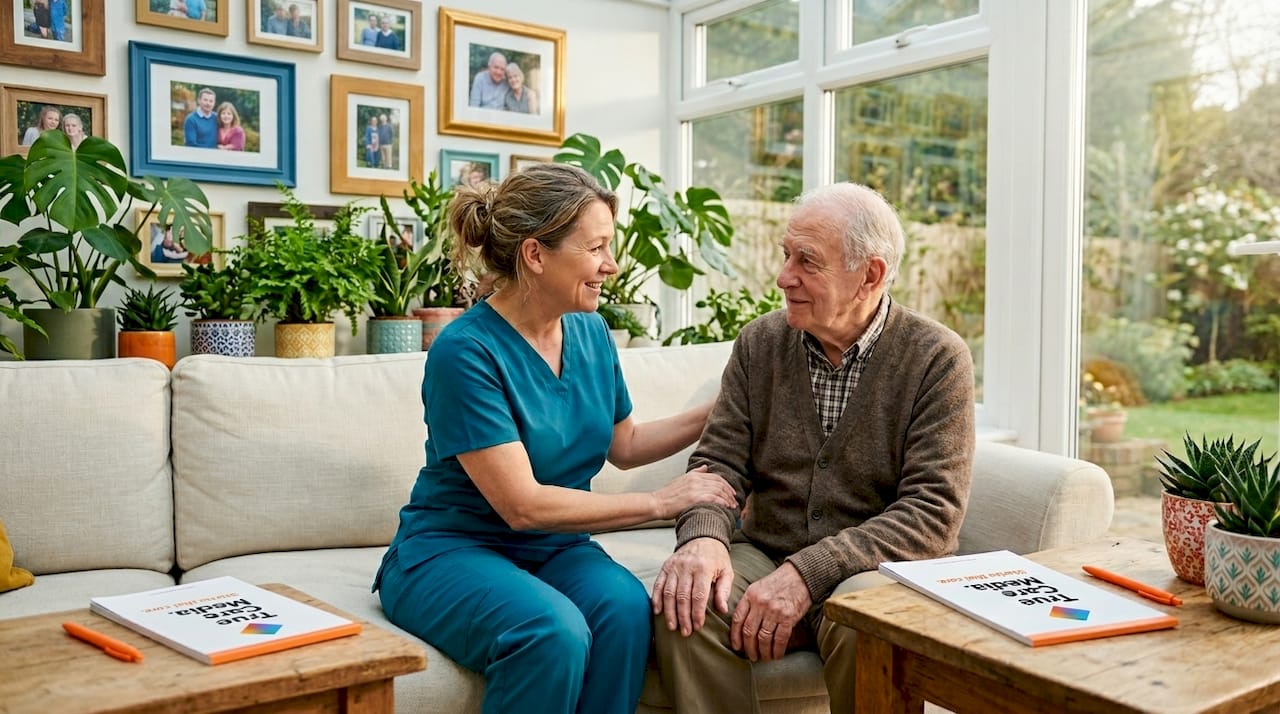
There is a reason video promotes transparency by showcasing genuine care environments and staff interactions, moving families from abstract worry to active partnership. When someone watches a facility tour narrated by a real care manager, or sees a physiotherapist explain their approach to mobility exercises, the provider stops being a faceless organisation and becomes a team of recognisable people.
This matters enormously in a sector where trust has been publicly tested. The aged care royal commission brought concerns about standards and accountability into every family’s awareness. Video storytelling for aged care providers is now less of a nice-to-have and more of a credibility signal.
Here is what storytelling video builds when done authentically:
- Familiarity with staff faces and roles before the first visit
- Confidence in the physical environment and how it functions day-to-day
- Reassurance about the tone of interactions between staff and residents
- Differentiation from competitors who still rely on generic stock imagery
The providers who use video to show genuine, unscripted moments are the ones building genuine, lasting trust. That is a meaningful competitive advantage.
Clinical and emotional benefits of video for older adults
The benefits of video for elderly care extend well beyond marketing. Clinical evidence now supports what many care workers have observed intuitively: video-based interaction and intervention genuinely improve health outcomes for older adults.
Video-based interventions in geriatric care reduce costs and improve physical function, pain management, and quality of life. These are not marginal gains. They reflect a growing body of research showing that video, used thoughtfully, becomes a tool for care itself.
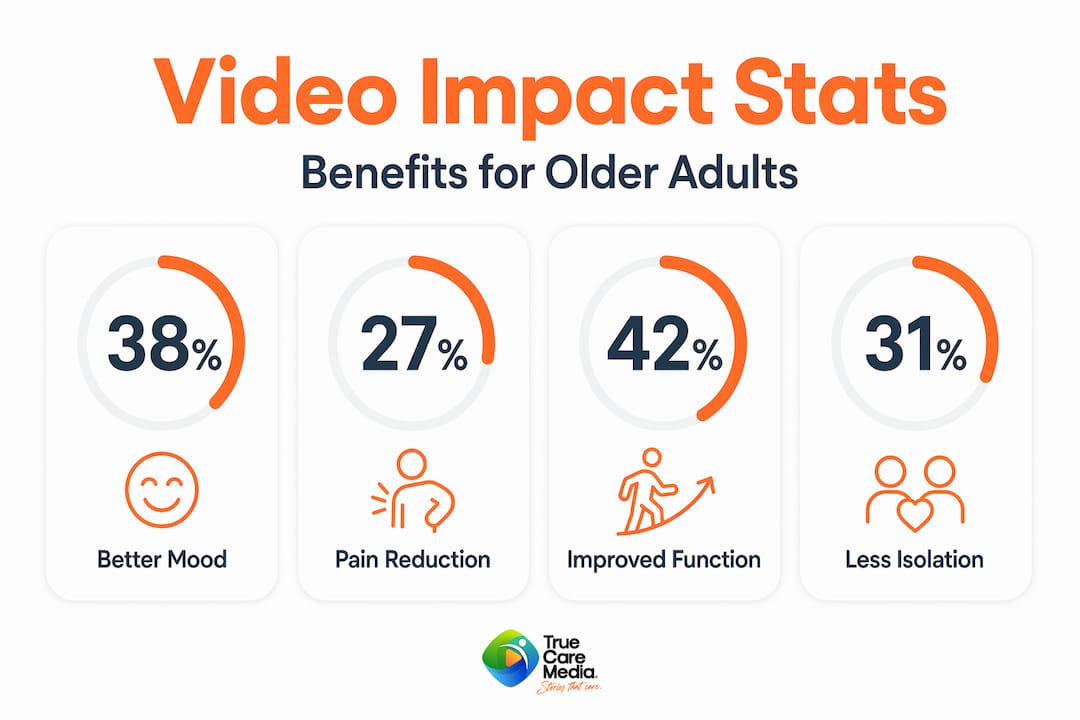
| Outcome area | Impact of video-based intervention |
|---|---|
| Physical function | Improved through guided exercise and telehealth sessions |
| Pain management | Reduced through remote monitoring and timely clinical response |
| Social isolation | Decreased through regular video contact with family and peers |
| Emotional wellbeing | Improved mood and reduced depression scores |
| Programme adherence | Higher when video digital models are used vs. in-person only |
Engaging seniors with video content also reduces the loneliness and disconnection that contribute to cognitive and physical decline. Families who cannot visit frequently can maintain meaningful visual contact. Staff can deliver guided activities, check-ins, and education remotely without any drop in the quality of connection.
Pro Tip: When showcasing your video approach to prospective families, include a brief segment where a staff member explains how video is used within the care programme itself, not just on the website. This reframes video as a care value, not just a marketing tool, which is a powerful and storytelling-driven distinction that few providers make.
Making video content accessible and functional on aged care websites
A video that cannot be understood by everyone who visits your site is not a finished video. It’s a liability. Accessibility is not optional in aged care web design because the people most likely to visit your site, or have it shown to them, are older adults and family members who may have hearing loss, reduced vision, or cognitive differences.
WCAG 2.2 Level AA standards are critical for aged care websites precisely because of these sensory and cognitive challenges among users. For video, this means:
- Accurate captions on all spoken content (not auto-generated captions left uncorrected)
- Full transcripts available below or alongside the video for those who prefer reading
- High-contrast player controls so pause, play, and volume functions are visible and operable
- No autoplay with audio, which can disorient or distress users with cognitive challenges
- Descriptive titles and summaries so users know what a video covers before watching
Beyond accessibility, video also reduces administrative load when embedded into inquiry and intake workflows. A three-minute explainer video about the admission process answers the ten questions your admin team fields daily. A staff introduction video means fewer phone calls from families who just want to know who will be caring for their parent.
Pro Tip: Create a short “meet the team” video series featuring one staff member per week. These don’t require professional production. A phone, good natural light, and a genuine conversation are enough. The impact on accessible storytelling and family confidence is disproportionate to the effort.
Practical strategies for implementing video on aged care websites
The biggest barrier most providers face is not budget or equipment. It’s not knowing where to start. The answer is simpler than most marketing advice suggests: pick four content themes and commit to them.
Here are the four that consistently perform best for video content on senior living sites:
- Virtual facility tours narrated by staff (not polished voiceovers), showing bedrooms, communal areas, outdoor spaces, and daily rhythms
- Staff introductions that humanise care workers and build pre-visit familiarity
- Resident stories with proper consent, where individuals share what they value about daily life in the community
- Activity and event highlights that show the social fabric of the community in action
Consistent, authentic video focused on daily life and relationships outperforms superlative marketing claims every time. Avoid scripted language that uses words like “best,” “top-rated,” or “world-class.” Families see through it immediately, and it actively erodes the trust you’re trying to build.
| Video type | Best platform | Ideal length |
|---|---|---|
| Facility tour | Website + YouTube | 3 to 5 minutes |
| Staff introduction | Website + Facebook | 60 to 90 seconds |
| Resident story | Website + YouTube | 2 to 4 minutes |
| Activity highlight | Facebook + Instagram | 30 to 60 seconds |
| Admission explainer | Website | 2 to 3 minutes |
Using video for aged care marketing also means choosing the right home for each piece of content. Short, warm clips belong on social platforms where emotional triggers drive sharing. Longer, more informative video content strategies belong on your website, where families in decision mode will sit with them.
Pro Tip: Publish one video per fortnight rather than eight in a week and then nothing for months. Families and their adult children follow aged care providers for months before making contact. Consistent presence builds trust over that entire window.
Rethinking video’s role in aged care: beyond marketing to meaningful connection
Here is the uncomfortable truth most aged care marketing advice misses: treating video purely as a lead-generation tool is what makes it feel hollow. Families can tell when a video exists to fill a quota versus when it exists because a provider genuinely believes in transparency.
The providers we see building the most durable reputations are not producing the most polished content. They are producing the most honest content. A slightly shaky phone video of a carer and a resident doing a puzzle together, posted with a simple caption, outperforms a $5,000 promotional reel with a generic voiceover. Every time.
This is where the importance of video in aged care goes deeper than the marketing funnel. When families watch real moments, they’re not evaluating production quality. They’re asking: does this place feel safe? Do the staff seem kind? Would my mum be happy here? Rethinking how you use video means answering those questions directly, before a family even picks up the phone.
The providers who will lead in aged care over the next decade will be those who treat video as an ongoing relationship, not a one-time marketing campaign. Regular content, unguarded moments, and genuine stories are not just good marketing. They reflect the kind of person-centred care that should be at the heart of everything you do.
How True Care Media helps aged care providers harness video
Understanding why aged care websites need video is one thing. Knowing how to produce content that actually earns trust is another.

At True Care Media, we work specifically with aged care providers to create video content that is authentic, accessible, and built for the decisions families are actually making. We’re not a generic production house. We understand the emotional complexity of the care decision, the regulatory environment, and the difference between content that converts and content that just looks nice. From strategy and filming through to distribution, we help you build a patient experience video library and a storytelling approach that works as hard as your care team does.
Frequently asked questions
Why is video important for aged care websites?
Video builds trust and emotional connection by showing real daily life and staff interactions, helping families feel confident before their first visit. It’s consistently one of the most effective ways to shape impressions in a high-stakes decision environment.
How does video reduce social isolation for seniors?
Regular video contact provides visual connection with family and friends, improving mood and reducing loneliness, particularly when in-person visits are limited. Research confirms that consistent video contact significantly reduces depression in older adults.
What accessibility features should videos on aged care websites have?
Videos must include accurate captions, full transcripts, and high-contrast player controls to support users with hearing, vision, or cognitive challenges. WCAG 2.2 Level AA sets the accessibility standard aged care websites are expected to meet.
Can video improve clinical outcomes in older adults?
Yes. Video-based interventions have demonstrated measurable improvements in physical function, pain management, and quality of life while also reducing costs in geriatric care settings.
How can aged care providers start using video effectively?
Begin with three or four core content themes such as virtual tours, staff introductions, and resident stories, then publish consistently rather than in bursts. Authenticity and regularity will always outperform occasional polished production.