
Most aged care providers assume that effective video marketing requires a professional film crew, a polished script, and a substantial budget. That assumption is costing them residents. The real role of video aged care marketing is far more practical and far more human than that. Video builds trust before a family ever walks through your door, shapes first impressions through authentic storytelling, and even improves the operational efficiency of your intake process. This guide breaks down exactly how to use video strategically, whether you are running a single facility or managing a network of aged care services across Australia.
Table of Contents
- Key takeaways
- How video builds trust in aged care
- Core video content themes that work
- Video beyond marketing: intake and assessments
- Best practices for aged care video production
- My take: where most providers miss the mark
- How Com can help your aged care video strategy
- FAQ
Key takeaways
| Point | Details |
|---|---|
| Authenticity over polish | Families trust natural, genuine video content far more than highly scripted or overly produced corporate videos. |
| Consistent output matters | Posting 3–5 times per week with video content builds ongoing trust and keeps your facility visible to families actively searching. |
| Four content themes work | Facility tours, staff introductions, resident stories, and community events form a repeatable and effective content system. |
| Video improves intake too | Video assessments that include remote family members shorten the sales cycle and speed up care plan documentation. |
| Measure what moves people | Watch time, website traffic, and enquiry conversion rates tell you which videos are actually driving decisions. |
How video builds trust in aged care
When a family begins researching aged care options, they are not just comparing facilities. They are trying to feel safe about one of the most emotionally charged decisions they will ever make. Text and photographs give information. Video gives feeling.
Video helps aged care communities show rather than tell, making it far easier for families to develop an emotional connection before they ever visit in person. A two-minute clip of your lifestyle coordinator running a morning activity communicates warmth, professionalism, and culture in a way that no brochure paragraph can replicate.
The types of video that consistently perform well in this space include:
- Resident testimonials: Hearing a resident speak about their day, their friendships, and what surprised them about moving in carries genuine credibility.
- Staff introductions: Short, natural clips of nurses, carers, and kitchen staff humanise the people families are entrusting with their loved ones.
- Day-in-the-life footage: Walking viewers through a typical morning or afternoon removes the fear of the unknown.
- Community event highlights: Footage from celebrations, outings, or creative programmes signals that residents have an active and dignified life.
Videos featuring frontline staff humanise the experience more effectively than any written content. Families making these decisions are under stress and time pressure. They need reassurance quickly, and video delivers it.
The consistency point is often overlooked. Industry guidance strongly recommends 3–5 posts per week to maintain visibility and build the kind of ongoing familiarity that drives enquiries. Think of your video presence as a relationship, not a campaign. Each post is another touchpoint that moves a family closer to calling you.
Pro Tip: Film your staff doing what they already do. A 90-second clip of your diversional therapist explaining the week’s programme, shot on a decent smartphone with a clip-on lapel microphone, will outperform a glossy promotional video in terms of trust-building.
Core video content themes that work
Building a repeatable content system is what separates aged care providers who get consistent enquiries from those who post sporadically and wonder why video is not working for them. Effective aged care video strategies are built around four content themes that, together, give prospective families a complete picture of your facility.
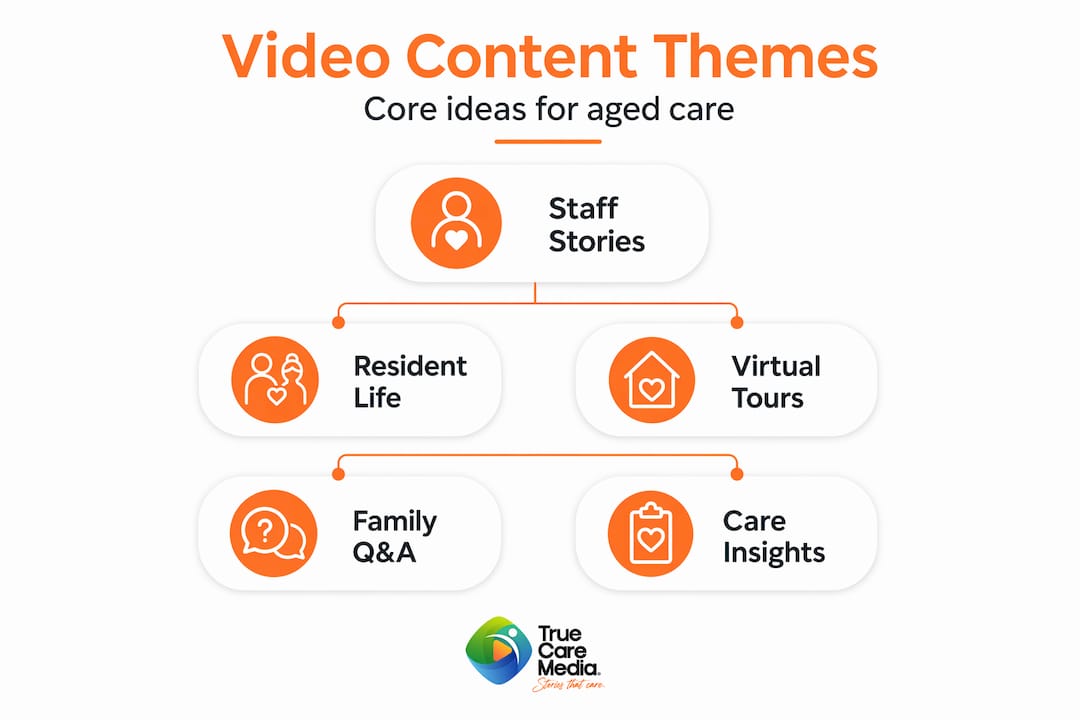
Using these themes systematically builds website traffic and social media engagement over time, rather than relying on a single viral moment that never comes.
Here are the four themes to rotate through:
- Facility tours: A narrated walkthrough of your rooms, dining area, gardens, and shared spaces. These remove the most common barrier to enquiry, which is not knowing what to expect.
- Staff introductions: Short clips where individual team members share their role, their background, and what they love about working at your facility.
- Resident stories: With consent and careful handling, these are your most powerful pieces of content. Let residents speak in their own words about their lives and their experience at your facility.
- Community events and programmes: Document your activities calendar, visiting entertainers, celebrations, and outings. These videos answer the question families are silently asking: “Will my mum actually be happy here?”
Beyond these four themes, mini-documentaries deserve serious consideration. Video campaigns focusing on personalities shift the conversation toward person-centred, dignified living and actively challenge the negative stereotypes that still surround aged care in Australia.
The comparison below shows why short documentary-style content outperforms scripted promotional video:
| Video type | Strengths | Weaknesses |
|---|---|---|
| Scripted promotional video | Polished, brand-controlled messaging | Feels corporate, low emotional trust |
| Documentary-style resident clip | High authenticity, emotional resonance | Requires relationship-building with residents |
| Live Q&A session | Real-time engagement, expert credibility | Needs promotion and preparation |
| Facility tour walkthrough | Informative, removes uncertainty | Lower emotional impact on its own |
Live Q&A sessions on Facebook or Instagram, where your care manager answers common questions from families, are particularly underused. They position your facility as knowledgeable, accessible, and confident, and they generate content that can be repurposed into shorter clips for other platforms.
Video beyond marketing: intake and assessments
Most aged care marketing discussions stop at content creation. That is a significant missed opportunity. Video assessments serve a dual role in that they support families during the consideration phase and simultaneously improve your operational workflow in ways that are measurable and immediate.
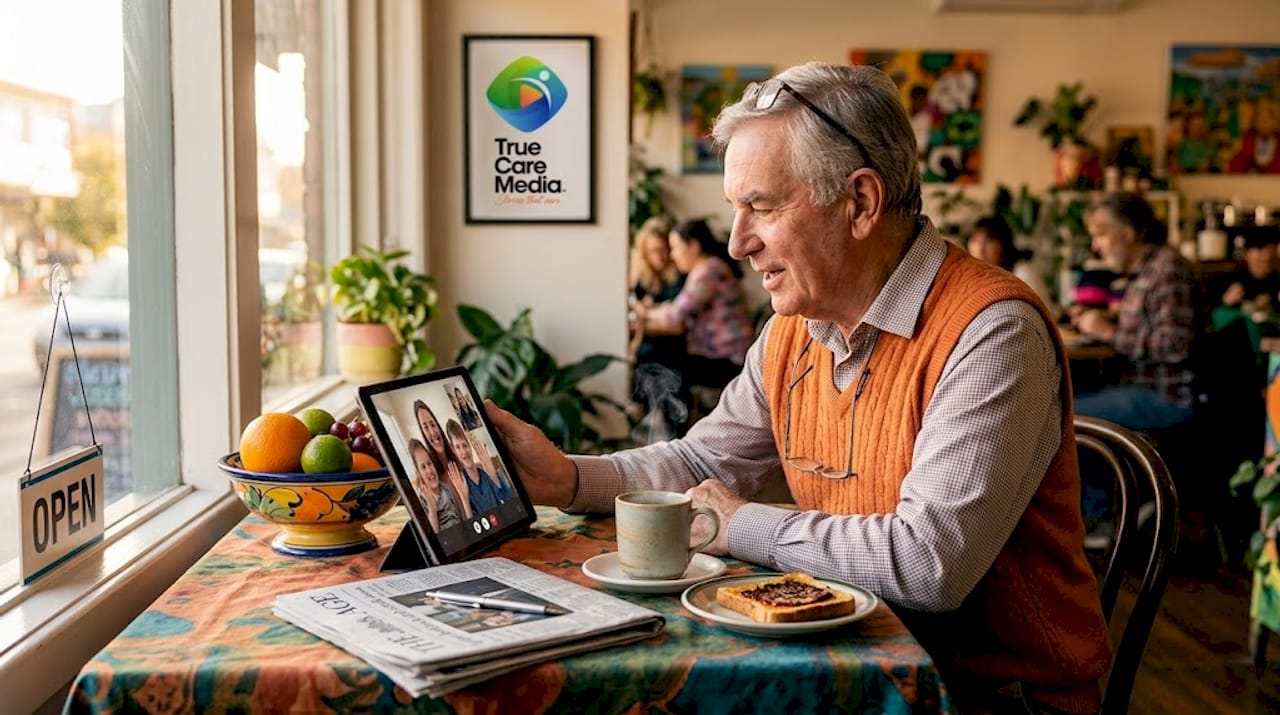
Consider what happens when a family member in Brisbane is trying to be part of the care assessment for a parent in regional Victoria. Traditionally, someone misses the conversation. With video assessment, that distance disappears.
| Operational benefit | Impact |
|---|---|
| Remote family inclusion | All decision-makers attend the assessment regardless of location |
| Reduced travel time | Staff and families save hours per assessment |
| Faster care plan drafting | Recorded sessions with consent accelerate documentation |
| Shorter sales cycle | Families who engage via video assessment convert more quickly |
Typical video assessments take 60–75 minutes and reduce overall workflow time significantly when integrated with digital intake platforms. When your intake system captures video content at the enquiry stage, you are also collecting information that directly improves the quality of your initial care plans.
Digital intake systems with AI transcription reduce the manual work involved in documenting assessments and improve the accuracy of care plans. For aged care administrators managing high volumes of enquiries, this is a genuine time-saving measure, not just a marketing advantage.
Pro Tip: When setting up video assessments, always confirm consent at the start of the recording. This protects your residents, supports your compliance obligations, and creates a reusable documentation asset that your clinical team can reference throughout the care journey.
Best practices for aged care video production
Here is where many providers go wrong: they spend months waiting until they can afford a production company, and they post nothing in the meantime. The evidence does not support that approach. Clear audio matters more than high-end visuals. Authenticity builds credibility in a way that corporate polish simply cannot replicate in the aged care context.
That said, there are non-negotiable production standards that separate a trustworthy video from one that actually damages your brand:
- Audio quality: Use a clip-on lapel microphone or a directional microphone for all spoken content. Poor audio is the single fastest way to lose viewer trust.
- Stable framing: A simple tripod costs under $50 and eliminates the shakiness that makes facilities look amateur.
- Natural lighting: Film near a window during daylight hours. You do not need a lighting kit for day-to-day content.
- Genuine interactions: Authentic clips where residents speak naturally consistently outperform scripted testimonials. Avoid asking people to read from a script.
For platform distribution, short videos suit TikTok, Instagram Reels, and Facebook, while longer-form content performs well on YouTube and your facility website. A four-minute resident story is too long for Instagram but works well embedded in a page about your residential care services.
Track your performance using watch time, website traffic referrals from video platforms, and the number of enquiries that mention having seen your videos. These three metrics tell you far more than view counts alone.
Pro Tip: Repurpose content across platforms by filming one 10-minute conversation and editing it into a 60-second Instagram clip, a 3-minute YouTube upload, and a quote card for Facebook. One filming session becomes a week of content.
Knowing how to market aged care services effectively through visual storytelling in 2026 means committing to consistency over perfection. Providers who post regularly, with genuine content, will always outperform those waiting for the perfect production moment.
My take: where most providers miss the mark
I have worked with enough aged care providers to recognise a pattern. The ones who wait for the “right” video before publishing anything are the ones still waiting two years later, while their competitors have built a recognisable, trusted presence simply by showing up consistently on camera.
The myth that every video needs to look like a television commercial has done genuine damage to aged care marketing in this country. In my experience, the video that performs best is almost always the one that felt slightly uncomfortable to post. The carer who got a little emotional talking about a resident they have supported for three years. The resident with dementia who lit up talking about her garden. Those are the moments that stop a family mid-scroll and make them think: “That is where I want my dad to be.”
What I have seen underutilised more than anything else is video’s role in the operational side of care. Providers who integrate digital family support tools into their video strategy are not just improving their marketing. They are fundamentally improving how families experience the care journey from first enquiry through to admission.
The providers who embrace authentic video now are building a competitive position that will be very difficult for late movers to close. This is not about technology. It is about trust. And trust, once built through consistent, honest storytelling, compounds over time.
— Mishal
How Com can help your aged care video strategy
If you are reading this and thinking about where to start, Com specialises in exactly this work. We help aged care providers build video content that actually converts, from virtual tour videos that remove the hesitation from initial enquiries through to resident storytelling series that challenge stereotypes and build genuine community reputation.
Our work is grounded in authenticity and built for the aged care context. We understand the consent requirements, the sensitivities around residents, and the specific trust signals that aged care families are looking for. Explore our guide to aged care video storytelling to see how providers across Australia are using consistent, genuine video content to increase occupancy and build lasting brand recognition. If you are ready to move beyond the brochure, we are ready to help you do it.
FAQ
What is the role of video in aged care marketing?
Video builds emotional trust with prospective residents and families earlier in the decision process than any other content type. It humanises your facility, showcases your culture, and answers the questions families are too anxious to ask directly.
How often should aged care providers post video content?
Industry guidance recommends 3–5 posts per week to build consistent visibility and maintain ongoing engagement with families actively researching options.
Do aged care videos need to be professionally produced?
No. Clear audio and authentic interactions matter far more than visual polish. A natural, genuine clip shot on a smartphone with good audio will outperform an overproduced promotional video in terms of trust and conversion.
How does video help with aged care intake processes?
Video assessments allow remote family members to participate in care planning, reduce travel time for staff and families, and speed up documentation when recorded with consent and integrated with digital intake platforms.
Which platforms work best for aged care video content?
Short clips perform well on Facebook, Instagram, and TikTok, while longer facility tours and resident stories are better suited to YouTube and your facility website where families spend more time researching.