
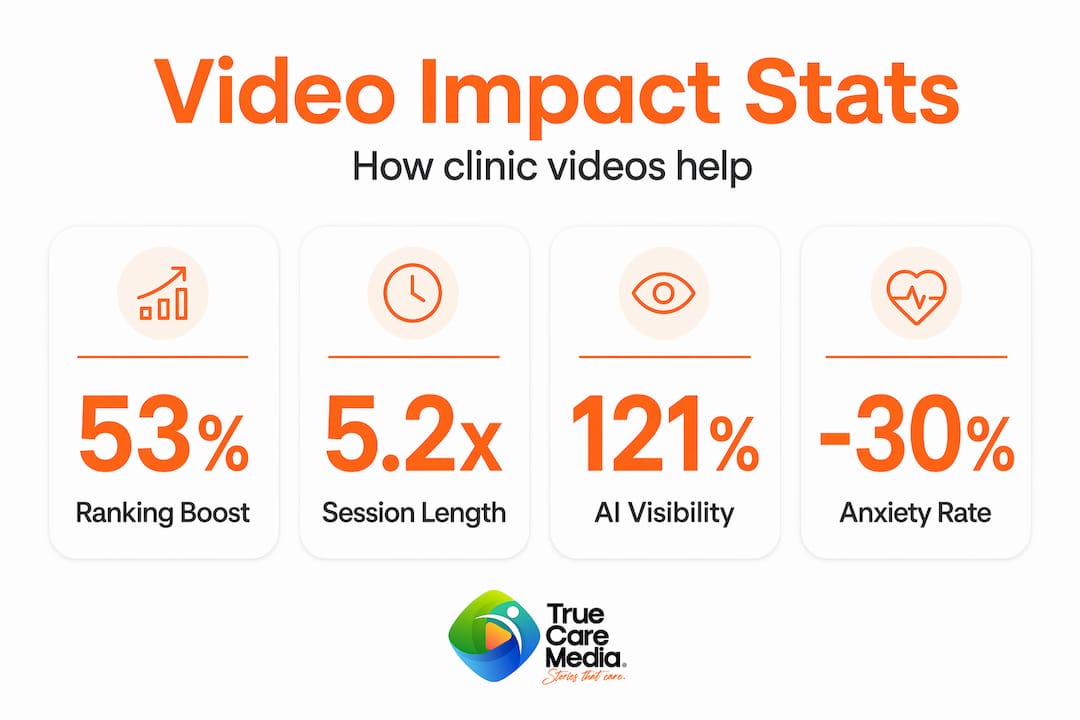
Most clinic websites are invisible. Not because they lack content, but because they lack the one asset that search engines and patients both respond to most: video. Understanding why clinic websites need video goes well beyond aesthetics. Embedded video content correlates with a 53% average ranking boost for the page, a 5.2x increase in engagement time, and a 403% lift in organic clicks within 90 days when properly optimised. For healthcare marketers and clinic administrators, these numbers represent real appointments, not abstract metrics.
Table of Contents
- Key takeaways
- Why clinic websites need video for SEO
- Building trust through authentic video storytelling
- Clinical benefits of educational video content
- Strategies for integrating video on clinic websites
- My honest view on video and clinic marketing
- How Com helps clinics build trust with video
- FAQ
Key takeaways
| Point | Details |
|---|---|
| Video lifts search rankings | Embedding optimised video on treatment pages can boost page rankings by over 50% in under three months. |
| Authenticity builds trust faster | Patients respond to calm, natural video far more than polished commercials or written credentials. |
| Educational videos improve outcomes | Pre-procedure videos measurably reduce complications and patient anxiety, making them a clinical asset. |
| SEO and AI visibility compound | YouTube videos are cited 121% more often in AI search results, amplifying your clinic’s digital reach. |
| Strategy beats volume | Embedding video near relevant content and using keyword-rich descriptions matters more than producing dozens of clips. |
Why clinic websites need video for SEO
Most healthcare marketers know that content drives search rankings. What many underestimate is how dramatically video shifts the equation. When you embed a well-optimised video on a treatment page, search engines read it as a signal of depth and authority. The result is striking: pages with embedded video rank 2 to 4 positions higher on search results pages, and the traffic and engagement gains compound quickly.
The mechanics behind this matter. Search engines measure dwell time: how long visitors stay on a page before returning to results. A written page about knee replacement surgery might hold a reader for 90 seconds. Add a two-minute explainer video from the treating surgeon and that same page routinely holds visitors for four minutes or more. Longer dwell time signals relevance and quality, which feeds directly into rankings.
Then there is the AI search layer, which is reshaping how patients find healthcare providers entirely. YouTube videos are cited 121% more in AI Overviews compared to text-only content. When a patient asks an AI assistant about post-operative care for cataract surgery, clinics with properly labelled, keyword-rich YouTube content are far more likely to be surfaced as a trusted source. That is visibility you cannot buy with a blog post.
Here is a practical breakdown of how video impacts key SEO metrics:
| SEO metric | Without video | With optimised video |
|---|---|---|
| Average page ranking | Baseline | +53% improvement |
| Engagement time | Standard | 5.2x longer |
| Organic click-through rate | Baseline | Up to 403% increase |
| AI Overview citations | Standard | 121% more frequent |
- Host your videos on YouTube first, then embed them on your treatment pages. YouTube is the world’s second-largest search engine and this dual-platform approach maximises discovery.
- Write keyword-rich titles and descriptions for every video. Think about what a patient types, not what a clinician says.
- Place the video near the most relevant section of the page, not buried at the bottom where dwell-time benefit is lost.
- Transcribe your videos and add captions. Search engines cannot watch video but they can read transcripts, which adds indexable keyword content to the page.
Pro Tip: Don’t create a generic “About Us” video and embed it on every page. Each page should have a video that is contextually relevant to that specific treatment or service. A video about your physiotherapy team belongs on the physiotherapy page, not on your contact form.
Building trust through authentic video storytelling
There is a concept in healthcare marketing worth taking seriously: trust engineering. It describes the deliberate process of building patient confidence before a first appointment. Written credentials, practice awards, and polished branding all contribute. But video does it faster and more effectively than any of them.
Patients make emotional decisions about healthcare providers. They want to know what a doctor looks, sounds, and behaves like before they walk through the door. Video satisfies that instinct in a way that text simply cannot replicate. A brief introduction from the treating practitioner, filmed calmly in a consulting room, communicates warmth, competence, and approachability in under two minutes.
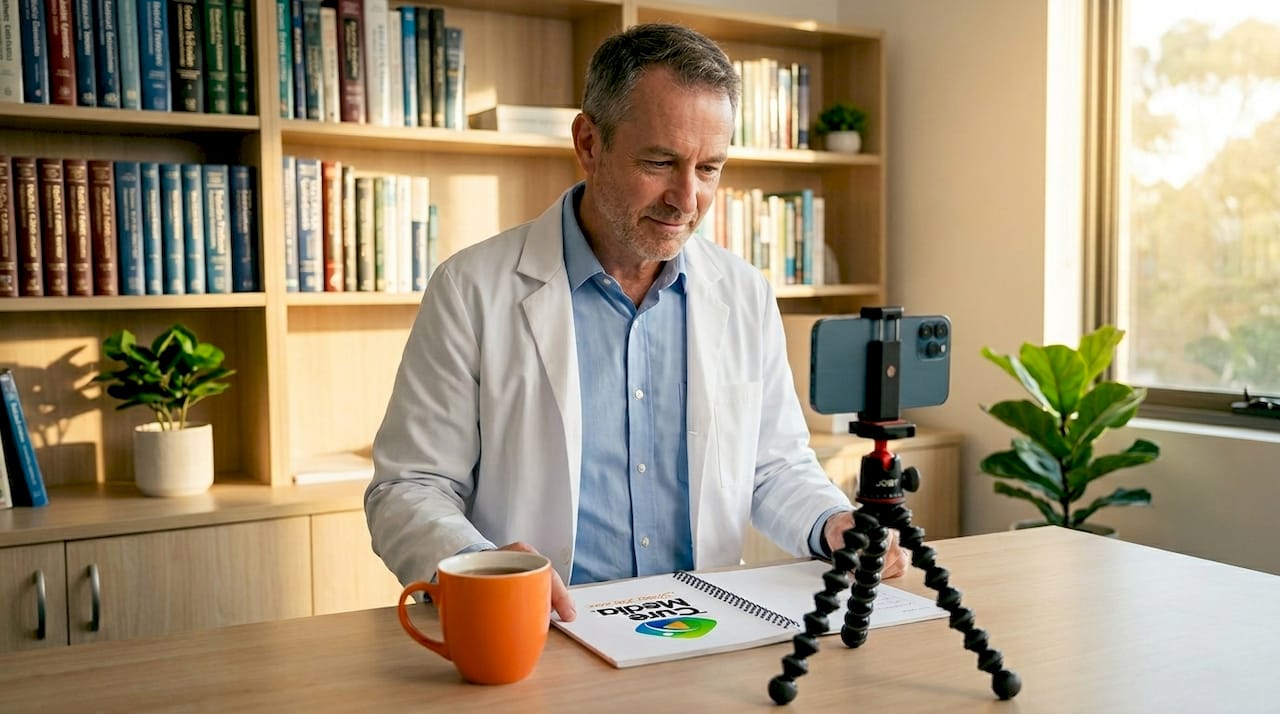
Here is where most clinics make their biggest mistake. They assume that higher production value means higher trust. The research points firmly in the other direction. Authentic, smartphone-style videos consistently outperform slick, over-produced commercials when it comes to patient trust. Over-production can actually trigger scepticism, making a clinic feel more like a corporate entity than a place of care.
What does work:
- A short video of the clinic coordinator explaining what to expect on the first visit
- A practitioner walking through a procedure in plain language, without a script
- A behind-the-scenes look at your sterilisation process or treatment room setup
- A patient journey video showing arrival through to aftercare (with appropriate consent in place)
“Fear arises from the unknown. Behind-the-scenes and staff introduction videos increase patient comfort by creating a sense of familiarity long before they arrive.” Peterson Health
The evidence on this is clear and consistent. Whether you are looking at how patient experience videos build connection in hospitals or how allied health clinics introduce their teams online, the pattern holds: patients commit to providers they feel they already know.
Pro Tip: Film a two-minute “what to expect on your first visit” video for your homepage. Use a real team member, natural lighting, and no teleprompter. This single video can reduce no-show rates and first-visit cancellations significantly.
Clinical benefits of educational video content
The case for video on clinic websites is not purely commercial. There is a growing body of clinical evidence showing that educational videos improve patient outcomes in measurable ways.
Consider the evidence on pre-procedure preparation. In one study, patients who watched an educational video before a specific ophthalmic procedure saw the incidence of a post-procedure complication, subconjunctival haemorrhage, drop from 69.2% to 41.2%. That is a 20-percentage-point reduction in a complication, attributed directly to video education. For any clinical director reviewing patient outcomes data, that figure carries serious weight.
- Fewer complications from better-prepared patients reduce the administrative and clinical burden on your team.
- Better-informed patients ask more relevant questions, which shortens consultation time.
- Patients who understand their treatment are significantly more likely to complete follow-up appointments.
- Reduced anxiety before procedures correlates with better patient cooperation during treatment.
A meta-analysis of social media and online video interventions found that video moderately reduces peri-procedural anxiety, with a standard mean difference of 0.57. This is a clinically relevant reduction. It is worth noting, however, that video does not eliminate anticipatory anxiety entirely. Excessive anticipation remains a significant concern for many patients regardless of preparation. Video is a powerful tool in a broader patient communication strategy, not a standalone solution.
The downstream commercial implications are equally significant. When patients understand their treatment, they are more likely to accept recommended care plans, return for follow-up, and refer others. Video simplifies complex clinical language into something a patient can replay, pause, and share with a family member before making a decision. That is a capability no written brochure can match.
You can also explore how therapeutic clinics like Heske Therapy use video libraries to prepare patients before their first session, which translates directly to higher treatment acceptance rates.
Strategies for integrating video on clinic websites
Knowing you need video is one thing. Knowing where to put it and how to structure it for maximum impact is another. This is where many healthcare marketing efforts fall short: producing good video content and then placing it poorly.
Start with placement. Video embedded directly within relevant treatment content outperforms video placed on a generic “Media” or “About Us” page. A video explaining your hip replacement rehabilitation programme belongs inside the hip replacement page, positioned just before or after the key procedure description. This positioning keeps the viewer on the page longer and reinforces the text content they have just read.
- Prioritise your highest-traffic treatment pages first. Use your analytics to identify the pages where patients spend the most time or where bounce rates are highest.
- Repurpose short-form clips into longer educational guides. A 60-second Instagram reel about post-surgery nutrition becomes a three-minute embedded explainer on your bariatric surgery page with a written transcript alongside it.
- Build a consistent publishing rhythm. A clinic that publishes two videos per month, every month, builds compounding SEO authority over a year. A clinic that publishes 20 videos in January and nothing after achieves far less.
- Match production quality to content type. Practitioner introductions and patient journey videos benefit from a slightly more polished look. Quick FAQs and behind-the-scenes content can be filmed on a good smartphone.
- Build your video content across both your website and your YouTube channel simultaneously to capture two separate audience streams: direct site visitors and YouTube search users.
Pro Tip: Create a video content calendar aligned with your clinic’s seasonal demand. If you see a spike in sports injury consultations every February, publish a video series on sports rehabilitation in January. You’ll capture both search intent and patient readiness at the same time.
My honest view on video and clinic marketing
I’ve watched a lot of healthcare marketing efforts stall at the same point. The clinic invests in a beautiful website, writes good service descriptions, and then wonders why it is not converting visitors into patients. In almost every case I’ve seen, the missing piece is video.
What I’ve come to understand is that video in healthcare is not really a marketing tool. It is a trust transfer mechanism. Every time a potential patient watches a practitioner explain their approach calmly and clearly, the psychological distance between “stranger on a website” and “my doctor” shrinks significantly. Text cannot do that. A headshot cannot do that. Only video creates the sense of having already met someone.
The clinics I’ve seen grow most consistently are not the ones with the biggest production budgets. They are the ones that publish video regularly, keep it authentic, and treat it as part of their patient communication infrastructure rather than a one-off marketing campaign.
The biggest pitfall? Waiting for perfect. I’ve worked with clinics that spent six months planning a video series and never launched it because the lighting wasn’t right or the branding wasn’t finalised. Meanwhile, their competitors filmed a five-video practitioner introduction series on a Friday afternoon and were ranking within 60 days.
If you are a healthcare marketer or clinic administrator reading this, the most useful thing you can do today is film one video and publish it. Refine the strategy from there.
— Mishal
How Com helps clinics build trust with video
At Com, we work specifically with allied health and healthcare brands that want to turn their websites into genuine patient acquisition tools, not just digital brochures.

We understand that the importance of video for clinics goes beyond ticking a marketing box. It is about building the kind of trust that converts a website visitor into a long-term patient. Our team produces video content tailored to healthcare environments, from practitioner introductions and patient journey stories to procedural explainers and service walkthroughs. We know how to capture authentic, credible footage that patients respond to without making your team feel like they are on a film set.
If you are ready to see how storytelling video can change how patients perceive and choose your clinic, explore what we do at truecaremedia.com.au. We also have a detailed guide on hospital patient experience videos that outlines the exact video types that build the deepest patient trust. The investment is smaller than most clinics expect, and the compounding returns in trust and search visibility are significant.
FAQ
Does video actually improve clinic search rankings?
Yes. Embedding optimised video on treatment pages correlates with a 53% ranking boost on average, along with a 5.2x increase in engagement time and up to 403% more organic clicks within 90 days.
What type of video builds the most patient trust?
Calm, authentic videos featuring real practitioners speaking naturally build more trust than highly produced advertisements. Patients respond to genuine communication over polished marketing, so a simple practitioner introduction or behind-the-scenes clinic tour performs very well.
Can educational videos improve clinical outcomes?
Yes. Research shows that patients who watched a pre-procedure educational video had complication rates drop by approximately 20%, and video interventions moderately reduce peri-procedural anxiety with a standard mean difference of 0.57.
How does video help with AI search visibility?
YouTube videos are cited 121% more often in AI Overviews compared to text content. Clinics with a YouTube presence and embedded website videos are significantly more likely to be surfaced in AI-generated search responses.
Where should clinics place video on their websites?
Place video directly within the relevant treatment or service page, near the procedure description. Avoid generic media galleries. Contextual placement increases dwell time and reinforces the surrounding content, which drives both SEO and patient conversion.