
Most clinic owners treat before-and-after patient stories as a promotional tool, something to post on Instagram or add to a brochure. That framing undersells what they actually do. The role of before-after storytelling clinics goes much deeper than promotion. When structured properly, these stories function as trust infrastructure. They reduce the anxiety a new patient feels before committing to treatment, answer questions no brochure can, and show a credible, relatable path from problem to resolution. This article covers how to build that system, why it works, and what most clinics get wrong.
Table of Contents
- Key takeaways
- Role of before-after storytelling clinics in healthcare
- Consent frameworks and ethical practice
- Techniques and tools for authentic storytelling
- Impact on brand trust and patient engagement
- Common pitfalls and how to avoid them
- My perspective on storytelling as trust infrastructure
- Build your storytelling system with Com
- FAQ
Key takeaways
| Point | Details |
|---|---|
| Stories outperform testimonials | Before-after narratives that include the patient journey build more trust than standalone praise. |
| Consent must be structural | Ad hoc story collection creates compliance risk; ethical clinics build repeatable consent workflows. |
| Facilitators shape story quality | Participant-centred session design produces richer, more authentic narratives than self-submitted content. |
| Consistency drives credibility | Clinics that collect stories regularly see measurable gains in patient confidence and referral rates. |
| Integration beats campaigns | Storytelling works best when embedded in operations, not treated as a one-off marketing effort. |
Role of before-after storytelling clinics in healthcare
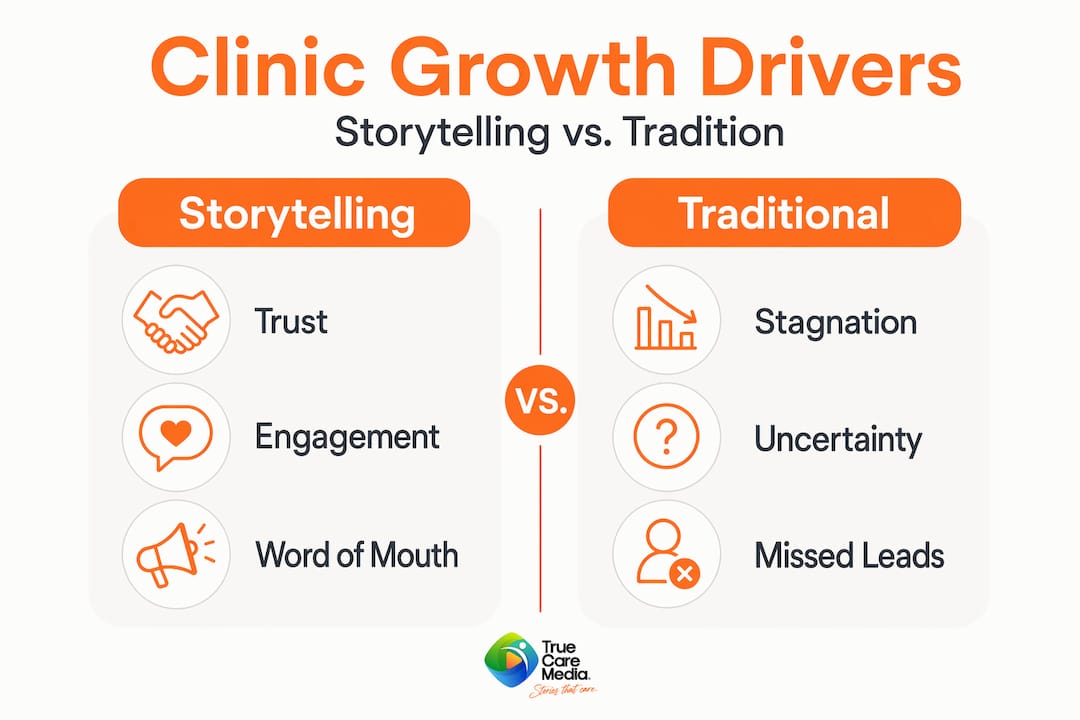
Most people confuse a before-after story with a testimonial. A testimonial is a verdict. A before-after story is a map. One tells a potential patient “this clinic is good.” The other shows them “here is where someone like you started, here is what the process looked like, and here is where they ended up.” That distinction matters enormously in healthcare, where uncertainty is the main barrier to booking.
Effective stories include the patient’s starting situation, the steps of care they experienced, and the result they achieved. Each of those three elements serves a different psychological function. The starting situation creates identification. The steps of care build credibility. The result provides hope. Remove any one of them and the story loses its power.
“Before-after narratives turn abstract care promises into understandable patient journeys, helping potential patients make confident choices.”
This is why the role of before-after storytelling clinics extends beyond the marketing department. These stories reduce the perceived risk of seeking treatment. For allied health services, NDIS providers, and specialist clinics, that risk reduction directly affects whether someone picks up the phone. Patient stories function as trust infrastructure, the kind of foundational content that keeps working long after a paid ad campaign ends.
The difference between clinics that grow steadily through word of mouth and those that stagnate often comes down to whether they have a working story system or just scattered content. Before-after visual storytelling, whether in video or photography, captures that journey in a format that text alone rarely achieves. You can read a description of someone’s recovery. Watching them describe it, with their own voice and expression, is a categorically different experience.
Consent frameworks and ethical practice
Building a storytelling clinic that lasts requires treating consent as a system, not a checkbox. This is where most clinics fall short. They capture a great patient story, get informal permission to use it, and post it. Then six months later, the patient updates their privacy preferences or the clinic changes its marketing channels, and no one knows what was originally agreed.
Responsible storytelling clinics build operational systems incorporating patient consent, privacy safeguards, and workflow integration from the start. That means documented authorisations that specify exactly where the story will appear, for how long, and in what format.
Here is a practical process for building an ethical consent framework:
- Separate the clinical relationship from the story request. Never ask a patient for a testimonial or story during a clinical consultation. The power imbalance in that moment is real, and patients may feel obligated to agree. Assign a non-treating staff member to make the request after care is complete.
- Use written authorisations with specific detail. Marketing authorisations should specify the channels, duration, and type of content. Vague consent creates legal exposure and erodes patient trust when stories appear in unexpected contexts.
- Build a digital tracking system. Record consent status, expiry dates, approved platforms, and any restrictions in your practice management or CRM system. This is not bureaucracy for its own sake. It is what allows you to use stories confidently and update them when permissions change.
- Train all relevant staff. Reception teams, care coordinators, and clinical staff all interact with patients at different points. Everyone needs to understand the policy and know their specific role in the storytelling workflow.
Pro Tip: Set a standard waiting period of at least two weeks after care completion before making a story request. This gives patients time to process their experience and reduces the chance of a rushed or insincere response.
Compliance considerations are not unique to any one country. Whether your clinic operates under Australian Privacy Principles or broader international frameworks, the principle is the same: consent workflows tied to marketing must be documented, specific, and reviewable.
Techniques and tools for authentic storytelling
Getting patients to share their story in a way that is genuine, useful, and emotionally resonant does not happen by accident. It requires structured tools and skilled facilitation.
The Patient Narrative Interview Guide is a research-backed tool developed through expert consensus that integrates illness narratives with broader life context. Rather than asking “how did the treatment go?”, it guides facilitators through questions that surface the patient’s life before the condition, how it affected their daily experience, what the care process felt like, and how their life has changed since. This approach produces stories that resonate because they connect healthcare to real human life, not just clinical outcomes.
Key elements of effective storytelling clinic sessions include:
- Participant-centred pacing. Facilitators should be adaptable to participant energy and availability. A rigid 45-minute session structure will not work for every patient. Flexibility is a feature, not a compromise.
- Balancing medical and personal voice. The story should not read like a case study. Clinical language tends to distance readers rather than draw them in. The patient’s own words, describing how they felt, what they feared, and what changed for them, carry more weight than any clinical summary.
- Video and photography as core formats. For patient experience videos, the visual layer adds authenticity that written testimonials cannot replicate. Facial expression, body language, and the setting all communicate credibility without saying a single word.
- Short, focused sessions. Research from the Mayo Clinic found that brief facilitated storytelling sessions in clinical environments are feasible, meaningful to participants, and produce positive emotional outcomes. You do not need a full documentary production. A well-run 20-minute conversation, recorded thoughtfully, can generate usable content for months.
Pro Tip: Avoid asking patients to “describe their experience with the clinic.” Instead, open with “Tell me a little about what life was like before you came to us.” That single reframe shifts the conversation from a review to a story.
Impact on brand trust and patient engagement
The benefits of before-after narratives are not theoretical. Clinics that maintain consistent story-driven workflows see measurable improvements in brand trust and patient engagement, often within weeks of implementation.
| Approach | Outcome for clinics |
|---|---|
| Ad hoc testimonials only | Inconsistent tone, low conversion, minimal SEO value |
| Structured before-after stories | Higher patient confidence, improved referral rates, stronger online presence |
| Video-led transformation narratives | Significant increase in engagement, time on site, and booked appointments |
“Storytelling clinics thrive when storytelling is integrated as part of operations, not just a marketing campaign.”
The impact on clinic patient transformation stories goes beyond the individual story. When you have ten, twenty, or fifty authentic stories that cover different conditions, demographics, and care journeys, you build a library of social proof that covers the full range of questions a potential patient might have. Someone researching physiotherapy for a sports injury will connect with a different story than someone managing a chronic condition. Breadth matters.
Staff engagement is another underrated benefit. When clinicians see their patients’ stories treated with care and published thoughtfully, it reinforces a culture of patient-centred care. It also gives the clinical team a tangible example of the difference they are making. That has real effects on morale and retention, which indirectly affects how storytelling improves clinics at an organisational level.

Common pitfalls and how to avoid them
Even well-intentioned clinics run into predictable problems with storytelling programmes. Knowing them in advance is half the solution.
- Posting transformation images without journey context. A before-and-after photo without any narrative is not a story. It is a claim. Without the patient’s voice and the process in between, it reads as promotional rather than credible. Always pair visual content with at least a brief written or spoken narrative.
- Ignoring the theory-practice gap. Narrative competence training is limited in fast-paced clinical environments because the workflow support is not there. The same is true for storytelling clinics. Knowing you should collect stories and actually doing it consistently are very different things. Build collection into your post-care workflow rather than relying on staff to remember.
- Treating story collection as a campaign rather than a process. A burst of activity for three months followed by silence does not build the kind of trust that compounds over time. Operational consistency is what creates credibility. Aim for a steady rhythm of one to two new stories per month per service type.
- Collecting stories without a distribution plan. Patient stories sitting in a shared drive serve no one. Before you collect the first story, know where it will live: your website, your Google Business profile, social channels, email newsletters, or referral documents. Distribution planning shapes what you capture.
Clinics using participant-centred storytelling approaches consistently produce more usable content because the patient feels in control of the process. That sense of agency also reduces the likelihood of consent withdrawal down the track.
My perspective on storytelling as trust infrastructure
I’ve worked with a lot of healthcare and allied health providers over the years, and the pattern I keep seeing is this: clinics invest in storytelling once, usually because they are launching a new service or responding to a competitor, and then they treat it as done. They get two or three great videos, publish them, and move on.
What I’ve found is that the clinics doing this well think about it completely differently. For them, story collection is not a project. It is a standing operational commitment, like patient follow-up or staff training. They have a clear person responsible, a clear process for asking, and a clear standard for what gets published. The stories build on each other over time.
The other thing I’ve noticed is that the best stories rarely come from the patients who were the most enthusiastic about their care in the room. They come from patients who had doubts, who almost did not come in, or who had tried other options first. That struggle in the before section is what makes the after credible. Smooth, frictionless stories of perfect outcomes do not build trust. Honest ones do.
If you are thinking about how storytelling improves clinics in a real, measurable way, start with one story done properly. Get consent in writing, use a structured interview, invest in quality capture, and publish it with the patient’s full journey intact. Then build a workflow around repeating that.
— Mishal
Build your storytelling system with Com
At Com, we work with NDIS providers and allied health brands to turn real patient experiences into content that builds genuine trust. If you have been collecting stories ad hoc and wondering why they are not connecting, it is usually a production or structure issue, not a story issue.
Our participant-centred storytelling service is built specifically for healthcare providers who need ethical, consistent, and compelling story content. We handle everything from consent workflows to filming and final delivery, so your clinical team can focus on care while your story library grows. If video is where you want to start, our guide on hospital patient experience videos covers the formats that work best for different clinic types. Reach out to explore what a working storytelling system looks like for your practice.
FAQ
What is the role of before-after storytelling clinics?
Before-after storytelling clinics collect, structure, and publish real patient transformation narratives to reduce uncertainty and build trust with prospective patients. They function as trust infrastructure rather than simple promotional content.
How do before-after stories differ from standard testimonials?
Testimonials offer a verdict on care quality, while before-after stories show the full patient journey including the starting situation, the care process, and the outcome. The journey context is what makes them credible and persuasive.
What consent is needed for patient transformation stories?
Clinics require specific written authorisations that detail the channels, format, and duration of story use. Marketing consent workflows must be separate from clinical care interactions to avoid any perception of coercion.
How often should clinics collect patient stories?
A steady rhythm of one to two new stories per month per service type is practical for most clinics. Consistent story collection builds a library that covers diverse patient profiles and conditions over time.
What tools help clinics run effective storytelling sessions?
Structured interview guides such as the Patient Narrative Interview Guide help facilitators elicit authentic, context-rich stories without defaulting to promotional language or clinical summaries.