
For hospital staff training, choose role based video kits covering orientation, infection control, safe patient handling, bloodborne pathogens, fire safety and workplace violence, delivered as LMS ready MP4 or streaming plus a quiz and certificate. That combination covers the topics surveyors ask about first and gives you a paper trail when they do.
Start by auditing what you already have against that list. Most hospitals discover gaps in workplace violence de-escalation and refresher content for bloodborne pathogens, not in orientation, which tends to get bought early and then left untouched for years.
The immediate priorities for any hospital safety training videos program look like this:
- New-hire safety orientation covering infection prevention, fire safety and facility expectations
- Infection control, including standard precautions and outbreak-specific protocols
- Safe patient handling and manual handling technique
- Bloodborne pathogens and needlestick prevention
- Fire safety, evacuation routes and emergency codes
- PPE selection and hazardous substance handling
- Workplace violence recognition and de-escalation
- First aid, CPR and AED use
Pro Tip: Don’t buy a full library before you pilot one module. Run a single topic, such as bloodborne pathogens, through your actual sign-off and LMS workflow first. It exposes format problems and approval bottlenecks before you’ve committed budget to twenty modules.
Once the audit is done, decide whether off-the-shelf kits cover enough ground or whether specific units, an oncology ward, a mental health unit, need bespoke scenarios. Then schedule a pilot before you commit to a full rollout.
Key Takeaways
Effective hospital safety training video programs combine role-based content, LMS-ready delivery, and hands-on competency checks rather than relying on video viewing alone.
| Point | Details |
|---|---|
| Cover the eight core topics | Orientation, infection control, patient handling, bloodborne pathogens, fire safety, PPE, workplace violence and first aid all need dedicated modules. |
| Choose LMS-ready delivery first | Streaming or MP4 hosted on your LMS or SharePoint suits most facilities, with offline media as a low-bandwidth fallback. |
| Demand the full paperwork set | A presenter’s guide, quiz, attendance log, certificate and competency checklist make a module audit-ready. |
| Pilot before you commit | A single pilot module with staged acceptance testing catches script and format issues before you buy a full library. |
| Match the supplier to the setting | Truecare Media builds hospital-specific playlists and LMS-ready packages for clinical educators rather than adapting generic corporate safety content. |
Table of Contents
- What topics should hospital safety training videos cover?
- Which delivery format actually works in a hospital?
- What compliance paperwork should a training video include?
- How do you choose or commission hospital training videos?
- How often should hospital staff repeat safety training?
- How should you build role-based training playlists?
- What do hospital training video licences and pricing usually look like?
- Truecare Media’s hospital training video capability
- Get hospital-ready training videos without the guesswork
- Sources
What topics should hospital safety training videos cover?
A hospital safety curriculum isn’t one thing, it’s roughly eight distinct programs stitched together, each with its own audience and its own compliance trigger. Treating them as a single “safety video” purchase is how facilities end up with orientation content that never gets refreshed and workplace violence training that nobody has watched in three years.
Safety orientation sits at the front of every new hire’s first week. It should cover facility layout, infection basics, fire response and where to report hazards. The Safe Day One e-learning course is a useful benchmark here, bundling pre-construction risk awareness, infection prevention, confined space and bloodborne pathogen content into a single onboarding pathway aimed at raising baseline knowledge fast.
Infection control needs both a general module (hand hygiene, standard precautions, transmission-based precautions) and a pandemic-specific refresher that gets updated whenever outbreak guidance changes. This is the topic most likely to go stale, because the science moves faster than most video libraries get revised.
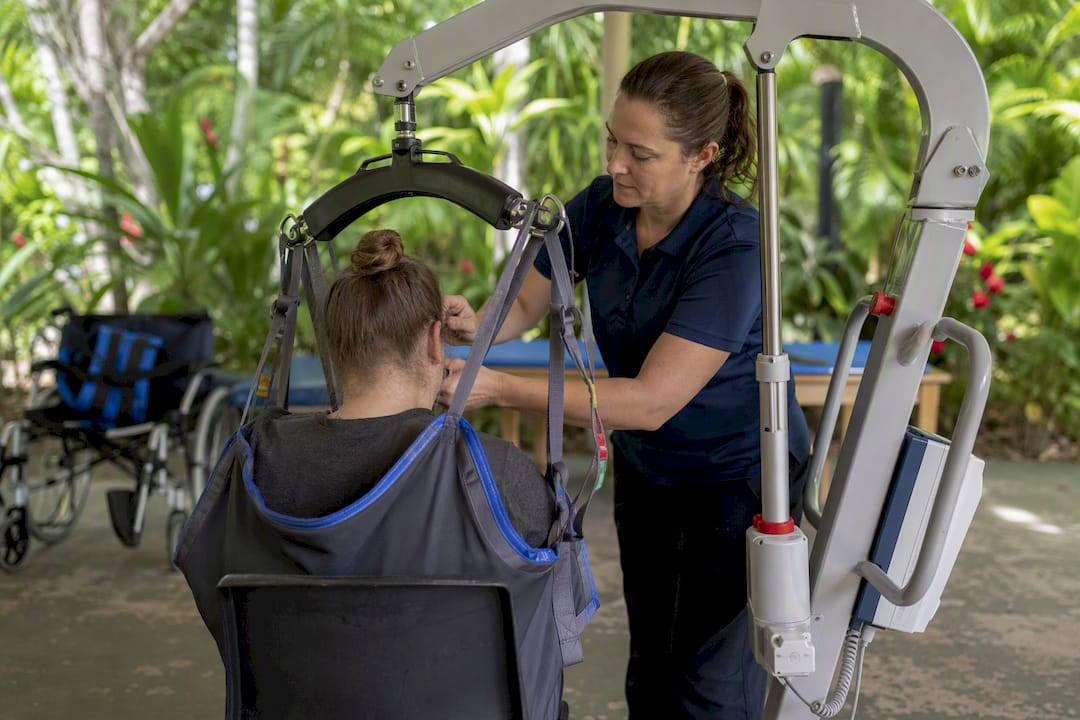
Safe patient handling and manual handling covers lifting technique, use of slide sheets and hoists, and body mechanics for repositioning patients. OSHA’s hospital guidance is explicit that video alone won’t cut it here. Equipment demonstrations and ongoing competency checks need to sit alongside the training video, not replace it.
Bloodborne pathogens and needlestick prevention is a legal requirement in most jurisdictions and needs annual refreshing, not a one-off viewing at orientation.
Fire safety and evacuation should walk staff through your facility’s actual codes, not generic hotel-fire content. Horizontal evacuation, smoke compartments and code response differ hospital to hospital.
PPE and hazardous substance handling covers correct donning and doffing sequences, plus chemical safety data for cleaning agents and cytotoxic drugs where relevant.
Workplace violence and de-escalation is increasingly treated as mandatory rather than optional, particularly for emergency department and mental health staff who face the highest incident rates.
First aid, CPR and AED training rounds out the list, and this is one of the clearest cases where video sets up the theory, but a hands-on skills check is what actually counts for certification.
Who needs what:
- New hires get the full orientation set within their first week
- Clinical staff repeat patient handling, bloodborne pathogens and CPR annually
- Environmental services and support staff need PPE, hazmat and fire modules but can usually skip clinical-specific content
- Emergency department and mental health staff need deeper workplace violence training than general wards
- Anyone handling patients directly needs a practical demonstration alongside the video, not instead of it
Which delivery format actually works in a hospital?
Streaming, downloadable MP4, or physical media, the format decision matters less for content quality and more for how well it fits your existing IT environment and your lowest-bandwidth ward.
Most hospitals now push video through a learning management system or SharePoint, tracking completion centrally rather than relying on paper sign-in sheets. Open LMS’s healthcare guidance notes this shift plainly: organisations increasingly favour LMS-hosted streaming or MP4 delivery over physical media, while keeping offline formats as a fallback for areas with patchy connectivity.
Here’s how the three main formats stack up in practice:
- Streaming subscriptions work well for large facilities with reliable Wi-Fi and a need to update content regularly without redistributing files.
- MP4 downloads hosted on your own LMS or SharePoint give you control and offline access, useful for basements, older wings, or facilities with unreliable internet.
- Physical media (DVD or USB) still has a place for classroom sessions in low-connectivity units or for facilities without a mature LMS, though it’s increasingly a fallback rather than a first choice.
For compliance records, ask suppliers whether their content packages as SCORM or xAPI, the two standards most LMS platforms use to track completion, quiz scores and time spent. Single sign-on integration saves your IT team from managing a second login system, and decent reporting means you can pull a compliance report the week before an audit instead of the night before.
Bedside and low-bandwidth options matter more than most procurement checklists admit. If your maternity ward has no reliable signal, an offline MP4 on a ward laptop beats a buffering stream every time.
Pro Tip: Ask any vendor for a sample SCORM package before you buy. Load it into your actual LMS and check the completion data lands correctly. Some “SCORM compliant” content only half-works with older LMS versions, and you won’t find that out until audit week if you skip this step.
What compliance paperwork should a training video include?
A video with no supporting paperwork is close to useless for compliance purposes. Surveyors don’t just want to know staff watched something, they want evidence of what was covered, who completed it, and how competency was checked.
Five deliverables separate a genuinely useful training kit from a video file sitting in a folder:
- A presenter’s guide that gives context, key talking points and discussion prompts for whoever runs the session, so quality doesn’t depend on one experienced educator being in the room.
- A learner quiz with an answer key, ideally 8 to 12 questions, enough to confirm comprehension without turning a 15-minute video into a 45-minute ordeal.
- An attendance log or LMS completion export, dated and named, ready to hand to an auditor without reformatting.
- A printable certificate, useful for staff files and for facilities that still run partly on paper.
- A competency checklist, particularly for hands-on topics like patient handling or CPR, where watching isn’t the same as demonstrating.
Commercial hospital video kits increasingly bundle all five as standard. Catalogue listings for healthcare safety orientation kits commonly package the training video with a presenter’s guide, quiz, certificates and downloadable resources specifically so in-house teams can run and document sessions without extra design work.
Map each module to your own facility policies and to a recognised external standard, whether that’s WHO’s Basic Emergency Care framework or your national workplace health and safety guidance. That mapping matters more than most educators expect: when an accreditor asks “how does this module satisfy Standard X,” a one-line reference beats scrambling through old emails.
Keep records for at least the period your accreditation cycle requires, and store the presenter’s guide and quiz alongside the completion data, not in a separate system nobody remembers exists.
How do you choose or commission hospital training videos?
Selecting a kit off the shelf or commissioning a bespoke module comes down to five checks: audience scope, clinical sign-off, scenario realism, policy alignment, and accessibility. Skip any one of these and you’ll find out during the pilot, not before.
Audience scoping means deciding upfront whether a module serves everyone or one role group. A generic infection control video works for most staff; a workplace violence module for an emergency department needs ED-specific scenarios, not a generic retail de-escalation script repurposed for healthcare.
Clinical sign-off should happen before filming or before final licensing, not after. Get a senior clinician or your infection control lead to review scripts or sample footage early. Catching an outdated technique after the video is finished costs far more than catching it in a script review.
Scenario realism separates content staff take seriously from content they roll their eyes at. A guide on how hospital culture videos work makes the case that staff disengage fast from generic stock scenarios, and safety content is no exception. If your fire evacuation video shows a floor plan that doesn’t match your building, it undermines the whole module’s credibility.
Local policy and emergency code alignment means the video should reference your actual code names (Code Red, Code Grey, whatever your facility uses) rather than generic placeholders.
Accessibility covers closed captions as a baseline, and increasingly a second language option depending on your workforce.
On the technical side, confirm the vendor can deliver SCORM or MP4 packages, subtitle files, and editable source assets so you can update a policy reference without recommissioning the whole video.
| Approach | Best fit | Typical trade-off |
|---|---|---|
| Off-the-shelf kit | Facilities needing broad coverage fast | Generic scenarios, limited local policy alignment |
| Bespoke commission | Facilities with unique protocols or branding needs | Higher upfront cost, longer lead time |
| Hybrid (licensed base + custom overlay) | Facilities wanting speed and some local relevance | Requires a vendor willing to edit licensed content |
Whichever route you choose, insist on a pilot episode with staged acceptance criteria before signing for a full library. It’s the single biggest lever for avoiding rework and budget blowouts on bespoke projects.
How often should hospital staff repeat safety training?
Training fade is real and predictable: knowledge from a single video viewing decays measurably within months, especially for skills staff rarely practise, like AED use or code response, which facility managers can address using a comprehensive Hospital Vending Machine Maintenance Checklist for Facility Managers as a model for structured refresher education. A fixed cadence beats an ad hoc “whenever we remember” approach every time.
A workable schedule looks like this:
- Day one: full orientation set, watched before or during first shift
- Ninety days: a short competency check, not a full re-watch, just enough to confirm retention on high-risk topics like patient handling and bloodborne pathogens
- Annually: full refresher for legally mandated topics, plus any module tied to updated policy or equipment
- As-needed: immediate retraining after an incident, a near-miss, or a policy change
Video alone rarely closes the gap between watching and doing. Pair it with toolbox talks, short five-minute team huddles that revisit one point from a video, equipment demonstrations for anything involving a hoist or a lift, and supervised practice sessions where a senior staff member watches a new hire perform the task. OSHA’s guidance for hospitals is direct about this: safe patient handling programs need engaged staff, refresher training and hands-on competency checks, not a video and a signature.
Measuring retention doesn’t need to be elaborate. A short quiz immediately after viewing, a competency sign-off for practical skills, and periodic informal observation on the floor tell you more than a completion percentage ever will.
Pro Tip: Tie your 90-day competency check to whatever shift pattern is easiest to schedule around, don’t fight the roster. A check that requires pulling someone off a busy ward will get skipped; one that fits into a handover slot won’t.
How should you build role-based training playlists?
Different roles need different combinations of the same core topics, and the fastest way to organise that is a playlist per role rather than a single long video everyone sits through regardless of relevance.
- New nursing staff: full orientation, infection control, patient handling, bloodborne pathogens, CPR/AED, sequenced across the first week rather than crammed into day one.
- Agency and casual staff: a compressed version focused on facility-specific codes, fire evacuation routes and infection control basics, since they likely already hold general certifications elsewhere.
- Environmental services staff: PPE, hazardous substance handling and fire safety, with less emphasis on clinical content that doesn’t apply to their role.
- Clerical and administrative staff: fire safety, workplace violence awareness and basic infection control, generally the shortest playlist of the group.
- Emergency department and mental health clinicians: an extended workplace violence and de-escalation module beyond the general version, given higher incident exposure.
Session length matters as much as content selection. Orientation modules running around 15 to 20 minutes fit into a first-day schedule without derailing clinical duties, a runtime pattern common across commercial healthcare orientation programs. Shift turnover windows, typically 15 to 30 minutes, work well for single-topic refreshers but not for stacking three modules back to back.
Pair every playlist with at least one hands-on element: a lift training station for patient handling, a supervised fire extinguisher demo, or a scenario walk-through for code response. A guide to treatment process educational videos offers useful reference points for structuring clinical content that pairs video instruction with a practical skills component.
What do hospital training video licences and pricing usually look like?
Pricing for hospital safety video content generally falls into four shapes, and each carries different long-term costs that only show up after you’ve signed.
- Per-seat licensing charges by headcount, straightforward for small facilities but expensive as staff numbers grow.
- Site licences cover unlimited use at one location for a flat fee, often better value for mid-size and large hospitals.
- Subscription libraries give ongoing access to a growing catalogue, useful if you want content refreshed automatically rather than repurchasing modules every few years.
- Bespoke production fees cover custom-filmed content, higher upfront cost but content that matches your exact protocols and codes.
Watch for a handful of common contract traps: download expiry clauses that quietly cut off access after a fixed period, headcount clauses that force a repricing conversation the moment you cross a staff threshold, and localisation fees charged separately for adding your facility’s own code names or branding.
Before signing anything, negotiate a pilot module, staged rollout, and acceptance testing against a written spec, and confirm the licence explicitly covers LMS delivery rather than just physical media distribution. Vague language here is where disputes start eighteen months later.
Truecare Media’s hospital training video capability
Truecare Media works specifically within NDIS, allied health and hospital settings, which means the training content we produce reflects real clinical workflows rather than generic corporate safety footage repurposed for healthcare.
Packages typically map to the deliverables covered above:
- Presenter guides and quiz content built alongside the video, not bolted on afterward
- LMS-ready MP4 files formatted for the platforms hospitals already use
- Role-based playlist structuring so orientation, patient handling and department-specific content can be sequenced logically
The gap between a generic safety video and one that actually changes behaviour on the floor usually comes down to whether the scenario matches the staff member’s actual shift, their actual ward, their actual code names.
Facilities exploring hospital training videos for clinical educators can request a scoping call to walk through existing content gaps and discuss whether an off-the-shelf base, a bespoke overlay, or a fully custom module fits the brief best.
What actually gets hospital video projects finished on spec
Clinical sign-off delays kill more hospital video projects than anything else. Lock a named clinical reviewer into the brief before filming starts, not after the first cut lands. One missed step in a lifting sequence, caught early, saves a full reshoot later.
— Mishal
Get hospital-ready training videos without the guesswork
If your options right now are an off-the-shelf library that doesn’t match your codes, or a full bespoke production house that treats hospitals like any other corporate client, there’s a middle path worth considering. Truecare Media works only in healthcare and disability services, so a workplace violence module for your emergency department or a patient handling video for your ward gets built around your actual protocols, not a generic script with your logo pasted on.

That specialisation shows up in the packages themselves: presenter guides and quizzes built in from the brief stage, LMS-ready files formatted for the systems hospitals already run, and role-based playlists sequenced for real shift patterns rather than a one-size-fits-all runtime. For hospitals also weighing broader storytelling needs alongside compliance content, the role video plays in aged care marketing shows how the same production approach extends beyond safety training into trust-building content.
If you’re ready to close a gap in your current safety library, book a scoping call and bring your existing training audit. We’ll tell you plainly whether a licensed base module with local overlays suits you better than a full bespoke shoot, and what each would realistically cost to produce.
Sources
- Safe Day One® e-Learning Course | ASHE
- Worker Safety in Hospitals – Education and Training | Occupational Safety and Health Administration
- Open LMS: healthcare LMS guidance
- Healthcare Safety Orientation – Complete Video Training Kit