
Testimonials in disability services are firsthand accounts from service users and their families that reveal what support actually looks and feels like in daily life. The role of testimonials in disability services goes far beyond marketing. These personal stories give families real evidence to judge whether a provider understands their needs, and they give providers honest feedback to improve. Organisations like NDIS-registered providers, allied health services, and community support groups all rely on this kind of lived experience to build genuine trust. No brochure or compliance report captures what a parent feels when their child finally makes a friend at school because of the right support.
How do testimonials build trust in disability services?
Testimonials build trust by making abstract service promises concrete and personal. When a family reads or watches a real account from someone in a similar situation, uncertainty drops. Storytelling reduces isolation and helps people understand what is genuinely possible, both for the person sharing the story and the person receiving it. That dual benefit is what separates a testimonial from a data point.
Real outcomes matter here. A 2026 account from Nona Bel Disability documented a participant named Jessie whose support led to decreased behaviours of concern, improved school attendance, and new friendships. That level of detail tells a family far more than a satisfaction score. It names the problem, describes the support, and shows the result.
The contrast between genuine and inauthentic testimonials is stark. Families can usually sense when a story has been sanitised or scripted. Vague praise like “the team was wonderful” gives no usable information. Specific accounts that name challenges, describe what changed, and include setbacks read as credible.
- Specific outcomes: Look for testimonials that name real changes, such as improved communication, reduced anxiety, or new daily skills.
- Named context: Credible testimonials describe the type of support received, not just the provider’s name.
- Honest tone: Accounts that mention difficulties alongside progress carry more weight than uniformly positive stories.
- Diverse voices: A provider whose testimonials only reflect one demographic or disability type raises questions about reach.
Pro Tip: When reading testimonials, ask whether the story could apply to anyone or whether it reflects a situation close to yours. Specificity is the clearest sign of authenticity.
Why are testimonials valuable evidence for service improvement?
Lived experience differs from data by supplying real-world understanding that statistics cannot replicate. A satisfaction survey tells a provider that 80% of participants felt supported. A testimonial tells them why the other 20% did not, and what a support worker said on a Tuesday afternoon that changed everything.
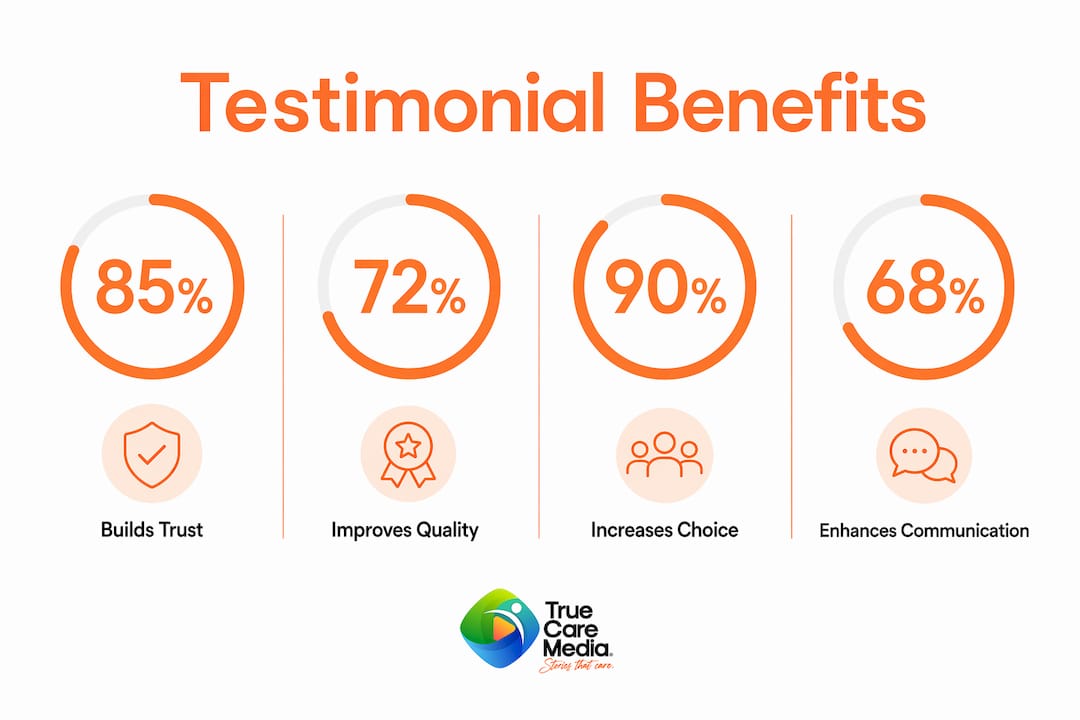
Testimonials function as a specific form of evidence when they are collected and used properly. Practitioners treat them as information design, meaning they need context about what supports were tried, what barriers existed, and what changed over time. Without that context, a story cannot help another family judge whether a service fits their situation.
Peer involvement in evaluation strengthens this further. Research into inclusive evaluation across four jurisdictions found that peer input improves trust and the quality of feedback in intellectual disability services. When people with lived experience are part of designing and collecting testimonials, the results reflect genuine service realities rather than provider preferences.
The practical steps for using testimonials as evidence include:
- Collect with context. Ask contributors to describe their starting point, the specific supports they received, and what changed. A story without context is anecdote, not evidence.
- Involve peers in the process. People with disability or their family members should help shape the questions asked and the format used.
- Act on what you hear. Testimonials that sit in a folder and change nothing breed cynicism. Providers should document what they changed in response to feedback.
- Pay fairly for participation. Inclusive evaluation requires adequate funding and fair pay for participants. Unpaid contribution signals tokenism, not genuine inclusion.
- Review regularly. Service needs shift. Testimonials collected two years ago may not reflect current delivery, staffing, or participant cohort.
Pro Tip: If you are a family member contributing a testimonial, ask the provider how they plan to use it and whether they will share what they changed as a result. A provider who cannot answer that question is collecting stories for marketing, not improvement.
What formats and ethical practices work best for testimonials?
Testimonials in disability support take several forms, and each carries different strengths. Written accounts suit people who communicate best through text and allow careful editing for clarity. Video testimonials convey emotion and non-verbal communication in ways that text cannot. Storytelling workshops give participants a supported space to shape their own narrative with facilitation, which is particularly useful for people who find unstructured sharing difficult.

The ethical foundation for all formats is the same: informed consent, respect for the contributor’s voice, and a clear commitment to avoiding tokenism. Tokenism occurs when providers collect one or two stories from people with visible disabilities and present them as representative of all participants. It is a form of misrepresentation that undermines participant trust and breeds scepticism across the sector.
| Format | Strengths | Considerations |
|---|---|---|
| Written testimonial | Easy to edit, accessible, shareable | Can feel impersonal; tone may be lost |
| Video testimonial | Emotional, credible, high impact | Requires consent, production support |
| Storytelling workshop | Participant-led, supported, nuanced | Needs facilitation and adequate time |
| Survey with open text | Scalable, structured | Responses often lack depth or context |
Diversity in testimonials is not a box to tick. It reflects the reality that disability services support people across a wide range of ages, backgrounds, disability types, and cultural communities. A provider whose testimonials only feature one type of participant is telling an incomplete story.
- Seek contributions from participants across different disability types and life stages.
- Offer multiple formats so contributors can choose how they share.
- Share a draft with the contributor before publishing and give them the right to withdraw.
- Never edit a testimonial in ways that change its meaning or remove critical nuance.
Participant-centred storytelling builds trust precisely because it keeps the contributor’s voice intact. When families read a testimonial and sense the person behind it, they trust the provider more.
How can families use testimonials to make informed choices?
Families choosing a disability service face a real information gap. Provider websites list services and credentials, but they rarely describe what day-to-day support actually feels like. Testimonials fill that gap when families know how to read them critically.
The most useful testimonials describe a situation that resembles yours. If your child has autism and communication challenges, a testimonial from a family navigating similar needs tells you far more than a generic account of “great staff.” Look for accounts that describe the specific type of support provided, the challenges that arose, and how the provider responded when things did not go to plan.
Families can also contribute their own testimonials, which benefits the wider community. Sharing personal experiences helps others reduce isolation and understand what is possible. It also gives providers feedback they can act on. Contributing a testimonial is not just a favour to the provider. It is an act of advocacy.
The pitfalls are real. Relying solely on testimonials without checking registration, complaints history, and NDIS compliance records is a risk. Testimonials reflect individual experiences, and one glowing account does not guarantee the same outcome for your family. Use testimonials as one input among several, not as the final word.
- Match the situation: Find testimonials from people with similar disability types, ages, or support needs.
- Check for context: A credible testimonial names the support received, not just the outcome.
- Look for balance: Accounts that mention challenges alongside progress are more trustworthy than uniformly positive stories.
- Verify independently: Cross-check testimonials with NDIS registration records, complaints data, and direct conversations with the provider.
- Ask the provider: Request contact with a past participant who is willing to speak directly. Providers confident in their service will facilitate this.
Staff stories for NDIS providers add another layer. When workers share their own experience of delivering support, families get a clearer picture of the culture and values behind the service.
Key takeaways
Testimonials in disability services are the most direct evidence families have of what a provider actually delivers, and their value depends entirely on how honestly and inclusively they are collected and used.
| Point | Details |
|---|---|
| Testimonials build real trust | Specific, honest accounts from real participants carry far more weight than satisfaction scores. |
| Lived experience is evidence | Stories with context about supports, barriers, and changes help families judge service fit accurately. |
| Ethical collection matters | Fair pay, informed consent, and diverse voices separate genuine testimonials from tokenism. |
| Families should read critically | Match testimonials to your situation and verify claims through NDIS records and direct conversations. |
| Providers must act on feedback | Testimonials that drive no change undermine trust and signal that participant voices are not valued. |
Why I think most providers are still getting testimonials wrong
The sector talks a lot about lived experience. What I see less often is providers actually changing anything because of it. A 2026 community survey by Every Australian Counts found that NDIS participants feel unheard when their input feeds into processes with pre-determined outcomes. That is not co-design. That is performance.
The testimonials that genuinely shift how families choose services are the ones where something went wrong and the provider fixed it. Those stories are rare because providers are understandably cautious. But a testimonial that only shows the best version of a service is not a testimonial. It is an advertisement.
What I find most powerful is when the person sharing the story gets something from the process too. Research confirms that storytelling benefits both teller and listener. When a provider creates space for that, the testimonial becomes something more than content. It becomes a record of genuine human experience. Families feel that difference immediately.
My advice to families is this: if a provider cannot show you a testimonial that includes a challenge, ask why. The answer will tell you more about the organisation than any polished video ever could.
— Mishal
How Com helps disability providers tell stories that matter
Com works with NDIS providers and allied health brands to create video, photography, and storytelling content that reflects real participant experiences. The difference between a testimonial that builds trust and one that gets ignored often comes down to how it is produced and presented.
Professional video testimonials give families the emotional clarity that written accounts rarely achieve. Com’s approach keeps the participant’s voice central, which is what makes the content credible rather than promotional. For providers wanting to understand how video builds NDIS trust, or for families exploring how visual storytelling shapes decisions, the guide on video in aged care marketing offers a practical starting point. Good storytelling is not about production quality alone. It is about giving real people the space to speak honestly.
FAQ
What is the role of testimonials in disability services?
Testimonials provide firsthand accounts of real support experiences, helping families assess whether a provider suits their needs and giving providers honest feedback to improve delivery.
How do I know if a disability service testimonial is genuine?
Genuine testimonials include specific details about the type of support received, challenges faced, and real outcomes. Vague praise without context is a sign the account has been sanitised.
Can testimonials actually improve service quality?
Yes. Inclusive evaluation research shows that peer input improves trust and feedback quality in disability services, but only when providers act on what they hear and pay participants fairly for their time.
What formats work best for disability service testimonials?
Video testimonials convey emotion and credibility most effectively. Written accounts and storytelling workshops also work well, depending on the contributor’s communication preferences and the audience’s needs.
Should families rely only on testimonials when choosing a provider?
No. Testimonials are one important input, but families should also check NDIS registration, review complaints history, and speak directly with the provider before making a decision.