
Occupational therapy service storytelling is the practice of crafting structured, evidence-based narratives that communicate the real human impact of therapy to clients, families, and funding bodies. Known formally as narrative reasoning in occupational therapy, this approach draws on frameworks like the Model of Human Occupation to connect clinical outcomes to personal meaning. Done well, it shifts how stakeholders understand your service. It moves them from reading a brochure to feeling the difference therapy makes. This guide gives healthcare providers and administrators the tools, structure, and ethical grounding to build those narratives with confidence.
What does an occupational therapy service storytelling guide cover?
Every effective occupational therapy service storytelling guide starts with the right foundations. Before you write a single word, you need three things in place: a method for gathering client data ethically, a narrative framework aligned with OT theory, and a clear picture of your audience.
Tools and frameworks to prepare first
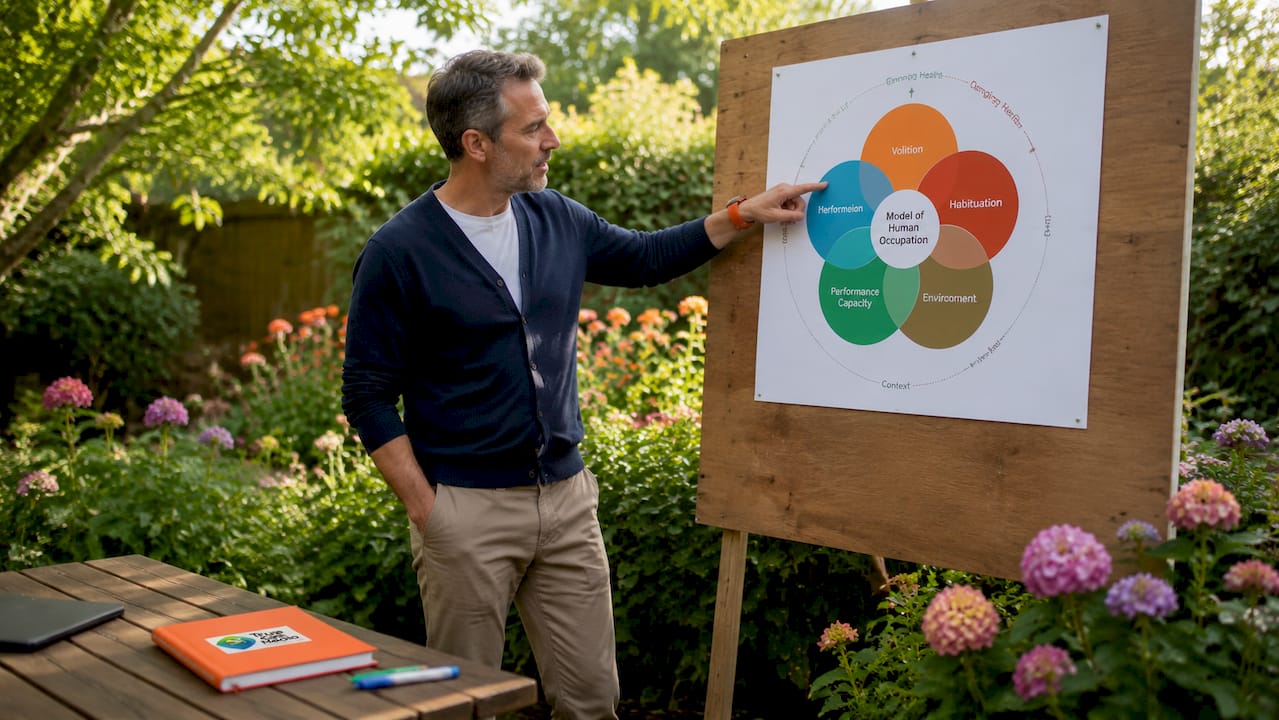
The Model of Human Occupation (MOHO) is the most widely used theoretical framework for OT narrative work. It organises client experience around volition, habituation, and performance capacity, giving your stories a clinical backbone that resonates with both professional and lay audiences. Aligning narratives with OT theoretical foundations boosts credibility and resonance with both groups. That alignment separates a compelling story from a vague testimonial.
Digital tools now extend what is possible. Structured templates, video capture tools, and AI-assisted writing platforms can personalise and expand therapeutic writing opportunities when used within ethical boundaries. The key word is “within.” Technology supports the story. It does not replace the clinical judgement behind it.
| Tool or framework | Role in storytelling |
|---|---|
| Model of Human Occupation (MOHO) | Provides theoretical structure for client narratives |
| Narrative reasoning frameworks | Guides how therapists interpret and sequence client experiences |
| Client data collection templates | Captures consistent, consent-ready story material |
| Digital media tools (video, photography) | Brings narratives to life for diverse audiences |
| Storytelling templates | Standardises structure across your service’s communications |
Pro Tip: Build a simple one-page consent form that explains exactly how a client’s story will be used, in what format, and by whom. Clients who understand the purpose are far more willing to share openly.
Composite narratives are a practical tool worth understanding early. A composite narrative synthesises details from multiple real client experiences into one de-identified story. This protects individual privacy while preserving authentic emotional truth. It is the standard approach recommended in ethical OT storytelling practice for any public-facing communication.
How do you structure and deliver compelling OT narratives?
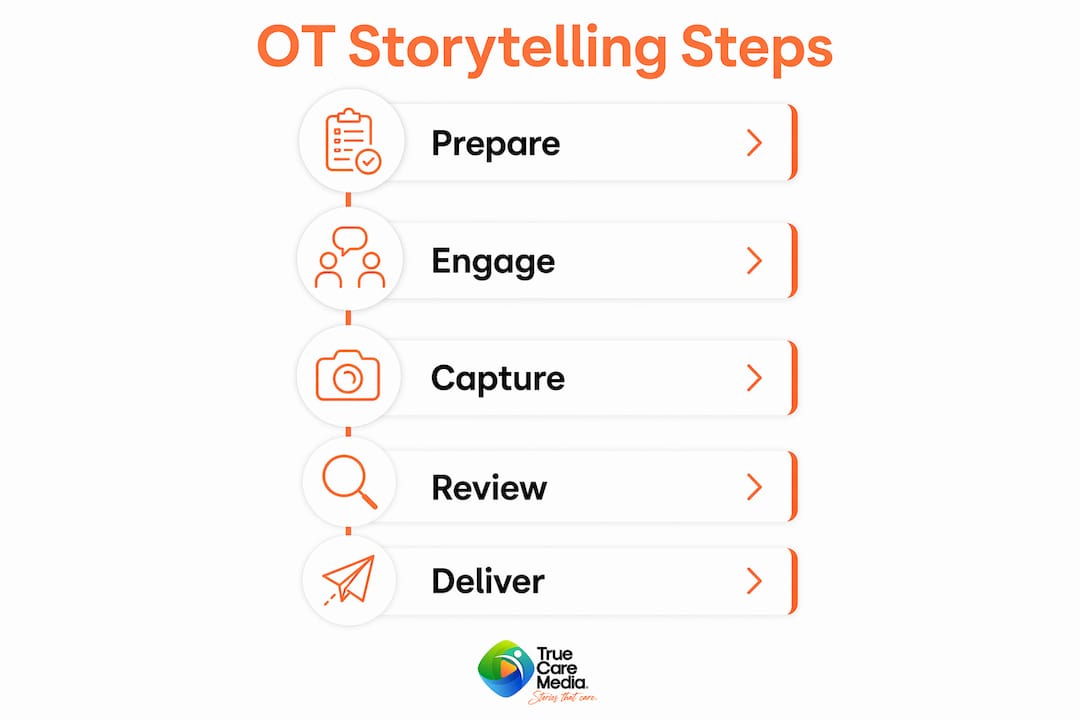
Structure is what separates a story that moves people from one that merely informs them. The most effective occupational therapy narrative techniques follow a clear sequence: gather, frame, build, and deliver.
A step-by-step storytelling process
- Gather the raw material. Conduct a structured interview or use a narrative reasoning template to capture the client’s experience before, during, and after therapy. Focus on what they could not do, what changed, and what that change meant to them personally.
- Identify the meaning, not just the outcome. Meaning-making amplifies storytelling value and client engagement far beyond outcome-only narratives. Ask: what did regaining this ability give back to this person’s life?
- Apply a narrative framework. Use MOHO or a narrative reasoning model to organise the story around volition and context, not just clinical milestones.
- Draft with emotional validation. Acknowledge the difficulty of the client’s experience before describing progress. This builds trust with readers who are in similar situations.
- Add future-oriented goal language. End the narrative with where the client is heading, not just where they arrived. This signals ongoing value and long-term impact.
- Match the format to the channel. A 90-second video suits social media. A written case study suits a funding submission. A photograph with a caption suits a waiting room display.
The Color Narrative program offers a strong structural model. It combines 90-minute colour-mediated storytelling sessions with three months of independent occupational story-making, connecting participants’ values to their life context. That two-phase structure, guided then independent, mirrors how the best OT service narratives work: you shape the story, then the client owns it.
Narrative approach comparison
| Approach | Structure | Best suited for |
|---|---|---|
| Color Narrative program | Guided sessions plus independent story-making | Preventive and community OT settings |
| Traditional case narrative | Clinician-authored, outcome-focused | Funding submissions and clinical reports |
| Collaborative narrative (Therapeutic Parental Story model) | Co-created with client or family | Family therapy and paediatric OT |
| Composite narrative | Synthesised from multiple clients | Public marketing and social media |
Research on structured narrative OT programmes shows that six sessions of 1.5 hours each, delivered over six weeks, produce significant improvements in self-efficacy, social quality of life, and resilience. That evidence gives your narratives a factual foundation that stakeholders trust.
Pro Tip: When presenting to funding bodies, lead with the outcome metric first, then tell the human story behind it. Funders respond to data. They remember the story.
For more on applying these techniques across allied health settings, the patient outcome storytelling guide for clinicians covers narrative impact on self-efficacy and quality of life in practical detail.
What ethical pitfalls should OT providers avoid in storytelling?
Ethics in occupational therapy narrative work is not optional. It is the foundation. Get it wrong and you risk harming the very clients whose stories you are sharing.
The concept of narrative burden
Narrative burden occurs when a client is asked to retell a traumatic experience for the benefit of the organisation rather than their own healing. Ethical digital storytelling requires avoiding this by using composite narratives that synthesise multiple real experiences into respectful, de-identified accounts. The story serves the audience. The composite protects the client.
Cultural sensitivity is equally non-negotiable. A narrative that resonates with one community may misrepresent another. The Therapeutic Parental Story framework addresses this directly by combining emotional validation with culturally responsive imagery. That combination is a useful benchmark for any OT narrative you produce.
Common ethical errors to avoid:
- Overemotionalising. Leaning on distress for impact without clinical context exploits rather than advocates.
- Inaccurate representation. Exaggerating outcomes or omitting setbacks damages credibility and misleads potential clients.
- Skipping consent review. Consent given at the start of treatment does not automatically cover marketing use of a client’s story.
- Ignoring de-identification. Names, locations, and specific dates can identify a client even without a photo.
- Centring the organisation. The story belongs to the client. The organisation is the supporting character, not the hero.
Pro Tip: Run every client story through a simple three-question check before publishing: Has the client seen and approved this version? Could anyone identify this person from the details included? Does this story serve the client’s dignity as much as it serves your service’s goals?
For a broader look at how participant-centred narratives build trust, that resource covers the practical steps in detail.
How do you measure storytelling impact and adapt for different audiences?
A narrative that works for a client’s family will not automatically work for an NDIS planner. Measuring impact and adapting your stories to different audiences is what turns good storytelling into a repeatable communications asset.
Qualitative measures include client feedback after reading or viewing a story, unsolicited enquiries that reference a specific narrative, and staff observations about how stories shift conversations in initial consultations. Quantitative measures include website engagement on story-based pages, video completion rates, and conversion from enquiry to intake.
Storytelling methods in OT education significantly enhance verbal communication, critical thinking, and narrative organisation skills. That finding applies directly to how your team delivers stories in presentations and client meetings, not just in written form.
| Audience | What they need from the story | Best channel |
|---|---|---|
| Prospective clients | Emotional connection and hope | Video, social media |
| Families and carers | Practical outcomes and reassurance | Written case study, photography |
| NDIS planners and funding bodies | Evidence of measurable outcomes | Written report with data |
| Referring clinicians | Clinical credibility and specificity | Case narrative with MOHO framing |
| Community stakeholders | Accessibility and relatability | Short video, infographic |
Adapting a story for different channels does not mean rewriting it from scratch. The core narrative stays the same. The framing, length, and emphasis shift to match what each audience needs to hear. A clinical storytelling overview explains how this works across healthcare delivery contexts.
Key takeaways
Effective occupational therapy storytelling requires ethical foundations, theoretical alignment, and audience-specific delivery to communicate genuine client impact.
| Point | Details |
|---|---|
| Start with consent and composite narratives | Protect client privacy by synthesising multiple experiences into de-identified stories. |
| Align narratives with OT theory | Use frameworks like MOHO to give stories clinical credibility beyond emotional appeal. |
| Follow a structured storytelling sequence | Gather, frame, build, and deliver narratives in a consistent, repeatable workflow. |
| Measure impact across qualitative and quantitative signals | Track enquiries, engagement, and client feedback to refine your narrative approach. |
| Adapt format and framing to each audience | Funders need data first; families need reassurance; prospective clients need hope. |
Why storytelling in OT is harder than it looks
From my experience working with allied health providers across Australia, the biggest mistake I see is confusing a good outcome with a good story. Practitioners document excellent clinical results every day. Very few of them know how to turn those results into something a stranger will care about.
The gap is meaning. Connecting events to personal meaning is what gives a narrative its power, not the list of goals achieved. I have reviewed OT communications that read like discharge summaries with the clinical codes removed. They are accurate. They are also forgettable.
What actually works is specificity grounded in the client’s world. Not “improved daily living skills” but “could make her own breakfast for the first time in two years.” That specificity is what makes a funding body pause, a family member cry, and a prospective client pick up the phone.
The ethical tension is real, though. The more specific and emotionally resonant a story is, the greater the risk of identifying the client. Composite narratives solve this, but they require skill to write convincingly. Providers who invest in that skill, whether through training, professional writing support, or structured templates, produce communications that consistently outperform generic service descriptions.
Storytelling in OT is not a marketing add-on. It is a clinical communication skill. Treat it that way.
— Mishal
How Com helps OT providers tell their story
Com works with NDIS providers and allied health brands to build trust through video, photography, and professional storytelling. For occupational therapy providers, that means turning clinical outcomes into narratives that resonate with clients, families, and funding bodies alike.
The team at Com understands the ethical and clinical context behind OT communications. Whether you need a short client story video, photography that reflects your service’s values, or a full video storytelling strategy for aged care and allied health, Com brings the production quality and sector knowledge to make it credible. For providers ready to communicate their impact clearly, staff story content for NDIS stakeholders is another practical starting point.
FAQ
What is narrative reasoning in occupational therapy?
Narrative reasoning is the clinical process by which occupational therapists interpret a client’s life story to inform assessment and intervention. It draws on frameworks like the Model of Human Occupation to connect personal meaning to therapeutic goals.
How do composite narratives protect client privacy?
A composite narrative synthesises details from multiple real client experiences into one de-identified story. This approach, recommended in ethical OT practice guidelines, preserves emotional authenticity without exposing any individual client.
How long does a structured OT storytelling programme take?
Research shows that structured narrative OT programmes delivered across six sessions of 1.5 hours each over six weeks produce measurable improvements in self-efficacy and quality of life.
How should OT stories differ for funding bodies versus clients?
Funding bodies respond to measurable outcomes presented first, supported by a human story. Prospective clients respond to emotional connection and hope. The core narrative can be the same. The framing, length, and emphasis should shift for each audience.
What is the Color Narrative program?
The Color Narrative program is a structured occupational storytelling intervention combining 90-minute colour-mediated sessions with three months of independent story-making. It connects participants’ personal values to their life context and has been tested in a randomised controlled trial.