
The highest-impact NDIS marketing strategy for 2026 combines outcome-led brand storytelling, a conversion-ready website, targeted Google Ads for accommodation and urgent services, and short-form video paired with referral outreach for community and allied health work. This mix suits the Australian market and stays inside NDIS Commission compliance rules. Budgets and a launch plan follow below.
TL;DR:
- Google Ads are most effective for high-intent searches related to accommodation and urgent services, converting faster than social channels.
- Strong storytelling with real participant outcomes and accessible, authentic branding significantly improves provider differentiation and trust.
- A website must offer clear trust signals like registration numbers, testimonials, and simple enquiry forms to maximize conversions.
- Paid campaigns should focus on one or two channels based on service type, with a higher budget allocated during launch and reduced for maintenance.
- Compliance with NDIS branding rules is essential; use the official logo correctly and avoid implying government endorsement.
Table of Contents
- What should an NDIS marketing plan prioritise first?
- Why does branding matter more than most providers think?
- What makes an NDIS website actually convert enquiries?
- How much should Google Ads and paid social cost for NDIS campaigns?
- Which social media formats actually build trust for community and allied health providers?
- How do you build referral partnerships that actually generate leads?
- How should you split your budget between launch and maintenance?
- What are the compliance rules for using the NDIS logo and name?
- What does a real NDIS content launch pack actually include?
- Common mistakes providers make and when to bring in outside help
- How TrueCare Media helps you execute this strategy
- Where to check the rules and dig deeper
- Sources
What should an NDIS marketing plan prioritise first?
Not every NDIS service needs the same channel mix, and treating “NDIS marketing” as one strategy is the fastest way to waste a budget. SDA, SIL and respite providers face urgent, high-intent searches. Community participation and allied health services win through trust built over weeks, not clicks won in seconds.
Here’s how to match channel to service type:
- SDA, SIL and respite providers should lead with Google Ads and a fast-loading, mobile-friendly enquiry page. Search intent runs high here, and accommodation-related searches typically convert faster through paid search than social channels.
- Community participation providers get more mileage from Facebook, Instagram and short video that shows real activities and outcomes.
- Allied health providers (occupational therapy, speech pathology, psychology) need a hybrid: local SEO plus testimonial-driven content that builds referrer confidence.
- Support coordination services rely almost entirely on referral relationships and word of mouth, so outreach and partnership management matter more than paid media.
If your budget is tight this month, do three things: fix your website’s enquiry flow, produce one strong launch video, and either trial a small Google Ads campaign or start a referral outreach sprint. Run all three at launch weight (heavier spend, more frequent posting) for four to six weeks, then drop to a maintenance cadence that keeps momentum without draining resources.
Pro Tip: Don’t split a small budget across five channels at once. Pick the two that match your service type and fund them properly, rather than running six channels at a whisper.
Why does branding matter more than most providers think?
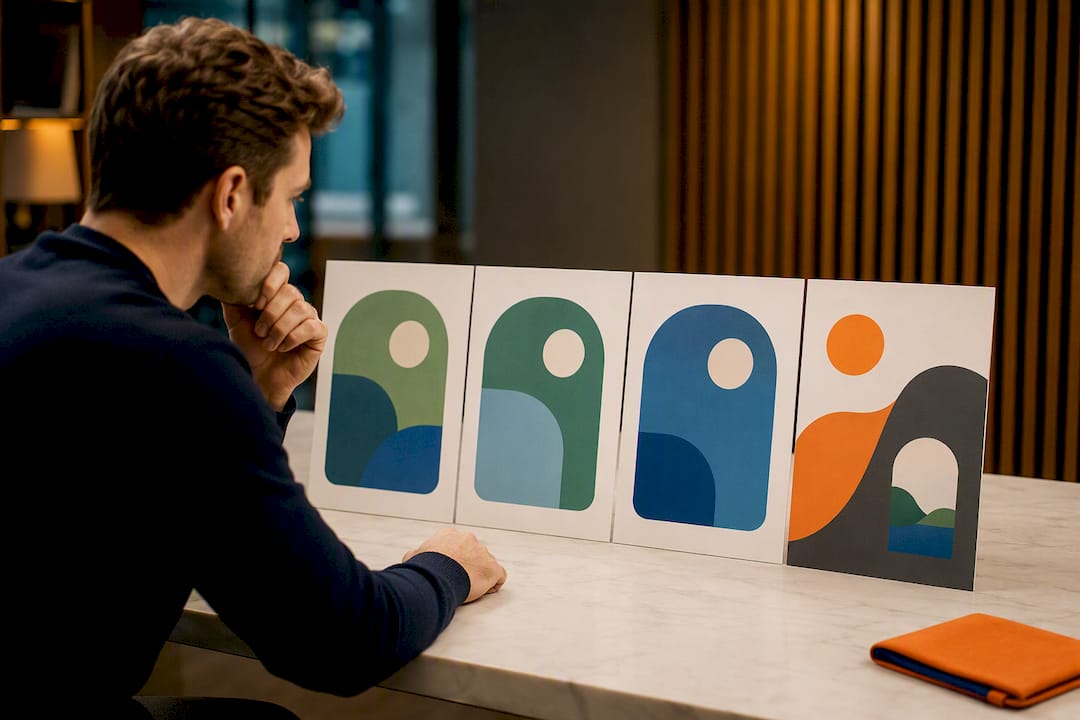
Most NDIS marketing looks the same: blue and green palettes, generic stock photography, phrases like “person-centred care” repeated on every second website. That sameness is a problem, and branding specialists point out that NDIS providers often converge on nearly identical visual choices, which makes it harder for families and support coordinators to tell providers apart.
Specific stories beat generic copy every time. A post about “supporting independence” says nothing. A story about a participant who moved into their own SDA home after eighteen months, told with their consent and in their words, says everything. Outcome-focused storytelling with real participants materially outperforms generic messaging because it gives families something concrete to imagine for their own situation.
To do this properly:
- Get written consent before any shoot, and confirm the participant (or guardian) understands exactly where footage will appear.
- Check accessibility during filming: captions, plain-language scripts, and no flashing effects for participants with photosensitivity.
- Use real staff and real settings, not stock photography that could belong to any provider in the country.
A basic brand system (logo, colour palette, photography style, a handful of core message pillars) typically costs a few thousand dollars as a one-off investment for a small to mid-size provider. Strong branding also supports growth and gives auditors and participants more confidence in the organisation, which matters at renewal time as much as at the enquiry stage.
Pro Tip: Read TrueCare’s guide on the benefits of storytelling for NDIS brands before your next shoot brief. It’ll save you from filming generic B roll that nobody remembers.
What makes an NDIS website actually convert enquiries?
A website that looks professional but buries its enquiry form under three menu clicks is losing leads it already paid to attract. Conversion comes down to trust signals plus friction removal, not design polish alone.
Trust elements that matter for NDIS visitors:
- Your NDIS registration number displayed clearly, ideally near the footer or an “About” section.
- Correct, compliant use of the NDIS logo, following NDIS Commission guidance on how services and branding may be presented.
- Real testimonials from participants or families (with consent), not vague five-star badges.
- Staff bios with photos and qualifications, especially for allied health and support coordination roles.
Landing pages built for paid traffic need to be even leaner:
- One clear call to action per page, not three competing buttons.
- A short enquiry form (name, phone, service needed) that works properly on mobile.
- A visible phone number and a “call now” button above the fold for urgent accommodation enquiries.
For local visibility, claim and fully complete your Google Business Profile, list every service area you cover, and keep your name, address and phone number identical across your website, directories and social profiles. Consider a dedicated location page for each region you serve rather than one generic “service areas” paragraph.
How much should Google Ads and paid social cost for NDIS campaigns?
Google Ads earns its budget for accommodation and urgent-care services because people searching “SDA vacancy near me” or “respite care available this week” are ready to act. Search intent for accommodation-related NDIS queries runs consistently higher than for community participation searches, which justifies a higher cost-per-click for those campaigns specifically.
Facebook and Instagram ads suit community participation and allied health services better, where the goal is building familiarity over several touchpoints rather than capturing an urgent search.
Practical budget guidance for Australian providers:
- Small providers testing paid search: start with a modest monthly trial budget focused on two or three high-intent keywords tied to a specific service and location.
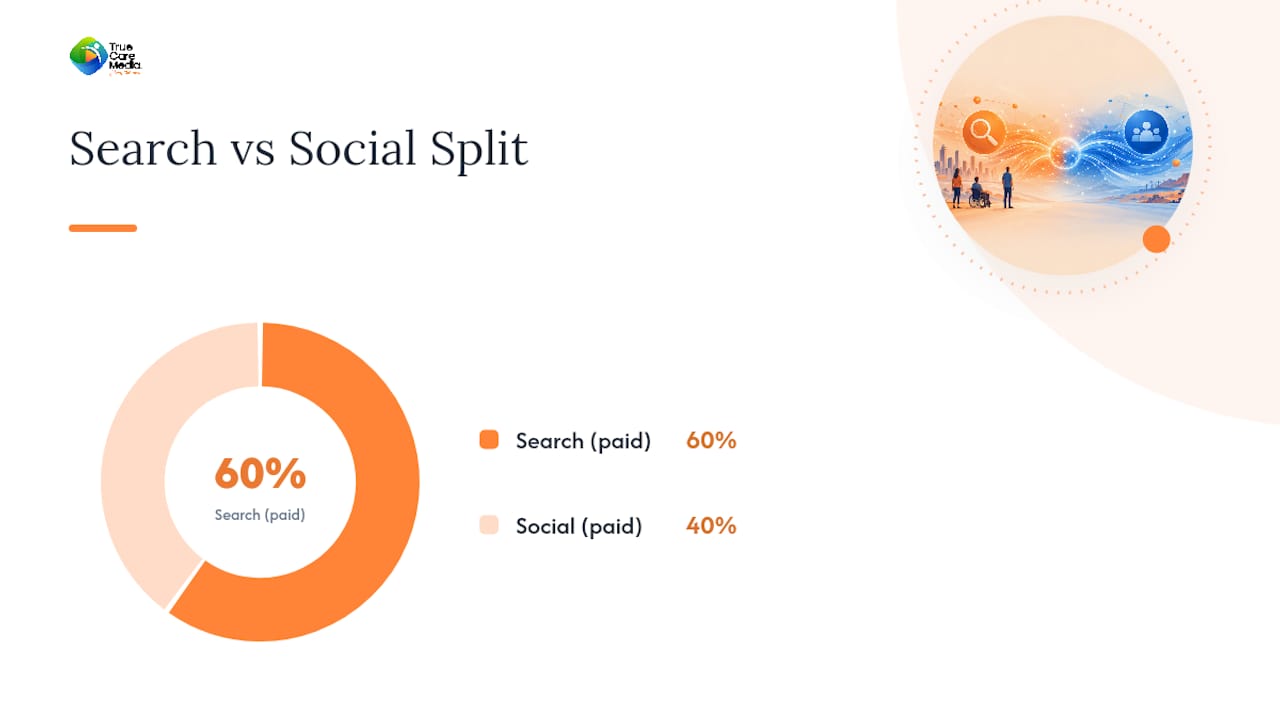
- Mid-size providers running steady lead generation: allocate a larger, consistent monthly spend split roughly 60/40 between search and social, weighted toward whichever service type drives more revenue.
- Every campaign needs a dedicated landing page, not your homepage, plus call tracking or a form-fill pixel so you know which ad actually produced the enquiry.
Accommodation searches convert faster through search than social for SDA, SIL and respite providers, which is the single clearest budget-allocation signal in Australian NDIS marketing right now.
Which social media formats actually build trust for community and allied health providers?
Short-form video does more work than any static post for community participation and allied health marketing. Three formats consistently perform well: a 15 to 30 second participant outcome clip (with consent), a 30 to 60 second staff introduction that puts a human face on your team, and a “day in the life” reel showing a typical session or activity.
For targeting, build a remarketing audience from website visitors and enquiry-page viewers, then layer a lookalike audience based on existing followers or past enquirers. Support coordinators and plan managers often follow provider pages too, so don’t assume your audience is only families.
The real value of video isn’t the single post. It’s reuse:
- Drop the same clip into your website’s landing page for paid campaigns.
- Cut a 15-second version for Instagram Stories and a longer version for Facebook.
- Attach a still frame and link in referral emails to support coordinators.
Pro Tip: Batch-film four to six short clips in a single session. One afternoon of filming can supply a full quarter of social content if you plan the shot list before the crew arrives.
How do you build referral partnerships that actually generate leads?
Referral relationships remain the quiet engine behind most established NDIS providers’ growth, and segmenting your outreach by decision-maker type outperforms treating “NDIS participants” as one audience. Support coordinators, plan managers, GPs and allied health referrers each make decisions differently and need different information.
- Identify five to ten support coordinators or plan managers in your service area and research what they already recommend to clients.
- Send a short, specific introduction: who you serve, what makes your service different, and one concrete resource (a one-page service summary or a short video works better than a brochure).
- Follow up within two weeks with an offer to visit in person or host a short information session.
- Track every referral source in a simple spreadsheet or your CRM, then review the list quarterly to see which relationships are actually converting.
Reviewing partnerships quarterly, rather than once a year, catches a quiet referrer before the relationship goes cold. For structured outreach ideas, this referral marketing framework offers useful sequencing you can adapt for the NDIS referral context.
How should you split your budget between launch and maintenance?
Run every new campaign at launch weight for four to six weeks: higher ad spend, more frequent posting, and a concentrated content push. Then drop to a maintenance cadence that sustains recall without draining the budget on channels that have already made their first impression.
| Provider size | Launch phase focus | Maintenance phase focus |
|---|---|---|
| Small (1 to 2 locations) | Website fix, one launch video, small Google Ads trial | Monthly social posts, quarterly referral check-ins |
| Mid-size (3 to several locations) | Full brand shoot, Google Ads across top service lines, referral outreach sprint | Weekly social content, monthly ads review, quarterly partnership audit |
| Larger multi-service providers | Coordinated video and photo library, paid search across all service types, structured referral program | Ongoing content calendar, monthly reporting, half-yearly brand refresh |
Track enquiries by source using UTM tags on every link and a simple “how did you hear about us” field on your contact form. Cost-per-lead only means something once you know which channel produced the lead in the first place.
What are the compliance rules for using the NDIS logo and name?
The NDIS Commission sets clear guidance on how providers may reference the scheme and use official branding, and getting this wrong is one of the most common (and easily avoided) marketing mistakes.
- Never imply government endorsement of your specific service, only that you’re a registered provider.
- Use the official NDIS logo only in its approved form, without altering colours or proportions.
- Avoid language suggesting the NDIS itself recommends or partners with your business.
- Before publishing anything, check: does this imply endorsement it shouldn’t? For a full breakdown, see TrueCare’s guide on NDIS logo usage for registered providers.
What does a real NDIS content launch pack actually include?
A typical launch pack for a mid-size provider includes three short videos (a brand story, a staff introduction, and a participant outcome story), ten to fifteen social clips cut from that same footage, and around ten professional photos covering staff, facilities and activities. Most providers can expect this delivered within two to three weeks of the shoot day.
Before any camera rolls, run through this checklist:
- Signed consent forms for every participant appearing on camera, with plain-language explanation of use.
- Caption files for accessibility on every video, not just the main brand piece.
- File metadata and naming that supports SEO when content goes onto your website.
TrueCare stages a single shoot day to produce content for both paid campaigns and organic channels at once, so a provider isn’t paying for separate shoots down the track. For more format ideas before your next brief, see NDIS provider video content ideas for 2026.
Common mistakes providers make and when to bring in outside help
The fastest wins come from fixing the enquiry form and filming one genuine outcome story, not from chasing every platform at once. The most common mistake is spreading a small budget across five channels instead of funding two properly.
In-house works fine for posting and community management. Bring in a specialist once you need consistent video output, a proper brand system, or paid campaigns that need ongoing optimisation rather than a one-off boost.
— Mishal
How TrueCare Media helps you execute this strategy
TrueCare Media is the practical alternative to hiring an agency or building an in-house production team from scratch for your NDIS marketing content. If your priority is a launch, a starter video and photo pack covers the brand story, staff introductions and participant outcome content this article recommends. If your goal is recruitment or trust-building for allied health referrers, our NDIS brand storytelling strategy guide shows how a single shoot day produces content for both paid and organic channels.

Providers typically receive their full content set within two to three weeks of filming, with pricing structured around fixed content packages rather than open-ended retainers. If you’re weighing up whether photography or video matters more for your service right now, our guide on why residential care needs photography is a useful starting point. The next step is simple: request a quote or book a discovery call through our starter video pack page and we’ll map a content plan to your launch timeline.
Where to check the rules and dig deeper
For compliance, start with the NDIS Commission’s code of conduct. For content formats, see TrueCare’s guide on types of NDIS provider marketing content.
Sources
- NDIS Commission — NDIS code of conduct
- 21webs — NDIS marketing Australia 2026: complete guide for SDA, SIL & community support leads
- Inside Small Business — Standing out in a crowded NDIS industry through branding