
What are the main hospital department showcase video types?
NDIS providers and allied health professionals working on video content in 2026 have four primary formats to choose from, each built for a different purpose. According to industry analysis, the core hospital department showcase video types are the Grand Tour, Departmental Loops, Wayfinding Videos, and Recruitment Overviews.
- Grand Tour: A brief cinematic walkthrough of the entire facility, designed to give prospective clients and families a confident first impression.
- Departmental Loops: Targeted videos for specialised wings such as occupational therapy suites, oncology units, or allied health consulting rooms, letting viewers focus on the space most relevant to them.
- Wayfinding Videos: Short navigational clips sent to clients before their appointment, reducing anxiety by showing exactly how to find the clinic, where to park, and what to expect on arrival.
- Recruitment Overviews: Videos aimed at prospective staff, highlighting workspaces, team culture, and available technology for HR campaigns.
For NDIS providers specifically, Departmental Loops and Wayfinding Videos tend to do the heaviest lifting. Clients and their support coordinators want to see the exact space they will be using, not a sweeping overview of a building they may never fully explore.
How do you produce a hospital department video that actually builds trust?
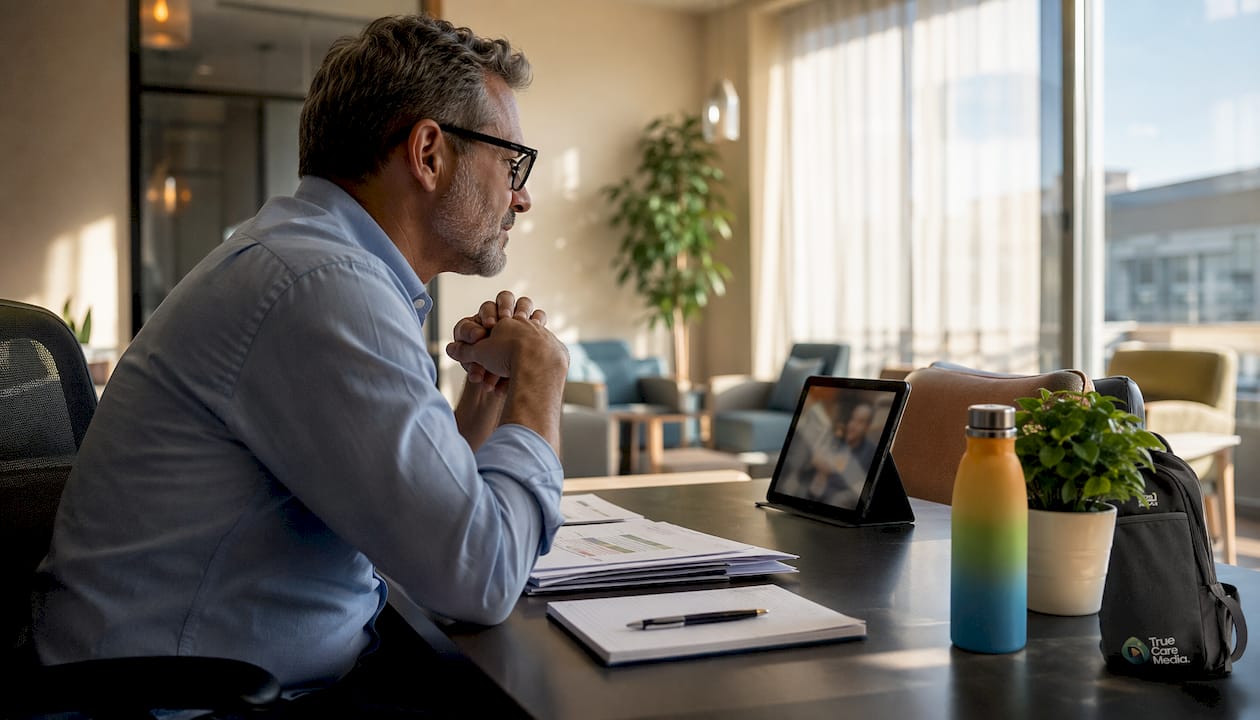
The most common production mistake is treating a department showcase as a property tour. Static shots of empty corridors and gleaming equipment tell a client very little about whether they will feel safe and supported. Featuring healthcare staff in their working environment shifts perception from sterile to approachable, and that shift is what converts a hesitant viewer into a confident client.
The strongest videos follow a patient journey narrative: arrival at reception, movement through the department, interaction with a clinician, and a sense of what care actually feels like. This arc builds familiarity and reduces anxiety far more effectively than a static facility walkthrough. You can see this approach in action across patient journey video examples that consistently outperform facility-only content on engagement.
Practical production tips:
- Film during quieter clinical periods to minimise disruption and protect patient privacy.
- Capture candid staff interactions alongside formal clinical scenes to prevent the “cold hospital” feel.
- Keep full-length website videos concise; cut social media versions to short clips appropriate for quick viewing.
- Use natural light where possible; harsh fluorescent lighting reads as clinical and unwelcoming on screen.
- Always obtain written consent from any staff or clients who appear on camera.
Pro Tip: Shoot a few unscripted moments, a physio greeting a client, a receptionist explaining the check-in process, alongside your planned facility shots. These human moments are what viewers remember, and they are what builds trust.
Where should you distribute hospital department videos to reach NDIS clients?
Production quality counts for nothing if the video sits unwatched on a server. Primary videos belong on your website and patient portal, hosted on YouTube and embedded for credibility. That combination gives you search visibility and a professional on-site experience simultaneously.
For social reach, produce short-form vertical clips (9:16 format) cut from your main video for Instagram and Facebook. These drive local engagement and work particularly well for NDIS audiences who are often researching providers on mobile devices. Wayfinding clips are also worth including in appointment confirmation emails and SMS messages, where they reduce no-shows by helping clients feel prepared.
Distribution tactics worth prioritising:
- Embed the Grand Tour or Departmental Loop on your homepage and relevant service pages.
- Share 15–30 second social teasers on Instagram Reels and Facebook to build local awareness.
- Include Wayfinding Videos in pre-appointment communications via email or SMS.
- Upload to your Google Business Profile to improve local search visibility.
- Share Recruitment Overviews on LinkedIn and your careers page.
For allied health clinics managing appointment logistics, tools that support room and wayfinding navigation can complement video content by giving clients a consistent pre-visit experience across digital and physical touchpoints.
How True Care Media helps NDIS providers build trust through video
True Care Media specialises in healthcare video production for NDIS providers and allied health brands across Australia. The approach centres on storytelling that reflects the real patient experience rather than a polished marketing performance. Videos are tailored to the specific department, the client cohort being served, and the platform where the content will live.
The benefits of video for trust building in healthcare settings are well documented: video content measurably increases patient confidence and engagement, strengthening a provider’s brand credibility with both clients and their families. For NDIS providers, where trust is the primary currency in client acquisition, that impact is direct.
Benefits NDIS providers gain from working with a specialist healthcare video partner:
- Content that reflects the NDIS client experience, not a generic hospital marketing template.
- Platform-specific edits delivered as part of a single production process.
- Guidance on privacy-compliant filming practices that protect both clients and the organisation.
- Storytelling that positions staff as approachable, competent, and genuinely caring.
Key takeaways
The four core hospital department showcase video types, produced with a patient journey narrative and distributed across website, social, and client communications, give NDIS providers a measurable advantage in building client trust.
| Point | Details |
|---|---|
| Four core video types | Grand Tour, Departmental Loops, Wayfinding Videos, and Recruitment Overviews each serve a distinct audience need. |
| Staff presence builds trust | Featuring care staff on camera shifts perception from clinical to approachable, improving client confidence. |
| Platform-specific formats | Full-length videos suit websites; vertical 9:16 clips drive engagement on Instagram and Facebook. |
| Patient journey narrative | Videos that follow arrival through to care are more effective than static facility walkthroughs. |
| True Care Media | Specialises in NDIS and allied health video production, delivering platform-tailored, privacy-compliant content. |
What legal and privacy rules apply when filming in a hospital department?
Privacy compliance is non-negotiable in any healthcare filming environment. Under the Australian Privacy Act 1988 and the NDIS Practice Standards, any person who appears identifiably in a video, whether a client, visitor, or staff member, must provide written informed consent before filming begins. That consent should specify how the footage will be used, where it will be published, and for how long.
Coordinate filming schedules directly with clinical leads, not just administration. Clinical staff understand which moments and spaces carry privacy risk, and their input prevents costly reshoots or footage that cannot be used. Never film in areas where clients are receiving active treatment without explicit consent from every person in frame.
How do you measure whether your healthcare showcase video is working?
Watch time is the most honest metric. If viewers are dropping off in the first 20 seconds of a Departmental Loop, the opening shot is not earning their attention. Aim for at least 50% average view duration on website-hosted videos as a baseline indicator of genuine engagement.
Beyond watch time, track click-through rates on any calls to action embedded in or linked from the video, appointment enquiry rates from pages where the video is embedded, and social engagement (saves and shares rather than just likes, which indicate genuine interest). For NDIS providers, a useful qualitative signal is asking new clients during intake whether they watched a video before booking, and what they took from it.
Storytelling techniques that build empathy in healthcare videos
The most effective healthcare videos are built around a single person’s experience, not a facility’s features. Choose one staff member or one client journey as the narrative spine, and let the environment reveal itself through that story rather than through a presenter-led walkthrough.
Contrast is a powerful tool. Showing a client’s apprehension before a first appointment, then their ease by the end of it, communicates more about your team’s care than any amount of clinical credential listing. Sound design matters too: ambient sound from a real session, a calm greeting, the quiet of a well-run waiting room, tells viewers what the experience actually feels like. You can find healthcare facility storytelling examples that use exactly this approach to build genuine emotional connection with NDIS audiences.
True Care Media: video production built for NDIS and allied health providers
True Care Media produces hospital department showcase videos specifically for NDIS providers and allied health brands that need to build client trust quickly and credibly. The work goes beyond filming a facility. Every production is shaped around the client journey, the care team’s personality, and the platform where the content will be seen.

Whether you need a Grand Tour for your website, Departmental Loops for specific service pages, or short social teasers to drive local enquiries, True Care Media delivers content that reflects how your organisation actually cares for people. For providers working with families navigating complex decisions, the family decision-making video guide is a practical starting point. To discuss a production brief for your department, visit truecaremedia.com.au.