
For NDIS brands, storytelling is the fastest way to build trust, improve referrals and increase participant engagement. In a sector where families are making high-stakes decisions about care and support, a specific, real participant story does more persuasive work than any service brochure.
The core benefits of storytelling for NDIS brands come down to five things:
- Trust and empathy: Real stories from real people signal that your organisation genuinely understands participant experience.
- Clearer decision-making: Families and participants can picture what your service actually looks like day-to-day, which reduces hesitation.
- Differentiation: In a crowded NDIS market, a specific outcome story makes your brand memorable in a way that a list of services never will.
- Higher engagement: Narrative content holds attention longer across every channel, from social media to your website.
- Referral growth: Participants and support coordinators who feel connected to your story refer others at a higher rate.
The National Disability Insurance Scheme (NDIS) funds supports for Australians with permanent and significant disability. The NDIS Quality and Safeguards Commission sets the standards providers must meet, including how participant information is handled. TrueCare Media works with NDIS providers across Australia to translate those real participant experiences into video, photography and written content that drives enquiries.
Table of Contents
- Why storytelling matters more for NDIS brands than most sectors
- What types of stories work best for NDIS providers?
- How do you create ethical, effective stories for NDIS audiences?
- Which channels and formats get the best results?
- How do you measure whether storytelling is actually working?
- What are the ethics and consent rules for NDIS storytelling in Australia?
- How TrueCare Media approaches storytelling for NDIS providers
- Key takeaways
- Why participant stories are the most underused asset in NDIS marketing
- TrueCare Media helps NDIS providers tell stories that convert
- Useful sources for further reading
Why storytelling matters more for NDIS brands than most sectors
NDIS purchasing decisions are rarely impulsive. A family choosing a support provider is weighing trust, safety, cultural fit and long-term outcomes, often over weeks or months. Generic marketing copy cannot carry that weight. A specific story can.
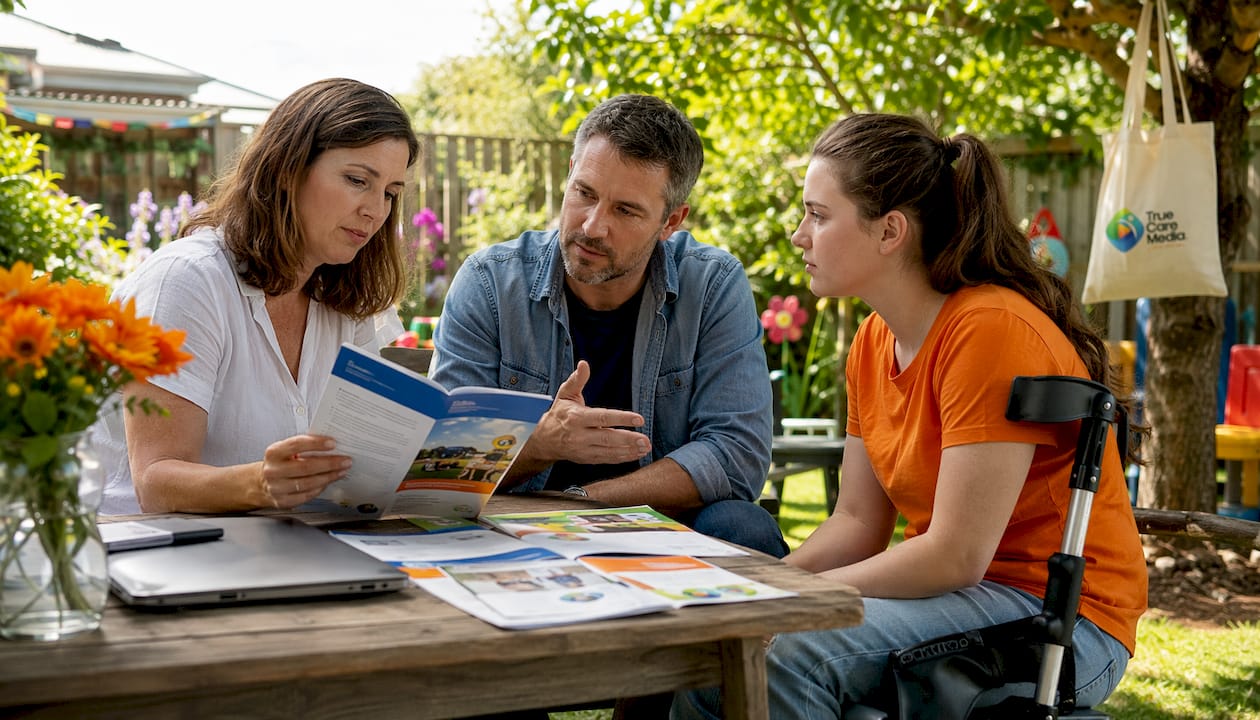
That kind of result is not about production budget. It comes from specificity: real names (with consent), real outcomes, real faces. Brand storytelling builds emotional credibility and recall in a way that a capability statement simply cannot replicate.
Several factors make this sector particularly responsive to narrative:
- High-trust decisions: Participants and families are choosing someone to enter their home or support their daily life. Stories reduce perceived risk faster than credentials alone.
- Complex eligibility: The NDIS process is genuinely confusing. A story that shows how your team helped a participant navigate their plan makes the abstract concrete.
- Cultural safety: For Aboriginal and Torres Strait Islander participants and those from culturally and linguistically diverse backgrounds, seeing someone who looks like them in your content signals that your service is for them too.
- Emotional reassurance: Carers and family members want to feel something when they choose a provider. Facts inform; stories reassure.
Stories are also more memorable than facts alone, a point Harvard Business School’s writing on brand narrative consistently reinforces. When a support coordinator is recommending providers to a family, the one they remember is the one with the story.
What types of stories work best for NDIS providers?
The story format you choose should match your goal. Here is a practical breakdown:
- Participant outcome stories: The most persuasive format for acquisition. Show a specific, measurable change: “Before working with us, Jordan couldn’t access community activities independently. Six months in, he’s attending weekly.” Use these on your website homepage and in paid social.
- Staff stories: Humanise your brand and support recruitment. A support worker explaining why they chose disability services builds trust with both families and potential hires. Staff stories act as a major trust signal in a relationship-based sector like the NDIS.
- Day-in-the-life content: Short video or photo essays showing what a typical support session looks like. Reduces anxiety for new participants and families who don’t know what to expect. Best suited to Instagram Reels and website FAQs.
- Origin and mission stories: Why did your founders start this organisation? What do you believe about disability? These build brand loyalty and are particularly effective for email newsletters and About pages.
- Before-and-after narratives: Structured around a challenge and a resolution, these are highly shareable and work well as outcome-focused case studies on your website.
- Explainer stories: Walk a family through a complex process, like plan management or SIL applications, using a real participant’s experience as the thread. These reduce drop-off at the enquiry stage.
Personal stories help break down stereotypes and make services feel relatable, improving both participant trust and your appeal to potential staff.
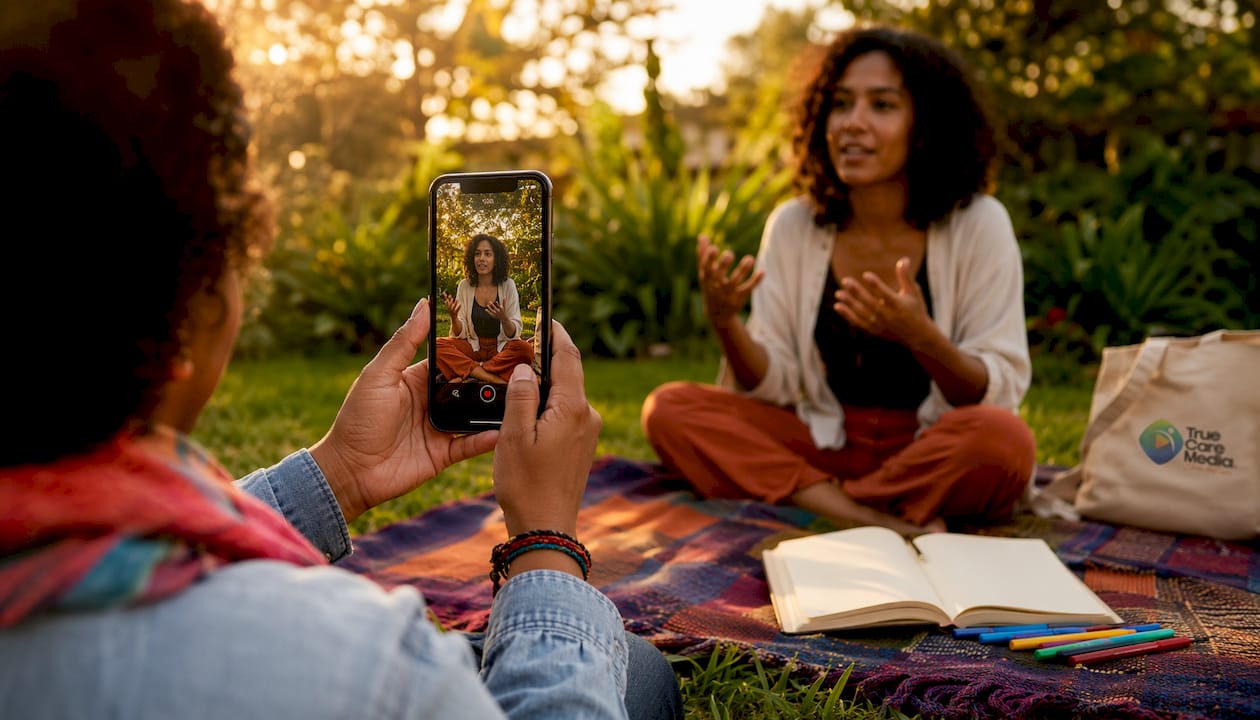
Pro Tip: For participant-led content, a phone-filmed conversation with genuine emotion will outperform a polished corporate video almost every time. Authenticity and specificity are the persuasive factors, not production gloss.
How do you create ethical, effective stories for NDIS audiences?
The most effective NDIS stories start with a clear outcome in mind and are built with participants, not about them. Here is a practical workflow:
- Identify the outcome you want to demonstrate. What specific change do you want a prospective participant or family to believe is possible? Start there, not with “we need content.”
- Co-create with the participant. Invite them into the process. Ask what they want to share and what they want to keep private. Participant-centred storytelling produces more authentic content and protects dignity.
- Secure documented consent. Written consent must specify: who will use the content, where it will appear, how long it will be used, and how the participant can withdraw consent. Verbal agreement is not sufficient.
- Plan for accessibility. Every video needs captions. Written content needs plain language. Images need descriptive alt text. This is not optional for an NDIS audience.
- Check cultural safety. If the participant is from an Aboriginal or Torres Strait Islander background or a culturally and linguistically diverse community, involve a cultural liaison or community advisor before production.
- Edit for specificity. Remove vague language (“we really helped them”) and replace it with concrete outcomes (“she now manages her own medication schedule”).
- Test with carers or advocates. Before publishing, share a draft with a family member or disability advocate. They will catch language that feels off.
- Publish and repurpose. One story can become a website case study, a social reel, an email feature and a printed brochure for referrers.
The NDIS Quality and Safeguards Commission sets expectations around participant privacy and dignity in provider communications. Their practice standards and guidelines are the authoritative reference for what is and is not appropriate when sharing participant information publicly.
Pro Tip: Ask participants to describe their experience in their own words before you write a single brief. The phrases they use naturally are almost always more compelling than anything a copywriter would invent, and they signal authenticity to other participants reading the story.
Which channels and formats get the best results?
Video and photography lead engagement for NDIS providers, while written case studies and social content sustain trust over time. The good news is that one well-produced story can feed multiple channels simultaneously.
- Short testimonial videos (60–90 seconds): Best for paid social and website hero sections. Keep them specific: one person, one outcome, one clear message. Add captions for accessibility and for the large proportion of social media viewers who watch without sound.
- Social media reels and photo stories: Social media storytelling combining education, empathy and daily wins builds community and increases referral likelihood. Post consistently rather than in bursts.
- Long-form website case studies: These are your conversion engine. A 400–600 word case study with a photo, a specific outcome and a clear call to action gives families the detail they need to pick up the phone. See healthcare facility storytelling examples for format references.
- Photo-led staff profiles: A professional headshot with a two-paragraph bio builds immediate trust. Families want to know who will be in their home.
- Explainer animations: Useful for complex NDIS processes. Keep them under two minutes and include a voiceover transcript for accessibility.
- Accessible PDFs for families: A one-page story summary that a support coordinator can print and share with a family is still one of the most effective referral tools in the sector.
A four-stage brand story framework, covering origin, mission, proof and vision, gives you a repeatable structure to apply across all of these formats. Velacore’s NDIS branding guidance recommends repeating the core narrative consistently across website, social and recruitment channels so that every touchpoint reinforces the same message.
How do you measure whether storytelling is actually working?
Measure outcomes that tie directly to business goals: qualified enquiries, referral rate, conversion rate, time-on-page and social engagement. Vanity metrics like follower counts tell you very little.
| KPI | What to measure | How often |
|---|---|---|
| Phone enquiries | Call volume from story-related pages or campaigns | Weekly |
| Form submissions | Enquiry forms tied to story landing pages | Weekly |
| Referral mentions | Ask new enquiries “how did you hear about us?” | Monthly |
| Time on page | Average session duration on case study pages | Monthly |
| Social engagement | Saves, shares and comments on story posts | Weekly |
| Conversion rate | Enquiries that become onboarded participants | Monthly |
Practical measurement tactics that actually work:
- UTM-tagged links: Tag every story URL shared via email or social so you can trace which content drove traffic and enquiries.
- Phone tracking: Use a call-tracking number on story-specific landing pages to isolate the lift from narrative content.
- Survey follow-ups: Ask new participants or enquirers directly: “What made you reach out to us?” The answer will tell you whether your stories are doing the job.
- A/B test message specificity: Run two versions of a social post, one with a specific outcome (“helped Marcus return to work”) and one generic (“supporting participants to reach their goals”). The specific version will almost always win.
The 688% phone call increase cited earlier came from a provider that replaced generic service descriptions with specific participant stories. That is the clearest sector evidence available that specificity drives conversions, not production value or ad spend.
What are the ethics and consent rules for NDIS storytelling in Australia?
Follow informed, documented consent, prioritise cultural safety and privacy, and avoid sensationalising disability. These are not just ethical obligations; they are practical requirements for maintaining participant trust and staying compliant with Australian standards.
A practical consent and ethics checklist:
- Written consent is mandatory. Verbal agreement is not sufficient. The consent document must name the specific content, the channels it will appear on, the duration of use and the withdrawal process.
- Withdrawal must be easy and consequence-free. A participant must be able to withdraw consent at any time without it affecting their supports. Document the withdrawal process clearly.
- Involve guardians or advocates when needed. For participants who cannot provide independent consent, involve a legal guardian, nominee or independent advocate. Document their involvement.
- Protect identifying information. Consider whether a participant’s full name, suburb or specific disability details need to be included. Often a first name and a general outcome is sufficient and safer.
- Avoid sensationalising. Stories that frame disability as tragedy or that position your organisation as a saviour are both ethically problematic and less effective. Centre the participant’s agency and achievement.
- Use real images, not stock photography. Stock images of disability are often inaccurate and can feel dismissive to participants and families who see through them immediately.
- Record keeping: Keep signed consent forms on file and link them to the specific content they cover. Review consents annually or when content is repurposed.
The NDIS Quality and Safeguards Commission’s practice standards and the NDIS registration storytelling guidance available through TrueCare Media are both useful references for providers building their consent processes.
Common pitfalls: over-editing a participant’s voice until it sounds like marketing copy (it will feel inauthentic to anyone who knows the sector), and using stock imagery that erases real participant experience. Both undermine the trust you are trying to build.
How TrueCare Media approaches storytelling for NDIS providers
TrueCare Media’s approach centres on participant-led, outcome-specific storytelling delivered through professional video and photography, with consent and accessibility built into the production process from day one.
The practical workflow looks like this:
- Discovery: Understand the provider’s goals, participant demographics and the specific outcomes they want to demonstrate.
- Participant selection and co-creation: Work with the provider to identify willing participants, then co-create the story with them rather than scripting it.
- Production: Capture video and photography in the participant’s natural environment where possible, prioritising authentic moments over staged setups.
- Accessibility editing: Add captions to all video, write descriptive alt text for images, and produce a plain-language written version of each story.
- Distribution planning: Map each story to the channels where it will have the most impact, from website case studies to social reels to referrer packs.
- Measurement: Set baseline KPIs before launch and track enquiry lift, referral mentions and time-on-page over the following 60 days.
The brand narrative guide for NDIS providers published by TrueCare Media outlines how participant-centred storytelling, when structured around specific outcomes and distributed consistently, builds the kind of trust that converts enquiries into long-term participants.
E-E-A-T proof points for this article:
- Author: Mishal —
- Case evidence:
- Client perspective:
Key takeaways
Storytelling builds trust and drives qualified enquiries for NDIS providers when it centres on specific participant outcomes, uses documented consent, and is distributed consistently across video, photography and written formats.
| Point | Details |
|---|---|
| Start with one real story | Replace one generic service description with a specific participant outcome and track enquiry lift over four weeks. |
| Consent must be documented | Written consent covering content, channels, duration and withdrawal is non-negotiable for NDIS providers. |
| Specificity drives conversions | Outcome-specific language (“Marcus returned to work”) outperforms generic claims in every channel. |
| Measure what matters | Track phone enquiries, referral mentions and conversion rate, not just social likes. |
| TrueCare Media | Provides end-to-end video, photography and content planning for NDIS providers with consent and accessibility built in. |
Why participant stories are the most underused asset in NDIS marketing
Most NDIS providers are sitting on their most powerful marketing asset and not using it. The participant stories that support workers hear every week, the small wins that get mentioned in handover notes, the family who sent a card after six months of support — that material is more persuasive than anything a marketing team could write from scratch.
The sector tends to default to capability statements and service lists because they feel safe and professional. But families choosing a disability support provider are not reading capability statements. They are looking for evidence that someone like their person has been genuinely helped, and that the people doing the helping actually care.
What the Pulse Agency data makes clear is that the gap between a generic provider and a story-led one is not marginal. A 688% lift in phone calls is not a rounding error. It reflects the difference between a family scrolling past your website and a family picking up the phone.
The ethical dimension matters here too, and not just for compliance. Providers who build genuine co-creation processes, where participants shape their own stories rather than being subjects of them, tend to produce content that is both more authentic and more effective. The participant’s voice is the asset. Protecting it and amplifying it at the same time is the actual skill.
TrueCare Media helps NDIS providers tell stories that convert
NDIS providers often know their participants’ stories better than anyone. The gap is usually production: turning those stories into polished video and photography that works across every channel, with consent and accessibility handled correctly from the start.
TrueCare Media delivers exactly that. Services include participant testimonial videos, brand awareness videos, team photography, social media reels and content planning packages, all built specifically for NDIS providers and allied health organisations across Australia.

Whether you need a single testimonial video or a full content package covering video, photography and a distribution plan, TrueCare Media handles the production so your team can focus on care. Start with the family decision-making video guide to see how the process works, or go straight to the NDIS brand narrative guide to understand the strategic framework behind it. Get in touch to discuss a content package for your organisation.
Useful sources for further reading
- NDIS provider marketing strategy that actually differentiates — Pulse Agency: Best for conversion evidence and the case for specificity over polish. Includes the 688% phone call case data.
- NDIS business branding: build trust and attract participants — Velacore: Best for brand story frameworks and the four-stage narrative structure. Useful for building a consistent brand voice.
- Social media for NDIS providers — Velacore: Practical channel-by-channel guidance on social storytelling for NDIS brands.
- Using storytelling in NDIS marketing — 21webs: Good overview of emotional connection and trust-building through personal stories.
- Role of brand narrative in NDIS — TrueCare Media: In-depth guide on narrative strategy specific to the Australian NDIS context.
- NDIS registration storytelling — TrueCare Media: Best for ethics, consent processes and registration-specific communications.
- Why healthcare brands need storytelling to win trust — TrueCare Media: Broader context on storytelling benefits across the healthcare sector.
- Brand story importance — Harvard Business School Online: Academic grounding for the memorability advantage of narrative over facts.
This article provides general information about storytelling and marketing for NDIS providers. It does not constitute legal, compliance or professional advice. Confirm current NDIS Quality and Safeguards Commission requirements with the Commission directly or with a qualified compliance adviser for your specific situation.