
Professional photography for allied health clinics builds patient trust before a person books their first appointment, and it does the heaviest lifting on your website’s service pages, where a stranger decides in seconds whether your clinic looks safe and competent. A proper shoot gives you team portraits, treatment-in-action shots, clinic interiors, and a working asset library you can draw from for a year or more. The next move is straightforward:
- Draft a shot list covering headshots, treatment moments, and interiors
- Confirm patient consent arrangements before booking a date
- Contact a specialist healthcare photographer or book a discovery call to scope the brief
Key Takeaways
Allied health clinic photography works because it pairs a tightly planned shot list with strict consent and infection-control protocols, delivering a reusable image library within days.
| Point | Details |
|---|---|
| Prioritise your shot list | Aim for 10 to 12 high-value images to cover the homepage, key service pages, and team bios in one day. |
| Plan around patient care | Schedule shoots in half-day, full-day, or staged blocks that fit around existing appointments. |
| Lock in consent early | Get written patient consent or arrange models before the shoot, not on the day. |
| Expect fast turnaround | Curated, edited assets typically arrive within three to five business days of the shoot. |
| Work with sector specialists | Com’s True Care Media team brings NDIS and allied health experience, published guides, and a proven delivery process. |
Table of Contents
- What does allied health clinic photography actually cover?
- How does the shoot day actually run?
- How do you handle patient privacy and consent during a shoot?
- Where do these images actually earn their keep?
- What affects the price of a clinic photography package?
- True Care Media’s experience in NDIS and allied health photography
- Lessons from working inside clinic timetables
- Get a clinic photography package that fits your patient list
- Sources
What does allied health clinic photography actually cover?
A solid brief starts with knowing exactly what you’re asking for, because “some photos of the clinic” gets you a folder of mismatched images nobody uses.
- Headshots. Offer staff both an environmental option (at their desk or treatment bay, natural context) and a clean studio-style version for directories and LinkedIn. Brief practitioners on wardrobe (solid colours over busy patterns) and posture (relaxed shoulders, a genuine expression rather than a forced grin).
- Treatment-in-action shots. These show a consented patient interaction, hands-on technique, or a consultation in progress. They do more to build trust than any headshot because they show process, not just a face.
- Clinic spaces. Reception, consult rooms, treatment bays, and accessibility features like ramps, wide doorways, or hearing loops. Prospective patients with mobility or sensory needs scan for these details specifically.
- Equipment and product detail. Close-ups of modalities, tools, or specialised equipment support individual service pages far better than a generic stock photo.
- Inclusive representation. Brief your photographer to capture a genuine mix of ages, abilities, and cultural backgrounds among patients and carers, not a narrow demographic slice.
Pro Tip: Shortlist your absolute must-have images before the shoot, ideally 10 to 12, according to True Care Media’s guide on why clinics need professional photography. That figure is enough to cover a homepage, three service pages, and a team page without stretching a single day thin.
How does the shoot day actually run?
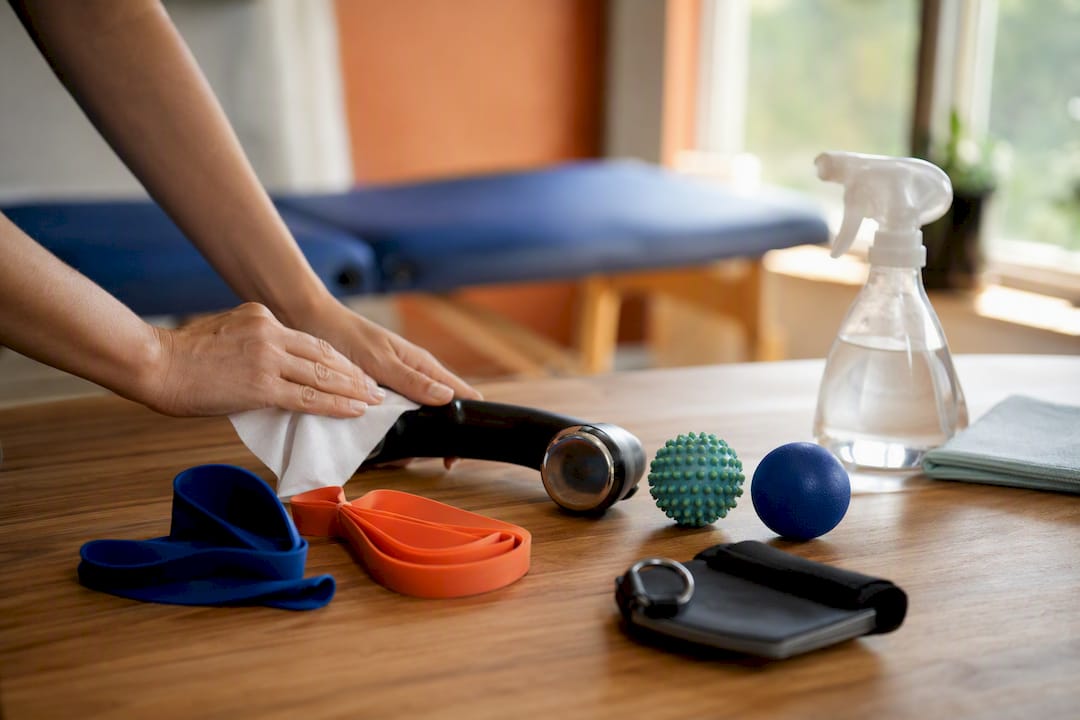
Planning happens well before anyone picks up a camera. A specialist photographer will want a shot list, a run sheet mapped to your clinic’s actual appointment gaps, and sign off from whoever owns the final say on staff and patient imagery. A short site walk-through beforehand catches lighting issues and layout constraints nobody spots from a floor plan.
Most clinics run one of three schedules:
- A half-day session for a single-location team refresh
- A full day when treatment-in-action shots and multiple departments are involved
- Staged sessions across several visits, timed around quieter appointment windows
The workflow itself follows a consistent pattern: pre-shoot planning, on-site shooting scheduled around patient care and facility protocols, then image curation and editing. Delivery of finished, high-resolution assets typically lands within three to five business days of the shoot wrapping. Expect a curated online gallery, both high-resolution masters and web-optimised files, and a clear note on usage rights so your marketing team isn’t guessing what they’re allowed to do with an image six months later.
Prep on your end matters just as much: brief staff on wardrobe and timing, gather any props or equipment in advance, and confirm which patients (or models) are participating before the photographer arrives.
How do you handle patient privacy and consent during a shoot?
Clinical settings carry obligations a standard commercial shoot doesn’t. Get this wrong and you’re looking at more than an awkward conversation.
- Secure written consent from every identifiable patient before the shoot, or use actors for scenarios where genuine patient participation isn’t practical or appropriate, a standard practice noted in clinical photography and patient consent research.
- Brief the photographer on infection-control protocols specific to your clinic, including sterile field boundaries and hand hygiene stations.
- Keep signed releases on file and manage the resulting images in line with your clinic’s privacy policy, not just general marketing practice.
- Loop in your compliance or legal contact early if a shoot involves minors, vulnerable patients, or any procedure with an elevated privacy risk.
Photographers experienced in clinical environments know to move quietly, stay out of sterile zones, and take direction from clinical staff without needing it spelled out twice.
Where do these images actually earn their keep?
The real return on a shoot shows up in how widely you can reuse the assets, not in the shoot itself.
- Website service pages and team bios. This is where imagery most directly influences whether a visitor books, because it’s the last thing they see before clicking “contact us.”
- Social media and paid ads. Treatment-in-action shots and interior images consistently outperform stock photography in engagement, and they double as Google Business Profile thumbnails for local search.
- Patient-facing materials. Brochures, intake packs, and annual reports all benefit from a consistent visual identity instead of a patchwork of old phone photos.
- Tender and RFP submissions. Government and insurer tenders increasingly expect visual proof of facilities and staff credentials, not just a written pitch.
Treat the finished shoot as a library rather than a one-off asset. A simple usage log, tracking which images are cleared for which channel, saves confusion later when a new staff member wants to reuse a photo nobody remembers approving.
What affects the price of a clinic photography package?
Quotes vary because the inputs vary. The main levers are shoot hours, the number of staff being photographed, how many locations are involved, how much retouching the images need, and the scope of usage rights you’re buying (a single service page versus unlimited use across print and digital).
Packages generally take one of three shapes:
- A single-location team day, aimed squarely at headshots and a handful of interior shots
- A full brand library covering multiple departments, treatment shots, and equipment detail
- An ongoing content retainer, where a photographer returns quarterly or biannually to keep the library current
When comparing quotes, ask for the same inclusions side by side: number of final images, retouching rounds, file formats, and usage terms. A price that looks unusually low often means unlimited raw files with no curation or editing included, which leaves your team doing the culling work yourselves.
Pro Tip: Treat any quote missing a clear usage-rights clause as a red flag. Ambiguity here is exactly what leads to disputes when an image ends up in a paid ad campaign nobody budgeted licensing for.
True Care Media’s experience in NDIS and allied health photography
Com’s team at True Care Media specialises specifically in NDIS and allied health photography and storytelling, which means the crew arriving at your clinic already understands consent protocols, infection control, and how to work around a live appointment book without disrupting patient care.
- Practical delivery standard: curated galleries for clinical review plus two rounds of light retouching included in the base package, keeping images authentic rather than over-processed, as outlined in how medical photography builds confidence in NDIS and allied health.
- Published sector guides, including the role of team photography in clinics and the clinic service page visual content checklist, give clinics a practical starting point before they even brief a photographer.
Lessons from working inside clinic timetables
Clinic schedules don’t bend for photographers, so the shoot has to bend for the clinic. The single biggest lesson: never book a session on a day with back-to-back appointments and hope for gaps. Build the shot list around the calendar, not the other way round.
One habit worth keeping: get the final shot-run signed off by whoever runs the clinic the day before, not the morning of. And always document consent and usage rights as you go, because chasing a signature after the fact rarely ends well for anyone.
— Mishal
Get a clinic photography package that fits your patient list
Com is the specialist alternative to a general commercial photographer for allied health clinics: every shoot is planned by a team that already understands consent forms, infection control, and how to work around a full appointment book without losing you a day of billable patient time.

Where a generalist photographer treats your clinic like any other office, Com’s crew arrives with sector-specific protocols already built into the run sheet, which means less time explaining your compliance requirements and more time getting the shots that actually convert visitors into bookings. The base package includes curated galleries and light retouching, so you’re not left culling hundreds of raw files yourself.
If you’re ready to see what a shoot could look like for your clinic, start with the detailed breakdown of clinic photography packages or request a quote directly through True Care Media’s team photography guide to scope your brief and lock in a date.
Sources
- CareNow – streamlining clinical workflows (Clinical Excellence Queensland)
- Clinical photography and patient consent (PubMed)