
Dementia care branding works by answering one question before a family ever books a tour: will my loved one be safe and happy here? Every photo, video and page on your site either builds that confidence or chips away at it. Families searching at 11pm, exhausted and guilt ridden, aren’t comparing floor plans. They’re reading faces, watching how staff talk to residents, and looking for proof that this place is run by people who actually care.
The fastest way to build that proof is authentic visual storytelling: real photography with consent, and a short family-decision video that shows an actual staff member explaining how a placement decision gets made. Start here, this week:
- Audit your homepage hero image. Is it stock photography or a real resident and carer?
- Check your Google Business Profile photos. Are they current, and do they show daily life?
- Draft one brief for a family-decision video featuring a named clinician or care lead.
Key Takeaways
Dementia care branding works when real photography, clinician-reviewed video and consistent messaging answer a family’s safety question before they ever pick up the phone.
| Point | Details |
|---|---|
| Lead with safety, not amenities | Families decide based on trust signals first; fees and floor plans come second. |
| Use real photography and video | Genuine images and clinician-led family-decision videos outperform stock imagery and generic copy. |
| Build a repeatable production workflow | Consent forms, clinical review and a tagged asset library beat one-off glossy shoots. |
| Prioritise referrers over volume | Clinician relationships and long nurture cycles of 60 to 120 days convert better than broad consumer ads. |
| Get a specialist to produce it | True Care Media builds family-decision videos, photography and staff-introduction films for NDIS, aged-care and allied-health providers. |
Table of Contents
- How dementia care branding works differently from general aged-care marketing
- The five core brand elements families expect
- How video and photography actually build trust
- A content checklist you can run this quarter
- Measuring impact and building referral relationships
- What I’ve learned from producing dementia-care storytelling
- How True Care Media helps you build that trust
- Frequently asked questions
- Sources
How dementia care branding works differently from general aged-care marketing
General aged-care branding sells convenience, lifestyle and amenities. Dementia care branding has to sell something harder: reassurance that a family member won’t be scared, mistreated or lost in the system. Families making this decision are often in the middle of a crisis, not shopping around calmly, and memory-care marketing guides note they are frequently frightened, guilt-ridden and overwhelmed by the time they start researching. Marketing that leads with amenities before addressing safety fails on arrival.
That emotional weight stretches the decision timeline. Families often research for weeks before making contact, revisiting the same pages, rewatching the same videos, checking whether the story stays consistent.
- Trust builds slowly, then breaks fast if one touchpoint contradicts another.
- A polished website paired with an outdated Facebook page or an unanswered enquiry form undoes weeks of goodwill in minutes.
- Response speed matters as much as content quality once contact is made.
Dedicated memory-care strategy work increasingly treats clinical messaging and long nurture cycles as the default, not an afterthought bolted onto a generic aged-care campaign.
The five core brand elements families expect
Families scanning a provider’s website and socials are pattern matching against a mental checklist, whether they realise it or not. Miss enough of these signals and they move on to the next search result.
- Real photography of daily life. Actual residents, actual staff, actual rooms. Care branding guides consistently find that genuine photography and a consistent visual system build more trust than stock imagery, which reads as generic at best and evasive at worst.
- Short family-decision videos and staff introductions. A two-minute clip of a clinical lead explaining how care plans get built does more work than a page of bullet points.
- Dedicated dementia landing pages structured around the family journey. Lead with what happens in the first week, how behaviour changes get managed, how families stay involved. Fees and logistics come after, not before.
- A tone that sounds like a person, not a brochure. Warm, plain language beats clinical jargon or marketing gloss every time.
- Visible operational trust signals. Staff training credentials, safety features, and genuine reviews displayed where families can find them without digging.
Pro Tip: Put your family-decision video above the fold on your dementia landing page, not buried under a fees table. Families decide whether to keep reading in the first fifteen seconds.
How video and photography actually build trust
Format matters as much as content. A 60 to 90 second decision film, structured around the questions families actually ask, works far better on a landing page than a five-minute corporate overview nobody finishes. Shorter 20 to 40 second clips built for social feeds should focus on one moment: a staff introduction, a walkthrough of a memory garden, a carer explaining how they handle sundowning.
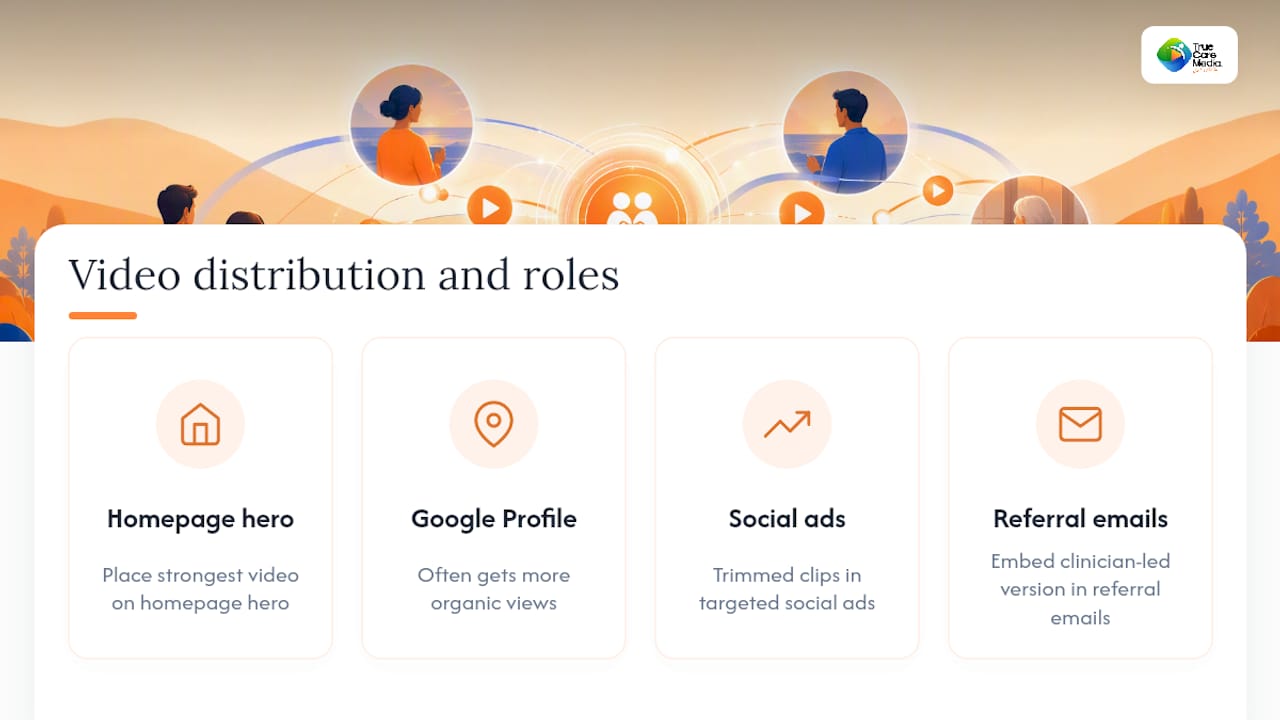
Distribution matters just as much as production. Put the strongest video on your homepage hero and your top dementia landing page. Upload it to your Google Business Profile, where it often gets more organic views than a standalone page. Use trimmed clips in targeted social ads aimed at adult children researching care for a parent, and embed a clinician-led version directly in referral emails to GPs and discharge planners.
None of this works if it feels staged. Healthcare video strategy increasingly treats clinician review and documented consent as core production steps, not compliance box ticking bolted on afterwards. The trick is running that review without flattening the footage into corporate stiffness. Use loose, open prompts rather than scripted lines. A carer answering “what’s a moment this week that made you smile?” in their own words will always beat a rehearsed sentence about “person-centred care.”
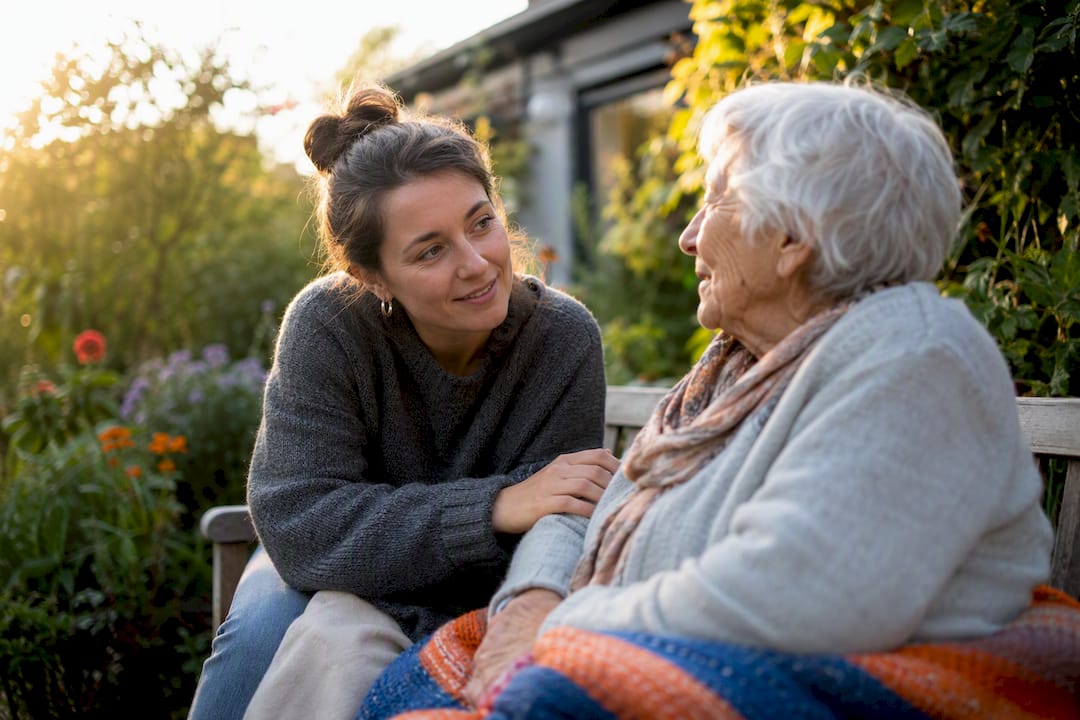
Pro Tip: Film staff introductions at different times of day. The energy of a morning shift looks completely different from an afternoon activity session, and families notice when everything looks staged in the same golden-hour light.
A content checklist you can run this quarter
You don’t need a twelve-month production calendar to get moving — see how a care home provider elevates dementia awareness through compassionate storytelling and community initiatives. You need a tight, sequenced plan.
- Audit first. Check your homepage hero, your Google Business Profile photos, and whether your top dementia landing page answers the family’s questions before it mentions price.
- Set the production workflow. Brief the shoot, collect consent forms upfront, schedule one clinical reviewer per shoot with an agreed turnaround, then archive everything in a tagged, reusable library.
- Build your quarter-one asset set. Aim for one family-decision video, three staff-introduction clips, around twenty updated hero photos, and six short social clips cut from the same shoot day.
- Reuse before you reshoot. A well-tagged library means your next social clip or referrer email doesn’t require a new production booking.
This sequence mirrors how aged care providers are rethinking video as infrastructure rather than a one-off campaign, and it keeps costs predictable while building a library you can draw on for years.
Measuring impact and building referral relationships
Track enquiry-to-tour conversion, tour-to-move-in rate, time-to-first-contact, and move-ins by referral source. These numbers tell you whether your branding is actually shortening the decision, not just generating traffic.
Expect long cycles. Memory-care decisions typically run 60 to 120 days from first search to move-in, so a nurture sequence beats a hard sell every time.
- Build clinician-facing content specifically for referrers, not just families.
- Run small education sessions or CME-style briefings for local GPs and geriatricians.
- Follow up referral sources with structured updates, not just a thank-you email.
Professional referrers such as neurologists, geriatricians and discharge planners often convert at a far higher rate than broad consumer ads, because they’re staking their own credibility on the recommendation.
What I’ve learned from producing dementia-care storytelling
The authenticity-versus-compliance tension is overstated as a problem and understated as a discipline. A clinician-led review process doesn’t kill natural footage, it protects it from being reshot into blandness later. The bigger mistake is chasing one glossy hero production instead of a repeatable rhythm of smaller shoots.
Staff introductions consistently outperform polished facility tours, and they help recruitment as much as enquiries. A human-centred rebrand built on honest storytelling tends to move both numbers at once.
How True Care Media helps you build that trust
True Care Media is the practical option for providers who need this content produced properly, not just planned. We produce family-decision videos, real photography, staff-introduction films and quarterly content plans built specifically for NDIS providers, aged-care operators, home-care organisations and allied-health clinics.

Building this in-house usually means one of your team learning consent processes, clinical review scheduling and video editing on top of their existing job, which is where speed and compliance both start slipping. A specialist team that already understands aged-care consent requirements and clinical review timelines gets you a usable asset library faster and with fewer redo cycles. If you want to see what a family-decision video brief actually looks like, start with a practical guide to producing one, or go straight to booking a discovery call about video production to scope your quarter-one asset plan.
Frequently asked questions
How does dementia care branding work compared to standard healthcare marketing?
It works by leading with emotional safety signals rather than service features. A family needs to believe their loved one will be treated with dignity before they’ll engage with anything about pricing or logistics.
What’s the fastest way to test whether our current branding is working?
Audit your homepage hero image, your Google Business Profile photos and your top dementia landing page’s structure. If fees appear before a family-decision video or real photos, that’s the first fix.
Do we need a full video production team to do this properly?
No. A quarter-one plan of one family-decision video, three staff introductions and around twenty hero photos, produced with a proper consent and clinical review workflow, is enough to start.
How long does it take families to decide on a dementia care provider?
Decision windows commonly run 60 to 120 days, which means your content needs to nurture over weeks, not just convert on a single visit.
Why do referral relationships matter more than consumer advertising here?
Clinicians such as geriatricians and discharge planners are staking their own reputation on a recommendation, which typically produces higher-converting enquiries than broad-reach ads.
Sources
- Memory care marketing: the complete guide to reaching families and building trust | USR Engage
- Memory care marketing strategy for census growth in 2026 | Alchemical
- Care home branding: build trust & win more enquiries | Bob
- Healthcare video strategy 2026 | Trust & compliance guide
- Anthem memory care’s story | Watson Creative