
Lifestyle content in aged care is the curated, personalised set of activities, programmes, and communications designed to enrich the daily lives of seniors and support their physical, cognitive, and social wellbeing. The role of lifestyle content in aged care extends well beyond activity calendars. Research on 125,000 Australians found that healthy lifestyle behaviours in a person’s 60s halve the risk of residential aged care admission over 10 years. That finding reframes lifestyle not as a nice addition to clinical care, but as a core driver of health outcomes. The Aged Care Quality Standards reinforce this by requiring providers to deliver person-centred care that reflects individual goals and preferences. For caregivers and families, understanding what good lifestyle content looks like is the first step toward choosing a facility that genuinely supports your loved one.
How does lifestyle content impact the health and engagement of seniors in aged care?
Personalised lifestyle content produces measurable health benefits, not just improved mood. Frequent social and cognitive engagement is linked to a 3–5% lower frailty risk over 11 years. That reduction matters because frailty is one of the strongest predictors of hospitalisation and loss of independence in older adults.
The timing of lifestyle engagement also shapes its impact. Residents benefit most from lifestyle enrichment in earlier frailty stages. Social and cognitive activities slow frailty progression in pre-frail and robust residents, but show limited effect once a person is already frail. This means starting meaningful engagement early, ideally at or before the point of admission, produces the best outcomes.
Structured physical activity compounds these benefits. A tailored 12-week exercise programme for new residents in Australian aged care facilities helped participants regain independence, autonomy, and social connection during the transition period. That transition is one of the most vulnerable phases for older adults, and purposeful movement directly reduces loneliness and functional decline.
The table below shows how different activity types connect to specific health and engagement outcomes.
| Activity type | Health benefit | Engagement benefit |
|---|---|---|
| Group exercise classes | Improved functional capacity, reduced fall risk | Social connection, routine |
| Cognitive games and puzzles | Slower cognitive decline | Mental stimulation, sense of achievement |
| Creative arts and music | Emotional expression, reduced anxiety | Self-expression, community participation |
| Gardening and outdoor activities | Physical movement, vitamin D exposure | Purpose, sensory engagement |
| Reminiscence and life story sessions | Reduced depression, identity affirmation | Belonging, family connection |
Pro Tip: Ask the facility whether lifestyle activities are scheduled at times that match residents’ natural energy levels. Morning sessions suit many older adults better than afternoon programmes, and a good provider will have thought about this.
The importance of lifestyle in elderly care also extends to mental health and community engagement. Passive activities, such as watching television or attending performances without participation, yield far smaller gains than active, purposeful engagement. Providers who understand this distinction design programmes where residents contribute, create, and connect rather than simply observe.
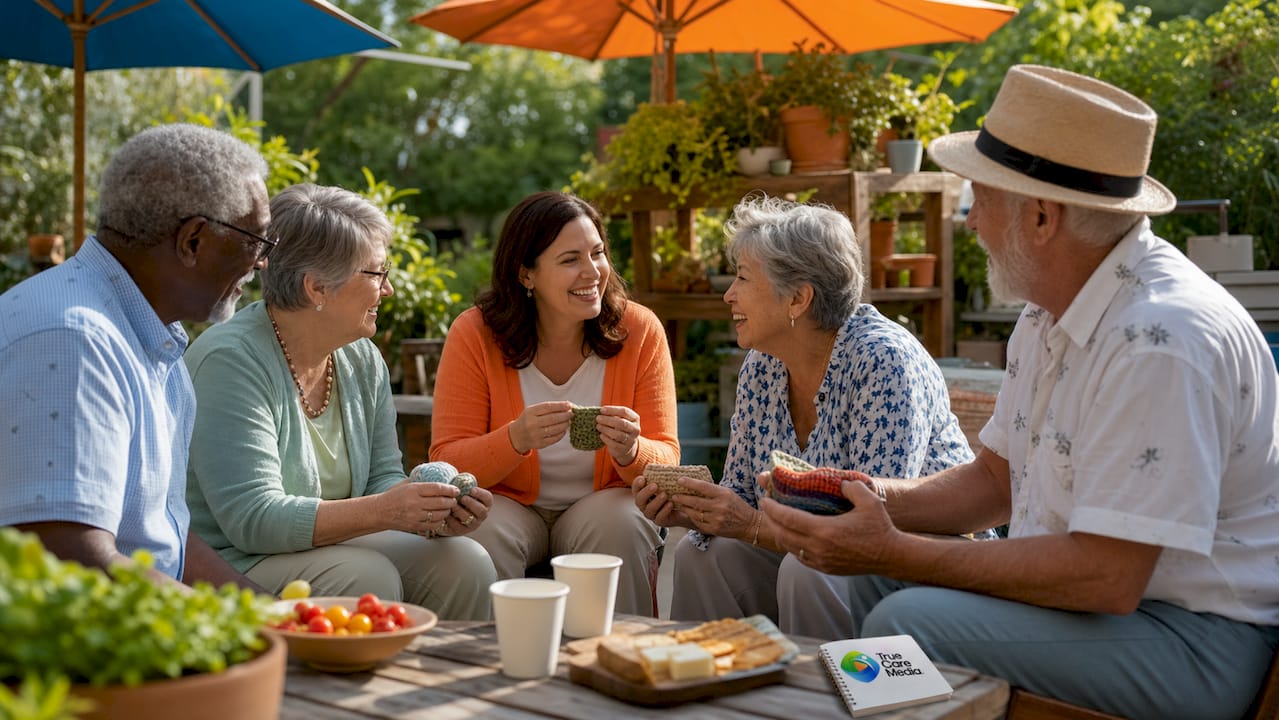
What makes lifestyle content in aged care meaningful and personalised?
Generic lifestyle content and meaningful lifestyle content look similar on paper but produce very different results. A generic programme offers bingo, chair yoga, and a weekly movie. A meaningful programme builds those activities around what a resident actually cares about: a former nurse who wants to contribute to others, a retired carpenter who misses working with his hands, or a lifelong gardener who still wants soil under her fingernails.
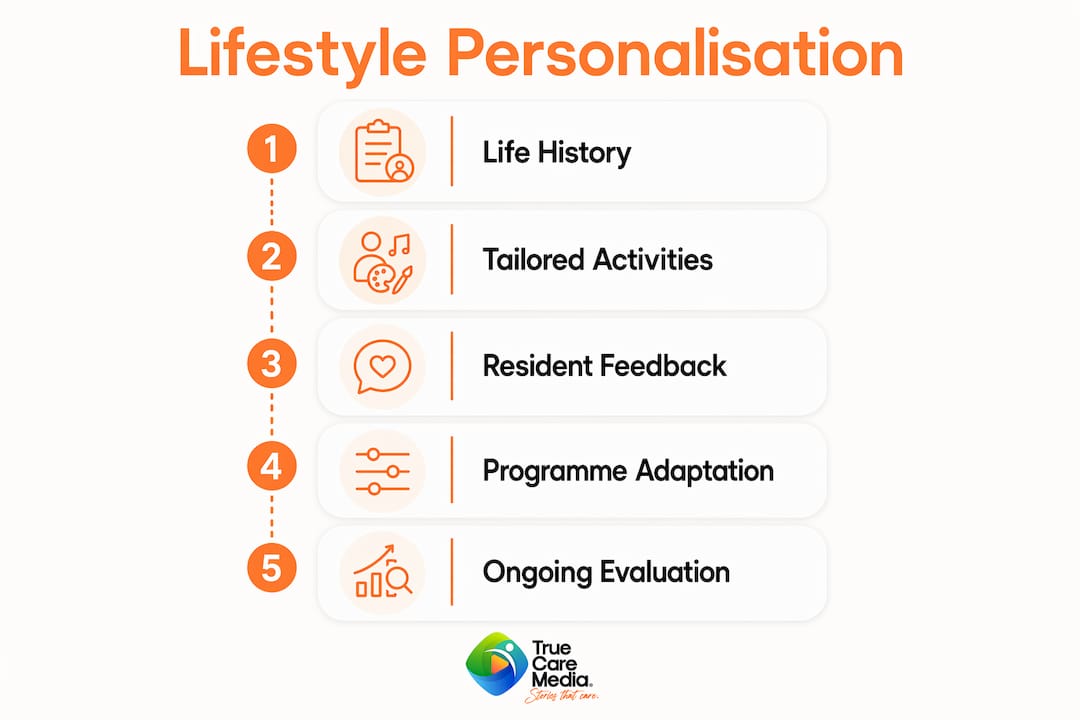
Meaningful lifestyle programmes tailor activities to residents’ past careers, hobbies, and life histories rather than relying on generic games or static calendars. Resident feedback and personalisation yield better engagement and wellbeing. The difference shows up in how residents spend their time and how connected they feel to their own identity.
Lifestyle coordinators play a central role in making this happen. They gather life history information at admission, review it regularly, and adapt the programme as a resident’s preferences or capacity changes. The best coordinators treat every resident as a source of knowledge about what works, not a passive recipient of scheduled activities.
An aged care lifestyle content checklist for families
Use these criteria to evaluate the quality of a facility’s lifestyle programme during tours or conversations with staff.
- Does the facility collect detailed life history information from each resident at admission?
- Are activity schedules reviewed and updated based on resident feedback, not just set annually?
- Can residents opt out of or modify activities without social pressure?
- Does the programme include resident-led sessions, not just staff-led ones?
- Are activities available across different times of day to suit varying energy levels?
- Does the facility measure resident satisfaction with lifestyle activities formally?
- Are families invited to participate in or contribute to lifestyle planning?
Lifestyle content that adapts based on resident feedback, rather than following fixed schedules, reflects superior aged care quality and better compliance with the Aged Care Quality Standards. Providers who treat those standards as a genuine benchmark rather than a compliance exercise consistently produce better resident outcomes.
Pro Tip: Ask the lifestyle coordinator to describe a specific example of how they changed a programme based on a resident’s feedback. A confident, detailed answer signals a genuinely responsive team. A vague answer signals a tick-box approach.
The best lifestyle content also tells residents’ individual stories. Storytelling and resident-led content challenge stereotypes about ageing and build trust with families who want to see their loved one treated as a full person, not a care recipient. Facilities that use participant-centred storytelling to share resident narratives create a culture where individuality is valued and visible.
How can caregivers and families evaluate lifestyle programmes in aged care?
Families are the most effective quality check on lifestyle programming. A brochure can describe an excellent programme. A facility visit reveals whether it actually exists.
Observing resident interaction during peak activity times reveals lifestyle programme authenticity better than any marketing material. Watch whether residents are genuinely engaged or simply present. Notice whether staff participate alongside residents or manage from a distance. Look at the physical environment: are activity spaces set up and in use, or are they empty and tidy?
Questions to ask lifestyle coordinators and facility managers:
- How do you find out what each resident enjoyed before moving in?
- How often do you update the activity programme, and who drives those changes?
- What happens when a resident says they dislike an activity?
- Can you show me examples of resident-led activities or events?
- How do you keep families informed about what their loved one is doing each week?
- What training do lifestyle staff receive, and how often?
The aged care sector is shifting toward what industry observers describe as “life-minded” content, validating seniors as active and purposeful rather than frail and dependent. Baby Boomers entering aged care bring higher expectations for autonomy and self-expression. Facilities that have not updated their lifestyle philosophy to reflect this shift will struggle to meet those expectations.
Pro Tip: Visit the facility at a time that was not pre-arranged with the lifestyle team. An unannounced visit during a mid-morning activity session gives you a far more accurate picture of daily life than a scheduled tour.
Families can also collaborate directly with lifestyle coordinators by sharing information about a resident’s history, interests, and preferences. A short written profile submitted at admission, updated after each home visit, gives coordinators the raw material to build genuinely personalised content. This kind of family involvement is one of the most underused tools in aged care quality improvement.
How is digital and multimedia content shaping aged care lifestyle engagement?
Video and digital storytelling have become practical tools for aged care providers, not just marketing assets. They serve three distinct functions: communicating lifestyle quality to prospective families, keeping current families connected to their loved one’s daily life, and building internal culture among staff.
Authentic, resident-led video content outperforms heavily scripted marketing in building family trust and showcasing lifestyle quality. Families seeking genuine insight into a facility’s culture discount polished promotional films quickly. A short, unscripted video of a resident describing her week carries more credibility than a two-minute brand film.
Effective aged care video content includes:
- Short resident story videos filmed in natural settings, not staged environments
- Regular manager or lifestyle coordinator updates sent directly to families
- Behind-the-scenes footage of activities, meals, and community events
- Staff introduction videos that show personality and genuine care
- Family testimonials recorded with consent and shared on facility websites
Regular, modestly produced videos from managers and staff build trust and connection with families more effectively than infrequent, high-production campaigns. Consistency matters more than production quality. A weekly two-minute update filmed on a smartphone communicates more care than a quarterly brand video.
Digital lifestyle software also supports personalised programme delivery by tracking resident preferences, recording participation, and generating feedback reports for coordinators. These tools help facilities move away from static, one-size-fits-all calendars toward genuinely responsive programming.
Pro Tip: When reviewing a facility’s online presence, look for video content featuring real residents and staff in unscripted moments. The absence of this content often signals a provider that prioritises marketing over genuine lifestyle engagement.
For families wanting to understand how visual storytelling in aged care works in practice, the gap between a facility that uses video well and one that does not is visible within minutes of visiting their website or social media channels. Understanding elderly mental health and how lifestyle-focused programming supports it gives families a stronger framework for evaluating what they see.
Key takeaways
Effective lifestyle content in aged care is personalised, resident-driven, and regularly updated, and it directly reduces frailty risk, supports independence, and builds family trust.
| Point | Details |
|---|---|
| Start engagement early | Lifestyle activities produce the greatest health benefits in pre-frail and robust residents, not after frailty sets in. |
| Personalisation is the benchmark | Programmes built around individual life histories and hobbies outperform generic activity calendars on every measure. |
| Families are quality auditors | Visiting during unscheduled times and asking specific questions reveals true programme quality better than brochures. |
| Video builds genuine trust | Authentic, resident-led video content communicates lifestyle quality to families more effectively than scripted marketing. |
| Feedback loops define quality | Providers who adapt programmes based on resident input consistently meet Aged Care Quality Standards at a higher level. |
What I’ve learned watching lifestyle content either work or fail
The facilities that get lifestyle content right share one habit: they treat residents as the authors of their own daily life, not the audience for a programme someone else designed. I have seen beautifully produced activity calendars that residents ignore, and I have seen handwritten weekly plans that residents genuinely look forward to. The difference is never the production quality. It is whether the content reflects what the person actually wants.
The most common mistake I see providers make is confusing activity volume with lifestyle quality. A packed schedule of group events does not equal meaningful engagement. A resident who spends 45 minutes a week doing something she genuinely loves is better served than one who attends six sessions she tolerates.
Families often underestimate their own influence here. Providers respond to informed, engaged families. When you share detailed information about your loved one’s history and preferences, and when you ask specific questions about how that information shapes the programme, you shift the dynamic. You become a collaborator, not just a visitor.
The aged care sector is moving toward consumer-driven models where residents and families have more say. That shift makes lifestyle content more important, not less. Providers who have built genuine, responsive lifestyle programmes will thrive. Those who have not will find it increasingly difficult to attract and retain residents who expect more than passive care.
Prioritise lifestyle quality as seriously as you prioritise clinical care ratios and medication management. It is not a soft metric. It is a direct predictor of how well your loved one will live.
— Mishal
How Com helps aged care providers tell their lifestyle story
Aged care providers with strong lifestyle programmes often struggle to communicate that quality to prospective families. The gap between what happens inside a facility and what families see from the outside is where trust is won or lost.

Com specialises in video, photography, and storytelling for NDIS providers and allied health brands, including aged care facilities that want to show, not just describe, the quality of their lifestyle programmes. From resident story videos to family update content, Com produces aged care video content that builds genuine trust with families at every stage of their decision. If your facility delivers exceptional lifestyle content, the right visual storytelling makes that visible to the families who need to see it.
FAQ
What is lifestyle content in aged care?
Lifestyle content in aged care refers to the personalised activities, programmes, and communications designed to support the physical, cognitive, and social wellbeing of residents. It goes beyond scheduled activities to include resident-led content, life history integration, and regular feedback-driven updates.
How does lifestyle content affect seniors’ health outcomes?
Frequent social and cognitive engagement is linked to a 3–5% lower frailty risk over 11 years, and healthy lifestyle behaviours in a person’s 60s can halve the risk of residential aged care admission. Starting meaningful engagement early, before frailty progresses, produces the strongest results.
What should families look for in an aged care lifestyle programme?
Families should look for programmes that collect individual life histories, adapt based on resident feedback, and include resident-led activities. Visiting during unscheduled times and asking specific questions about how the programme is personalised reveals far more than a facility tour.
How can video improve lifestyle engagement in aged care?
Authentic, resident-led video content builds family trust and communicates lifestyle quality more effectively than scripted marketing. Regular, modestly produced updates from staff and managers also strengthen connection between families and the facility.
What is an aged care lifestyle content checklist?
An aged care lifestyle content checklist is a set of criteria families use to evaluate programme quality, covering life history collection, feedback mechanisms, activity variety, resident autonomy, family involvement, and staff training. Use it during facility tours and conversations with lifestyle coordinators.